“The object of the work of redemption is not limited to the salvation of individual sinners, but extends itself to the redemption of the world, and to the organic reunion of all things in heaven and on earth under Christ as their original head.
The final outcome of the future, foreshadowed in the Holy Scriptures, is not the merely spiritual existence of saved souls, but the restoration of the entire cosmos, when God will be all in all under the renewed heaven on the renewed earth.”
—Abraham Kuyper, Lectures on Calvinism
HT:OFI

Thursday, July 23, 2009


Monday, July 20, 2009
Sunday, July 19, 2009

god's gift
“Be sure you see this most wonderful and astonishing of all truths: God took the record of all your sins that made you a debtor to wrath . . ., and instead of holding them up in front of your face and using them as the warrant to send you to hell, God put them in the palm of his Son’s hand and drove a spike through them into the cross. It is a bold and graphic statement: He canceled the record of our debt . . . nailing it to the cross (Col. 2:14).”
- John Piper, This Momentary Marriage
HT:OFI
- John Piper, This Momentary Marriage
HT:OFI
Saturday, July 18, 2009
our freedom
"Although I am an unworthy and condemned man, my God has given me in Christ all the riches of righteousness and salvation without any merit on my part out of pure free sovereign mercy so that from now on I need nothing except faith which believes this is true. Why should I not therefore freely, joyfully, with all my heart and with an eager will do all thing which I know are pleasing and acceptable to such a father who has overwhelmed me with His inestimable riches! I will therefore give myself as a Christ to my neighbor, just as Christ offered himself to me; I will do nothing in this life except what I see as necessary, profitable, and salutary to my neighbor, since through faith I have an abundance of all good things in Christ.
Behold, from faith thus flow forth love and joy in the Lord, and from love a joyful, willing, and free mind that serves one’s neighbor willingly.
Martin Luther, The Freedom of a Christian
Behold, from faith thus flow forth love and joy in the Lord, and from love a joyful, willing, and free mind that serves one’s neighbor willingly.
Martin Luther, The Freedom of a Christian
Friday, July 17, 2009
jesuslessness
Jared Wilson posts this excellent piece.
On Jesuslessness
There is a pastor whose Twitter feed I occasionally read, but I shouldn't, because it absolutely drives me nuts. A large portion of my reaction is tied to my own issues, I'm sure, but I see in his broadcasts an almost pathological intention not to mention Jesus. And as I thirst for Jesus, I notice this withholding lots and lots of places in the Bible Belt.
I have been and always will be doggedly suspicious of pastors who rarely (or never) mention Jesus.
John Piper says, "What we desperately need is help to enlarge our capacities to be moved by the immeasurable glories of Christ."
We ministers of the gospel -- and Christians at large -- can fumble this commission in three main ways:
1. We speak in vague spiritual generalities. Love. Hope. Peace. Joy. Harmony. Blessings. All disembodied from the specific atoning work of the incarnate Jesus and exalted Lord. It all sounds nice. It's all very inspirational. And it's rubbish. He himself is our peace. He himself is love. He himself is life. He does not make life better. He is life. Any pastor who talks about the virtues of faith, hope, and love, with Jesus as some implied tangential source, is not feeding his flock well.
2. We speak Christ as moral exemplar. We tell people to be nice because Jesus was nice. We tell them to be sweet because Jesus was sweet, good because Jesus was good, hard-working because Jesus was hard-working, loving because Jesus was loving. This is all well and good, but you could substitute "Mother Theresa" or even "Oprah" for "Jesus" and essentially have the same message.
3. We avoid the real problem -- sin -- and therefore either ignore the real solution -- the cross -- or confuse its meaning. In many churches, not only is sin never mentioned -- Joel Osteen, for instance, flat out says he doesn't like to talk about it basically because it hurts people's feelings -- the cross is rarely mentioned. And when the cross is mentioned, because we don't want to talk about sin, it becomes instead the great affirmation of our special-ness, rather than the great punishment for our unholiness. The cross becomes not the intersection of God's justice and mercy but the symbol of God's positive feelings about our undeniable lovability.
In all of these instances, and others, people are inspired and enthused, but they are moved about God's recognition of their own awesomeness, not about the glories of Christ. The capacity is enlarged with our growing self-esteem.
Even angels long to gaze into the life-giving riches of the gospel of grace. We prefer to drink deeply from the well into which we're gazing -- our navels.
Pastors, inspiration sells. But only Jesus transforms.
On Jesuslessness
There is a pastor whose Twitter feed I occasionally read, but I shouldn't, because it absolutely drives me nuts. A large portion of my reaction is tied to my own issues, I'm sure, but I see in his broadcasts an almost pathological intention not to mention Jesus. And as I thirst for Jesus, I notice this withholding lots and lots of places in the Bible Belt.
I have been and always will be doggedly suspicious of pastors who rarely (or never) mention Jesus.
John Piper says, "What we desperately need is help to enlarge our capacities to be moved by the immeasurable glories of Christ."
We ministers of the gospel -- and Christians at large -- can fumble this commission in three main ways:
1. We speak in vague spiritual generalities. Love. Hope. Peace. Joy. Harmony. Blessings. All disembodied from the specific atoning work of the incarnate Jesus and exalted Lord. It all sounds nice. It's all very inspirational. And it's rubbish. He himself is our peace. He himself is love. He himself is life. He does not make life better. He is life. Any pastor who talks about the virtues of faith, hope, and love, with Jesus as some implied tangential source, is not feeding his flock well.
2. We speak Christ as moral exemplar. We tell people to be nice because Jesus was nice. We tell them to be sweet because Jesus was sweet, good because Jesus was good, hard-working because Jesus was hard-working, loving because Jesus was loving. This is all well and good, but you could substitute "Mother Theresa" or even "Oprah" for "Jesus" and essentially have the same message.
3. We avoid the real problem -- sin -- and therefore either ignore the real solution -- the cross -- or confuse its meaning. In many churches, not only is sin never mentioned -- Joel Osteen, for instance, flat out says he doesn't like to talk about it basically because it hurts people's feelings -- the cross is rarely mentioned. And when the cross is mentioned, because we don't want to talk about sin, it becomes instead the great affirmation of our special-ness, rather than the great punishment for our unholiness. The cross becomes not the intersection of God's justice and mercy but the symbol of God's positive feelings about our undeniable lovability.
In all of these instances, and others, people are inspired and enthused, but they are moved about God's recognition of their own awesomeness, not about the glories of Christ. The capacity is enlarged with our growing self-esteem.
Even angels long to gaze into the life-giving riches of the gospel of grace. We prefer to drink deeply from the well into which we're gazing -- our navels.
Pastors, inspiration sells. But only Jesus transforms.
mclaren's miss
In The Method, The Message, and The On-Going Story, Brian McLaren writes tells of this man, Sam, who, after some time of tending to the plants at McLaren’s church, approached the pastor and asked him if he was curious why Sam had never visited the church he volunteered to do work for. McLaren, approached by such a question, is of course curious and quite alarmed by Sam’s answer. Sam tells McLaren that he is Jewish and is not interested in Christianity because “I was listening to one of your evangelical preachers on the television, and he said that if Hitler had said a little prayer so that he accepted Jesus into his heart or some such nonsense, then all the wrong he did wouldn’t matter and he’d go straight to Heaven.”
McLaren rightly acknowledges that this sort of “gospel presentation” seems to make God sound unjust, reduces Christianity to easy-believism, and trivializes the Holocaust. Sam continues by describing how his son had decided to go to Israel to join the Israeli army, knowing it was dangerous but wanting to assist his people in their struggles. one night, Sam’s son came across a group of fellow soldiers who were harassing a Palestinian man by calling him names, roughing him up a bit, and brandishing knives, telling the Palestinian man that if he was going to live in the land then he needed to be circumcised. Sam’s son was disgusted by this, encouraged them to stop, and when they wouldn’t he pulled his rifle on the other soldiers. this gave the Palestinian man the chance to run away, at Sam’s son’s command, and Sam’s son apologized for his fellow soldiers’ behavior. the next day, Sam’s son was arrested, held in prison for a good while, was put on trial, was exonerated from any wrong doing, and even received a letter praising him for doing the right thing. after telling this story, Sam’s question for McLaren was this: “Would your God send my boy to hell because he never said, ‘Jesus save me,’ but he’d let Hitler go to Heaven for saying the magic words? Is that what you believe, like that TV preacher?”
McLaren’s response: “I didn’t answer his question; I didn’t know how.”
He doesn’t seem to recall exactly what he said, but he says, “I said something like this: ‘Sam, i think your son acted a lot like Jesus would have acted. Jesus cared for the outsiders, just as your son did, and Jesus gave up his life to protect us all, just as your son risked his life for that guy. So i think your son was following Jesus’ example, and I can see why you’re so proud of him. Really, i think God feels about Jesus a lot like you feel about your son. And i know God must be proud of your son too.”
Here, McLaren communicates that the Gospel is being a generally good and moral person. The Gospel is acting in a way and living in such a way as to hope that God will be “proud” of you when you stand before His throne to give an account for your life. McLaren has given Sam false hope in a false gospel. instead of answering the negative version of “what must i do to be saved” with the response that Jesus would have been “proud” of, McLaren follows the Pharisees and Judaizers in presenting a gospel of works-righteousness to Sam, a gospel which condemned in the New Testament.
As noted in the previous post, the postmodern innovators of today are returning to works based righteousness under the guise a wrongly defined notion of love.
Galations 2:21; "do not nullify the grace of God, for if righteousness were through the law, then Christ died for no purpose."
Jesus had a similar encounter as McLaren. See John 3. Jesus told Nicodemus that his good life was not good enough. That he was a sinner like everyone else. And that he, like everyone else, must receive the gift of regeneration.
McLaren rightly acknowledges that this sort of “gospel presentation” seems to make God sound unjust, reduces Christianity to easy-believism, and trivializes the Holocaust. Sam continues by describing how his son had decided to go to Israel to join the Israeli army, knowing it was dangerous but wanting to assist his people in their struggles. one night, Sam’s son came across a group of fellow soldiers who were harassing a Palestinian man by calling him names, roughing him up a bit, and brandishing knives, telling the Palestinian man that if he was going to live in the land then he needed to be circumcised. Sam’s son was disgusted by this, encouraged them to stop, and when they wouldn’t he pulled his rifle on the other soldiers. this gave the Palestinian man the chance to run away, at Sam’s son’s command, and Sam’s son apologized for his fellow soldiers’ behavior. the next day, Sam’s son was arrested, held in prison for a good while, was put on trial, was exonerated from any wrong doing, and even received a letter praising him for doing the right thing. after telling this story, Sam’s question for McLaren was this: “Would your God send my boy to hell because he never said, ‘Jesus save me,’ but he’d let Hitler go to Heaven for saying the magic words? Is that what you believe, like that TV preacher?”
McLaren’s response: “I didn’t answer his question; I didn’t know how.”
He doesn’t seem to recall exactly what he said, but he says, “I said something like this: ‘Sam, i think your son acted a lot like Jesus would have acted. Jesus cared for the outsiders, just as your son did, and Jesus gave up his life to protect us all, just as your son risked his life for that guy. So i think your son was following Jesus’ example, and I can see why you’re so proud of him. Really, i think God feels about Jesus a lot like you feel about your son. And i know God must be proud of your son too.”
Here, McLaren communicates that the Gospel is being a generally good and moral person. The Gospel is acting in a way and living in such a way as to hope that God will be “proud” of you when you stand before His throne to give an account for your life. McLaren has given Sam false hope in a false gospel. instead of answering the negative version of “what must i do to be saved” with the response that Jesus would have been “proud” of, McLaren follows the Pharisees and Judaizers in presenting a gospel of works-righteousness to Sam, a gospel which condemned in the New Testament.
As noted in the previous post, the postmodern innovators of today are returning to works based righteousness under the guise a wrongly defined notion of love.
Galations 2:21; "do not nullify the grace of God, for if righteousness were through the law, then Christ died for no purpose."
Jesus had a similar encounter as McLaren. See John 3. Jesus told Nicodemus that his good life was not good enough. That he was a sinner like everyone else. And that he, like everyone else, must receive the gift of regeneration.
Technorati Tags: evangelism
what we need to believe
In A Heretic's Guide to Eternity Spencer Burke tries to promote the idea that right beliefs are unnecessary for salvation.
I'm saddened for people like Burke. I can only presume this kind of thinking stems from hardened heart that has only interacted with a pharisaical type of Church. That is, I see Burke's thinking as an equally wrong over-reaction to an opposite wrong. As a believer in love with Christ and His Church I see where people (and especially organizations) have missed the mark but I cannot conclude that belief is unnecessary (Jn 14.6).
I like Michael Wittmer's diagram here for thinking about what is necessary, what cannot be rejected, and what is simply beneficial.

Wittmer writes:
He is exactly right. Postmodern innovators, in a reaction to the legalist pharisees of our day, have over-reacted so far in the opposite direction that they have come full circle and ended back in a works based heresy.
For most of my Christian life, I have heard people say that it is not enough to do good works or care for the world. There has to be faith in Jesus - which usually means assent to a set of presuppositions. But actually, the apostle Paul said it is good works without love - not good works without a belief system - that are empty and worthless.
I'm saddened for people like Burke. I can only presume this kind of thinking stems from hardened heart that has only interacted with a pharisaical type of Church. That is, I see Burke's thinking as an equally wrong over-reaction to an opposite wrong. As a believer in love with Christ and His Church I see where people (and especially organizations) have missed the mark but I cannot conclude that belief is unnecessary (Jn 14.6).
I like Michael Wittmer's diagram here for thinking about what is necessary, what cannot be rejected, and what is simply beneficial.
- Sinners need Regeneration
- Regeneration requires the Holy Spirit
- The Holy Spirit uses Truth
For by a kind of mutual bond the Lord has joined together the certainty of his Word and of his Spirit so that the perfect religion of the Word may abide in our minds when the Spirit, who causes us to contemplate God's face, shines; and that we in turn may embrace the Spirit with no fear of being deceived when we recognize him in his own image, namely, in the Word. ... Therefore the Spirit ... has not the task of inventing new and unheard of revelations, or of forging a new kind of doctrine ... but of sealing our minds with that very doctrine which is commended by the gospel.
Wittmer writes:
Contrary to what some postmodern innovators believe, those who reject these foundational doctrines of Christian faith cannot be saved, no matter how swell they are and how well they behave. Being good is not good enough. We must know and believe something - the basic fact about salvation - to be saved.
He is exactly right. Postmodern innovators, in a reaction to the legalist pharisees of our day, have over-reacted so far in the opposite direction that they have come full circle and ended back in a works based heresy.
Technorati Tags: Emerging Church
you are favorable
“God has declared in the gospel that whenever we come to him, we are to call upon him freely and openly as our Father, who has adopted us as his children. If we do not have this assurance, the thought of serving God will make us grind our teeth.
If, however, we are persuaded that God looks upon us favourably; if, though we are weak and can do nothing worthy of his approval, he accepts us in the name of the Lord Jesus Christ, then we will surely be filled with courage.
We will be like a ship’s sail that has been stretched and filled by the breeze! Thus, our hearts will run to obey him, like a ship driven along by its sail, when we know that God delights in us and accepts our works, not wanting us to be compelled into servitude. He is happy for us to be his children, and that we desire to obey him.”
- John Calvin, Sermons on Galatians
HT:OFI
If, however, we are persuaded that God looks upon us favourably; if, though we are weak and can do nothing worthy of his approval, he accepts us in the name of the Lord Jesus Christ, then we will surely be filled with courage.
We will be like a ship’s sail that has been stretched and filled by the breeze! Thus, our hearts will run to obey him, like a ship driven along by its sail, when we know that God delights in us and accepts our works, not wanting us to be compelled into servitude. He is happy for us to be his children, and that we desire to obey him.”
- John Calvin, Sermons on Galatians
HT:OFI
Tuesday, July 14, 2009
tolerance
I need to be careful that I do not copy all of Michael Wittmer's Don't Stop Believing here - you should go buy a copy yourself, it is excellent - but I cannot resist. Here is an interesting analogy regarding how much tolerance is the right amount.
When mechanics tighten the nut on a wheel bearing, they back off the nut a quarter turn to allow grease to lubricate the bearing. The mechanic who forgets to back off the nut and allow for a grease tolerance is like some conservative Christians. They insist that every belief is important and do not give others room to breathe, to differ even on minor issues. Lacking sufficient grace to lubricate their lives, metal grinds on meal until their wheels overheat and eventually seize up, crippling their faith. ...
If conservatives sometimes lack enough tolerance, some postmodern Christians seem like the mechanic who backs off the wheel nut too far. These postmodern innovators seem so tolerant that what they are driving no longer resembles historic Christianity. They permit so much play that their wheels wobble from the beginning and, when they hit a pothole, may quickly fall off and disable their faith.
still more sola scriptura
"My conscience is captive to the Word of God. Thus I cannot and will not recant, because acting against one's conscience is neither safe nor sound. God help me. Amen." ~ Martin Luther
"Evangelical Christians tend to turn Luther's cherished sola scriptura (Scripture alone) into nuda scriptura (naked Scripture), so that Scripture becomes our only rather than final authority. ~ Michael Wittmer
"Evangelical Christians tend to turn Luther's cherished sola scriptura (Scripture alone) into nuda scriptura (naked Scripture), so that Scripture becomes our only rather than final authority. ~ Michael Wittmer
Technorati Tags: Scripture
the word in light of culture
He who marries the present culture becomes a window in the next. At the same time, as Michael Wittmer explains, the more we learn about God's world, the more accurately we can interpret God's Word. Wittmer provides the following illustrations:
Science. Copernicus's discovery that the earth revolves around the sun enables us to properly interpret Psa 31.9: "The world is firmly established; it cannot be moved." In Copernicus's day, most Christians took this as proof that the earth is the stationary center of the universe. Even Martin Luther criticized Copernicus for allowing his newfangled view of the world to contradict Scripture. While a few such dinosaurs exist, most Christians today rightly read Psa 31.9 not as a scientific description of the earths immovability but as a poetic promise of God's provision for his creation.
Politics. Many nineteenth-century Americans used Paul's commands that slaves should obey their masters as biblical suppor for slavery. But now, in part due to our country's emphasis on democracy and human rights, no one outside of an occasional white supremacist uses the Bible to condone slavery.
History. Until recently most theologians believed that God is impassible, meaning that he does not experience emotions (a sign of weakness for an omnipotent and extremely rational God). Typical is Anselm, who, in an eleventh-century prayer to God, wrote that we may "feel the effect of Your mercy, but You do not experience the feeling ... You do not experience any feeling of compassion for misery." Try preaching that! In part because we have just past through the bloodiest century in history - from the Holocaust to Hiroshima to Hotel Rwanda - Christians are rediscovering the first verse they every memorized: "Jesus wept." We have learned from very painful experience that we not only need a God who is strong, but also a God who weeps and suffers with us.
Society. Not that long ago and still every now and again, various conservatives cite Genesis 1.28 in the King James Version to justify their right to "dominate" the rest of creation. Thankfully, society's increasing concern for the environment leads most Christians to interpret God's command to "have dominion" as his call to responsible stewardship rather than wasteful abuse of his world.
Science. Copernicus's discovery that the earth revolves around the sun enables us to properly interpret Psa 31.9: "The world is firmly established; it cannot be moved." In Copernicus's day, most Christians took this as proof that the earth is the stationary center of the universe. Even Martin Luther criticized Copernicus for allowing his newfangled view of the world to contradict Scripture. While a few such dinosaurs exist, most Christians today rightly read Psa 31.9 not as a scientific description of the earths immovability but as a poetic promise of God's provision for his creation.
Politics. Many nineteenth-century Americans used Paul's commands that slaves should obey their masters as biblical suppor for slavery. But now, in part due to our country's emphasis on democracy and human rights, no one outside of an occasional white supremacist uses the Bible to condone slavery.
History. Until recently most theologians believed that God is impassible, meaning that he does not experience emotions (a sign of weakness for an omnipotent and extremely rational God). Typical is Anselm, who, in an eleventh-century prayer to God, wrote that we may "feel the effect of Your mercy, but You do not experience the feeling ... You do not experience any feeling of compassion for misery." Try preaching that! In part because we have just past through the bloodiest century in history - from the Holocaust to Hiroshima to Hotel Rwanda - Christians are rediscovering the first verse they every memorized: "Jesus wept." We have learned from very painful experience that we not only need a God who is strong, but also a God who weeps and suffers with us.
Society. Not that long ago and still every now and again, various conservatives cite Genesis 1.28 in the King James Version to justify their right to "dominate" the rest of creation. Thankfully, society's increasing concern for the environment leads most Christians to interpret God's command to "have dominion" as his call to responsible stewardship rather than wasteful abuse of his world.
global warming settled
There's no longer a need to debate global warming. The G8 have agreed to stop the world from getting too warm.
Technorati Tags: current events, politics
Monday, July 13, 2009
postmodern innovators
I am just now re-beginning Michael Wittmer's Don't Stop Believing and immediately I'm loving it. Rather than getting hung up on broad, volatile terms whose definition feel like a moving target, e.g., emergent, Wittmer starts right off with an excellent grid depicting modernity v. post-modernity and conservative v. liberal.

Wittmer then gives this timeless warning, the "quest to correct the abuses of previous generations must not lead ... to err on the opposite extreme."
What we seek is Truth and right practice based on that. Wittmer states;
In light of that, Wittmer continues his analysis of today's weltgeist.
More to come later ...
Wittmer then gives this timeless warning, the "quest to correct the abuses of previous generations must not lead ... to err on the opposite extreme."
What we seek is Truth and right practice based on that. Wittmer states;
Authentic Christianity demands our head, heart, and hands. Our labor for Christ flows from our love for him, which can arise only when we know and think rightly about him. Genuine Christians never stop serving, because they never stop loving, and they never stop loving, because they never stop believing.
In light of that, Wittmer continues his analysis of today's weltgeist.
It is one thing to jettison a former generation's additions to the Christian tradition; it is quite another to question foundational elements of that tradition. We must do the former to own and embody the gospel for our day. We must avoid the latter, or we will lose the very gospel we are attempting to apply.
More to come later ...
sola scriptura
the concern of preaching
“Puritan preaching revolved around ‘Christ, and him crucified’ – for this is the hub of the Bible. The preachers’ commission is to declare the whole counsel of God; but the cross is the center of that counsel, and the Puritans knew that the traveler through the Bible landscape misses the way as soon as he loses sight of the hill called Calvary.”
– J.I. Packer
HT:EK via PC
– J.I. Packer
HT:EK via PC
our concern
“The holiest Christians are not those most concerned about holiness as such, but whose minds and hearts and goals and purposes and love and hope are most fully focused on our Lord Jesus Christ.”
- J.I. Packer, Keep in Step with the Spirit
HT:OFI
- J.I. Packer, Keep in Step with the Spirit
HT:OFI
Sunday, July 12, 2009
binding satan
In The Dark Side of the Millennium, Arthur Lewis writes this excellent summary on the "binding of Satan".
When Jesus drove out the demons, He actually proclaimed His authority over Satan and the arrival of His Kingdom. He said, "How can one enter a strong man's house unless he first binds the strong man?" (Matt 12.29).
As the disciples also found success in casting out demons, the Lord exclaimed, "I saw Satan fall like lightning out of heaven" (Luke 10.18). This was a metaphoric way of saying that the devil's power had been overcome by the king's envoys. We know that Satan was cast down when Christ was lifted up (John 12.31); thus it was Calvary's victory that broke the grip of the devil on men and nations. the Gospels clearly teach that the devil's control and power over the peoples of the world has been weakened since the first advent of Christ (cf. Heb 2.14).
Technorati Tags: eschatology, Kingdom of God, Satan, spiritual warefare
evangelical distinctives
RC Sproul on evangelical distinctives in Faith Alone.
Evangelicals are called Evangelicals for a reason. That reason may change as words undergo a fluid evolution through variations of usage over time and in various cultural settings. Language changes. Words undergo sometimes radical, sometimes subtle changes in nuance and meaning. The science of lexicography is cognizant of such change. Lexicographers pay attention chiefly to two factors in the process of defining words. The first is etymology or derivation. We search for the original roots of words and their historic meanings to gain insight into present usage. Since words and their meanings can and often do change, however, it is not enough merely to examine a word’s root to discover its current meaning. Philosopher Ludwig Wittgenstein, chief architect of Linguistic Analysis, argued that words must be understood in terms of their contemporary or “customary” usage.
Words are a part of the customs of a people. Words change their meanings as the people change. Take, for example, the word scan. If I tell my students to scan the textbook, what would they understand their assignment to be? Most would understand that they need only skim lightly over the material.
Historically the word scan meant to examine closely with fixed attention to detail. The word still carries that idea with respect to the task of air-traffic controllers. The radar scan is not a loose skimming of planes in the air. A brain scan done by a physician is likewise not a casual, “once over” viewing.
The word scan sounds enough like the word skim for people to begin confusing the two. In this confusion the term scan began to be used to refer to a process that means the very opposite of the word’s original meaning. So what is the correct “meaning” of scan? Most modern lexicographers, because of the confusion in the term’s contemporary usage, would probably cite both meanings.
I labor the point of language because the meaning of the word evangelical is not immune from such fluid development, change, and confusion. The etymology of evangelical is simple. It comes from the Greek word euangelion, or “evangel,” which is the New Testament word for gospel. Historically the term evangelical meant literally “gospeler.” It was a term used by Protestants who identified with the Reformation doctrine of justification by faith alone.
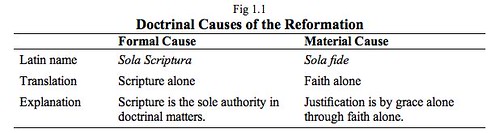
If the Reformation had two chief causes, a formal and a ma terial cause, historic Evangelicalism has the same two causes. The formal cause of the Reformation was declared in the formula sola Scriptura, meaning that the only source of special written revelation that has the authority to bind the conscience absolutely is the Bible. The material cause was declared by the formula sola fide, meaning that justification is by faith alone.
Over the centuries Evangelicalism became manifest in a wide variety of forms. Manifold denominations emerged with individual doctrinal distinctives. Protestants were divided over a host of theological points, including the sacraments, church government, and worship. We have seen divergent views of soteriology and eschatology—Arminianism, Calvinism, Lutheranism, dispensationalism, and many other “isms”—all flying under the generic banner of Evangelicalism.
The term evangelical served as a unifying genus to capture under one heading a wide assortment of species. The two prominent doctrines that served as the cohesive forces of evangelical unity were the authority of the Bible and justification by faith alone. Though Protestants historically were divided over many issues, they were united on these two points as well as in their affirmation of the main tenets found in such ecumenical creeds as the Apostles’ Creed, the Nicene Creed, and the formulas of Chalcedon.
Evangelicals are called Evangelicals for a reason. That reason may change as words undergo a fluid evolution through variations of usage over time and in various cultural settings. Language changes. Words undergo sometimes radical, sometimes subtle changes in nuance and meaning. The science of lexicography is cognizant of such change. Lexicographers pay attention chiefly to two factors in the process of defining words. The first is etymology or derivation. We search for the original roots of words and their historic meanings to gain insight into present usage. Since words and their meanings can and often do change, however, it is not enough merely to examine a word’s root to discover its current meaning. Philosopher Ludwig Wittgenstein, chief architect of Linguistic Analysis, argued that words must be understood in terms of their contemporary or “customary” usage.
Words are a part of the customs of a people. Words change their meanings as the people change. Take, for example, the word scan. If I tell my students to scan the textbook, what would they understand their assignment to be? Most would understand that they need only skim lightly over the material.
Historically the word scan meant to examine closely with fixed attention to detail. The word still carries that idea with respect to the task of air-traffic controllers. The radar scan is not a loose skimming of planes in the air. A brain scan done by a physician is likewise not a casual, “once over” viewing.
The word scan sounds enough like the word skim for people to begin confusing the two. In this confusion the term scan began to be used to refer to a process that means the very opposite of the word’s original meaning. So what is the correct “meaning” of scan? Most modern lexicographers, because of the confusion in the term’s contemporary usage, would probably cite both meanings.
I labor the point of language because the meaning of the word evangelical is not immune from such fluid development, change, and confusion. The etymology of evangelical is simple. It comes from the Greek word euangelion, or “evangel,” which is the New Testament word for gospel. Historically the term evangelical meant literally “gospeler.” It was a term used by Protestants who identified with the Reformation doctrine of justification by faith alone.
If the Reformation had two chief causes, a formal and a ma terial cause, historic Evangelicalism has the same two causes. The formal cause of the Reformation was declared in the formula sola Scriptura, meaning that the only source of special written revelation that has the authority to bind the conscience absolutely is the Bible. The material cause was declared by the formula sola fide, meaning that justification is by faith alone.
Over the centuries Evangelicalism became manifest in a wide variety of forms. Manifold denominations emerged with individual doctrinal distinctives. Protestants were divided over a host of theological points, including the sacraments, church government, and worship. We have seen divergent views of soteriology and eschatology—Arminianism, Calvinism, Lutheranism, dispensationalism, and many other “isms”—all flying under the generic banner of Evangelicalism.
The term evangelical served as a unifying genus to capture under one heading a wide assortment of species. The two prominent doctrines that served as the cohesive forces of evangelical unity were the authority of the Bible and justification by faith alone. Though Protestants historically were divided over many issues, they were united on these two points as well as in their affirmation of the main tenets found in such ecumenical creeds as the Apostles’ Creed, the Nicene Creed, and the formulas of Chalcedon.
Technorati Tags: justification
Saturday, July 11, 2009
warren
This is rather sad ... "how can we can we actually work together, maintaining our separating traditions, maintaining our convictions without compromise, working together for the greater good?" Ouch. Sorry Rick, you dropped the ball.
what's available?
“Jesus gives his bride full liberty to take all that He has to be their own; He loves them to help themselves freely to His treasure and appropriate as much as they can possibly carry. The boundless fullness of His all-sufficiency is as free to the believer as the air he breathes.”
- Charles Spurgeon, Morning by Morning
HT:OFI
- Charles Spurgeon, Morning by Morning
HT:OFI
Monday, July 06, 2009
climate change change
Slowly but surely public and political opinion is reversing regarding global warming as a result of human activity. I intentionally left off scientific opinion because I was never fully convinced which way science was pointing on this issue - it seemed to me that it was heavily influenced by public and political opinion rather than true science.
Anyway, it seems I read more and more these days about real concerns with the theory and a slowing of the mad press forward to fix this before we really understand if there is something to fix. While that pleases me, I pray Christians would realize that we are not to mindlessly destroy the creation that Our Creator has graciously given us dominion over.
Anyway, it seems I read more and more these days about real concerns with the theory and a slowing of the mad press forward to fix this before we really understand if there is something to fix. While that pleases me, I pray Christians would realize that we are not to mindlessly destroy the creation that Our Creator has graciously given us dominion over.
Friday, July 03, 2009
kevin skinner
God uses all sorts of ways to speak. Here he revealed to me how quick we judge based on our own grid. Kevin Skinner, on America's Got Talent, fools me. First, along with most others, I judged much about the man. I mean come on, "I'm not a math ... real good at math." And then he plays this song. Amazing! Beautiful! Wow, now we all regret how we assessed him. But pay attention, now that we realize our miss, Sharon Osbourne can some how see that he is a "good man".
Why do we do this?
That aside, if you like good music (and for me that doesn't normally include country), enjoy this.
Why do we do this?
That aside, if you like good music (and for me that doesn't normally include country), enjoy this.
our king
“In our vision of ultimate reality, who is occupying the throne today? Are we authentic New Testament Christians, whose vision is filled with Christ crucified, risen and reigning? Is guilt still reigning, and death? Or is grace reigning, and life?
To be sure, sin and Satan may seem to be reigning still, since many continue to bow down to them. But their reign is an illusion, a bluff. For at the cross they were decisively defeated, dethroned and disarmed.
Now Christ reigns, exalted to the Father’s right hand, with all things under his feet, welcoming the nations, and waiting for his remaining enemies to be made his footstool.”
—John Stott, The Message of Romans
HT:OFI
To be sure, sin and Satan may seem to be reigning still, since many continue to bow down to them. But their reign is an illusion, a bluff. For at the cross they were decisively defeated, dethroned and disarmed.
Now Christ reigns, exalted to the Father’s right hand, with all things under his feet, welcoming the nations, and waiting for his remaining enemies to be made his footstool.”
—John Stott, The Message of Romans
HT:OFI
Thursday, July 02, 2009
false apostles
This excellent word of wisdom comes from Phil Ryken's commentary on Galatians in the Reformed Expository Commentary series by way of Martin Downes.
We cannot simply assume that we have the gospel. Unless we keep the gospel at the center of the church, we are always in danger of shoving it off to one side and letting something else take its place.
Martin Luther rightly warned that "there is a clear and present danger that the devil may take away from us the pure doctrine of faith and may substitute for it the doctrines of works and of human traditions..." The good news of the cross and resurrection must be preached, believed, and lived. Otherwise it will be lost.
The church's greatest danger is not the anti-gospel outside the church; it is the counterfeit gospel inside the church. The Judaizers did not walk around Pisidian Antioch wearing T-shirts that said, "Hug me, I'm a false apostle."
What made them so dangerous was that they knew how to talk the way that Christians talk. They used all the right terminology. They talked about how they "got saved." They told people to "trust in Christ." They "presented the gospel." Only they did not have the gospel after all.
We should expect, therefore, that the most serious threat to the one true gospel is something that is also called the gospel. The most dangerous teachers are the ones who preach a different Christ but still call him "Jesus."

Sunday, June 28, 2009
universalism
Apparently universalism continues to thrive ... too bad. Or maybe it's not universalism but just an emergent understanding of what it means to "be in Christ" or "a child of God" so that folks can continue to mold God into their own image ... even more too bad.
“Now people still have the free will to choose against that if they want – to OPT OUT if they want – and they do so to their own destruction. But the default setting now is that people are in Christ.” ~ Greg Boyd
With cartoon explanation by Jon Birch. :(

Here's a quick Scripture reminder of "in Christ". I don't see this as descriptive of the default setting for all.
“Now people still have the free will to choose against that if they want – to OPT OUT if they want – and they do so to their own destruction. But the default setting now is that people are in Christ.” ~ Greg Boyd
With cartoon explanation by Jon Birch. :(
Here's a quick Scripture reminder of "in Christ". I don't see this as descriptive of the default setting for all.
Technorati Tags: Emerging Church
Saturday, June 27, 2009
the book
“…the churches are to read and reread the book in their assembly so that they may continually be reminded of God’s real, new world, which stands in opposition to the old, fallen system in which they presently live. Such a continual reminder will cause them to realize that their home is not in this old world but in the new world portrayed parabolically in the heavenly visions. Continued reading of the book will encourage genuine saints to realize that what they believe is not strange and odd, but truly normal from God’s perspective. They will not be discouraged by outside worldliness, including what has crept into the churches, which is always making godly standards appear odd and sinful values seem normal. John refers to true unbelievers in the book as ‘earth-dwellers’ because their ultimate home is on this transient earth. They cannot trust in anything except what their eyes see and their physical senses perceive; they are permanently earthbound, trusting only in earthly security, and will perish with this old order at the end of time when the corrupted cosmos finally is judged and passes away. On the other hand, Christians are like pilgrims passing through this world. As such they are to commit themselves to the revelation of God in the new order so as progressively to reflect and imitate his image and increasingly live according to the values of the new world, not being conformed to the fallen system, its idolatrous images, and associated values (cf. Rom. 12:2).” ~ G. K. Beale, The Book of Revelation (NIGTC), p. 175
HT:TR
HT:TR
Thursday, June 25, 2009
confession
Confession, for the believer, restores fellowship rather than relationship. ~ Matt Massey
Confession (1 Jn 1.9) involves three things:
1) examination of the heart
[In confession] we are inviting God to move upon the heart and show us areas that need His forgiving and healing touch. ~ Richard Foster, Celebration of Discipline
2) sorrow
3) determination to avoid sin
Give me one hundred [people] who fear nothing but sin, and desire nothing but God, ... such alone will shake the gates of Hell and establish the kingdom of heaven upon earth. ~ John Wesley
Confession (1 Jn 1.9) involves three things:
1) examination of the heart
[In confession] we are inviting God to move upon the heart and show us areas that need His forgiving and healing touch. ~ Richard Foster, Celebration of Discipline
2) sorrow
3) determination to avoid sin
Give me one hundred [people] who fear nothing but sin, and desire nothing but God, ... such alone will shake the gates of Hell and establish the kingdom of heaven upon earth. ~ John Wesley
Wednesday, June 17, 2009
finished transgressions
Jesus Christ "finished transgressions" (Dan 9.24) in the sense of breaking sin's power over God's people (Rom 6.1-2, 14), taking away sin's condemnation (Rom 5.12-19; 6.23), and atoning for wickedness (Rom 3.21-26) ... through these acts, Jesus Christ will take away all of the consequences of the curse. ~ Kim Riddlebarger
Technorati Tags: eschatology
Tuesday, June 16, 2009
shedding of blood
Hebrews 9.22, "Indeed, under the law almost everything is purified with blood, and without the shedding of blood there is no forgiveness of sins."
Sunday, June 14, 2009
penal substitution again
I read recently read again where someone thinks they have finally put the nail in the penal substitution coffin, i.e., proving that it is not a Biblical teaching. For the most part, this comes from people with little knowledge of the Bible repeating a disagreement that furthers their ability to form God into their own image. In fact, the most recent example was from someone with a history of sloppy exegesis. The best he could do was to point to a fellow that I already credited as making some good arguments against penal substitution. This second person does a good job of pointing out that not all of the arguments used to support penal substitution are as strong as proponents think. I respect this guy for that. He wasn't all giddy thinking he finally stuck it to the "traditional church". And he certainly didn't seem to be out to re-form god to his liking as others seem bent on doing. This guy did a fine job handling Scripture and frankly caused me to do some thinking. In the end I agreed with many of his disagreements but I did not reach the same conclusion he did. That is, I think there is more penal substitution supporting Scriptures than he can dismiss - and I also didn't see him offering a viable alternative to the matter addressed in the penal substitution doctrine. Therefore, overall, I still have to align with the words of Dr. Greg Bahnsen quoted by Peter Cockrell.
The doctrine of penal substitution could be expunged from the Biblical witness only by a perverse and criminal mistreatment of the sacred text or a tendentious distortion of its meaning. What else could Peter have meant by writing to believers in the church that “Christ suffered for you”? The Greek preposition (”for”) has the sense of “in your behalf” or “for your sake.” Was it simply for the sake of a moral example, so that those who “suffer unjustly” (v. 19) might “follow His steps” (v. 21)? Is that the end of the matter (exemplary suffering) or is that not rather the moral application of the fundamental saving significance of Christ’s suffering?
Saturday, June 13, 2009
Transreligious
I supposed it was inevitable given today's technology ... this just in from TBNN ...
Born in an Armenian Body John Knew Early That He Was a Calvinist
John William Henry was always good-looking. His teeth never needed braces. His hair never thinned. He had a symmetrical jaw, a pleasant smile, white teeth, broad shoulders, and a trim waste. But he had a secret. He sometimes, in secret prayer, acknowledged God as sovereign over all things.
"I really wanted to be a Calvinist so bad, and that was one way for me to satisfy those feelings," Henry said. "But I always felt like someone was looking over my shoulder."
The desire to be a Calvinist never went away. At age 27, Henry confessed those feelings to his pastor and started seeing a Christian phychologist who suggested Henry was Armenian to Calvinist transreligious. Through constructive surgeries, reverse electrolysis, simulated scar technology, smoking lessons, and an unhealthy diet, John the Armenian became known as John the Calvinist.
While still relatively rare, one advocate estimates that 0.25 to 0.5 percent of all Calvinists are considered "handsome" or "pretty". The idea of changing physical appearance to be accepted by Calvinists has become more widespread in recent years.
Many people who have transitioned, including Henry, say they knew they had been born into the wrong body from childhood. As early as age 3, Henry, born into a good-looking Armenian family, didn't understand why his father wanted him to ignore certain passages in the Bible. As an Armenian, Henry learned at least 3 versions of the sinner's prayer, wrote his second birth date in his Bible, created Popsicle stick figures of all 12 disciples, and weekly wrote cards to missionaries. But he secretly enjoyed praying each morning on his knees, reading the Bible, and discussing Bible truths with his grandfather.
"Now I get up every morning and say, 'Wow, I can actually look at myself in the mirror,' because I've never been able to do that in my life, because that handsome figure that would stare back at me was not me," Henry said.
Doctors speculate that there is a biological foundation to religious identity, but no one has determined what in the biological makeup determines that religion.
"For people who want an Armenian to Calvinist change on a biological level, the first step is to spend more time on the spiritual aspects of the body than the physical," says Altus Nethammer, a personal trainer with Bodies4Life.
It is rare for people to undergo an Armenian to Calvinist transreligious change and then want to reverse it, especially when substantial changes have been made to diet and exercise routines, experts say.
Some transreligious individuals do face some quandaries. Some churches do not simply look at physical appearances for membership and require people to voice and demonstrate proof of their theological beliefs before becoming members.
Henry has experienced some dismay from others around him. Henry said his mother took five years to adjust. One of his brothers still doesn't speak to him. "For the longest time, I really felt like I had a mental illness, but I don't feel that way anymore," Henry said.
Born in an Armenian Body John Knew Early That He Was a Calvinist
John William Henry was always good-looking. His teeth never needed braces. His hair never thinned. He had a symmetrical jaw, a pleasant smile, white teeth, broad shoulders, and a trim waste. But he had a secret. He sometimes, in secret prayer, acknowledged God as sovereign over all things.
"I really wanted to be a Calvinist so bad, and that was one way for me to satisfy those feelings," Henry said. "But I always felt like someone was looking over my shoulder."
The desire to be a Calvinist never went away. At age 27, Henry confessed those feelings to his pastor and started seeing a Christian phychologist who suggested Henry was Armenian to Calvinist transreligious. Through constructive surgeries, reverse electrolysis, simulated scar technology, smoking lessons, and an unhealthy diet, John the Armenian became known as John the Calvinist.
While still relatively rare, one advocate estimates that 0.25 to 0.5 percent of all Calvinists are considered "handsome" or "pretty". The idea of changing physical appearance to be accepted by Calvinists has become more widespread in recent years.
Many people who have transitioned, including Henry, say they knew they had been born into the wrong body from childhood. As early as age 3, Henry, born into a good-looking Armenian family, didn't understand why his father wanted him to ignore certain passages in the Bible. As an Armenian, Henry learned at least 3 versions of the sinner's prayer, wrote his second birth date in his Bible, created Popsicle stick figures of all 12 disciples, and weekly wrote cards to missionaries. But he secretly enjoyed praying each morning on his knees, reading the Bible, and discussing Bible truths with his grandfather.
"Now I get up every morning and say, 'Wow, I can actually look at myself in the mirror,' because I've never been able to do that in my life, because that handsome figure that would stare back at me was not me," Henry said.
Doctors speculate that there is a biological foundation to religious identity, but no one has determined what in the biological makeup determines that religion.
"For people who want an Armenian to Calvinist change on a biological level, the first step is to spend more time on the spiritual aspects of the body than the physical," says Altus Nethammer, a personal trainer with Bodies4Life.
It is rare for people to undergo an Armenian to Calvinist transreligious change and then want to reverse it, especially when substantial changes have been made to diet and exercise routines, experts say.
Some transreligious individuals do face some quandaries. Some churches do not simply look at physical appearances for membership and require people to voice and demonstrate proof of their theological beliefs before becoming members.
Henry has experienced some dismay from others around him. Henry said his mother took five years to adjust. One of his brothers still doesn't speak to him. "For the longest time, I really felt like I had a mental illness, but I don't feel that way anymore," Henry said.
Friday, June 12, 2009
post rapture pet care
If you have a pet and you still believe in a rapture (pre or post trib), then you need to contact these people now, Post Rapture Pet Care.
"No one knows the day or the hour when these things will happen, not even the angels in heaven or the Son himself. Only the Father knows" Matthew 24:36
Do you wonder what is going to happen to your pets when Jesus descends from Heaven to re-unite the Church with the Father taking all Christians - dead and alive - up to Heaven? Will your pets be left behind with no-one to care for them?
Have no fear! We at Post Rapture Pet Care are confirmed atheists and as such will be part of the left behind when the time comes. Just because we are atheists doesn't mean we are not animal lovers. We adore all kind of pets and would love to look after your pets after you are gone.
For a small donation of £69.99 pounds, we will make sure your pets are well fed and taken care of long after you and your family have been taken up.
We have representatives in the South East of England and also in the North East of Scotland so can accommodate for most areas of the country giving you peace of mind where ever you are.
This is not a joke. We feel very strongly about pet care and want to offer the best possible services to British pet owners. Feel free to get in touch at pets@postrapturepetcare.com for more info.
"For the Lord Himself will descend from heaven with a shout, with the voice of an archangel, and with the trumpet of God. And the dead in Christ will rise first. Then we who are alive and remain shall be caught up together with them in the clouds to meet the Lord in the air. And thus we shall always be with the Lord." 1 Thessalonians 4:15–17
"No one knows the day or the hour when these things will happen, not even the angels in heaven or the Son himself. Only the Father knows" Matthew 24:36
Do you wonder what is going to happen to your pets when Jesus descends from Heaven to re-unite the Church with the Father taking all Christians - dead and alive - up to Heaven? Will your pets be left behind with no-one to care for them?
Have no fear! We at Post Rapture Pet Care are confirmed atheists and as such will be part of the left behind when the time comes. Just because we are atheists doesn't mean we are not animal lovers. We adore all kind of pets and would love to look after your pets after you are gone.
For a small donation of £69.99 pounds, we will make sure your pets are well fed and taken care of long after you and your family have been taken up.
We have representatives in the South East of England and also in the North East of Scotland so can accommodate for most areas of the country giving you peace of mind where ever you are.
This is not a joke. We feel very strongly about pet care and want to offer the best possible services to British pet owners. Feel free to get in touch at pets@postrapturepetcare.com for more info.
"For the Lord Himself will descend from heaven with a shout, with the voice of an archangel, and with the trumpet of God. And the dead in Christ will rise first. Then we who are alive and remain shall be caught up together with them in the clouds to meet the Lord in the air. And thus we shall always be with the Lord." 1 Thessalonians 4:15–17
Technorati Tags: eschatology
Thursday, June 11, 2009
eschatological tension
In The Presence of the Future, George Eldon Ladd writes the following regarding the tension between the signs which precede the coming of the Lord and the sudden nature of His coming.
In regard to the signs of these end times, Kim Riddlebarger adds, "the tribulation the church will face throughout this present evil age are not signs of God's indifference or impotence in coming to their aid. These signs guarantee that Jesus Christ is coming to end this present age. The despair of humanity and the tumult of the earth cry out together for the redemption of all creation. The groaning of the earth tells us that all is not right and that God must intervene to undo the consequences of human sinfulness."
... its primary purpose an ethical objective: to exhort to watchfulness and readiness for the end. ... Jesus was not interested in depicting eschatological conditions but in preparing men for the day of judgment. This ethical concern conditioned Jesus' proclamation of the time of the eschatological event. This is where the Gospels leave us ... Logically, for many, this appears contradictory, but it is a tension with an ethical purpose --to make date-setting impossible and therefore to demand constant readiness.
In regard to the signs of these end times, Kim Riddlebarger adds, "the tribulation the church will face throughout this present evil age are not signs of God's indifference or impotence in coming to their aid. These signs guarantee that Jesus Christ is coming to end this present age. The despair of humanity and the tumult of the earth cry out together for the redemption of all creation. The groaning of the earth tells us that all is not right and that God must intervene to undo the consequences of human sinfulness."
Technorati Tags: eschatology
Wednesday, June 10, 2009
jesus
Last week Ray Ortlund reminded us that it is Jesus, Jesus, Jesus (Mt 11.28). Now Kevin DeYoung reminds us just who this Jesus is. The following is his post.
The greatness of God is most clearly displayed in his Son. And the glory of the gospel is only made evident in his Son. That’s why Jesus’ question to his disciples is so important: “Who do you say that I am?”
The question is doubly crucial in our day because not every Jesus is the real Jesus. Almost no one is as popular in this country as Jesus. Hardly anyone would dare to say a bad word about him. Just look at what a super-fly friendly dude he is over there. But how many people know the real Jesus?
This Jesus was the Creator come to earth and the beginning of a new creation. He embodied the covenant, fulfilled the commandments, and reversed the curse. This Jesus is the Christ that God spoke of to the serpent, the Christ prefigured to Noah in the flood, the Christ promised to Abraham, the Christ prophesied through Balaam before the Moabites, the Christ guaranteed to Moses before he died, the Christ promised to David when he was king, the Christ revealed to Isaiah as a suffering servant, the Christ predicted through the prophets and prepared for through John the Baptist.
This Christ is not a reflection of the current mood or the projection of our own desires. He is our Lord and God. He is the Father’s Son, Savior of the world, and substitute for our sins–more loving, more holy, and more wonderfully terrifying than we ever thought possible.
The greatness of God is most clearly displayed in his Son. And the glory of the gospel is only made evident in his Son. That’s why Jesus’ question to his disciples is so important: “Who do you say that I am?”
The question is doubly crucial in our day because not every Jesus is the real Jesus. Almost no one is as popular in this country as Jesus. Hardly anyone would dare to say a bad word about him. Just look at what a super-fly friendly dude he is over there. But how many people know the real Jesus?
- There’s the Republican Jesus who is against tax increases and activists judges, for family values and owning firearms.
- There’s Democrat Jesus who is against Wall Street and Wal-Mart, for reducing our carbon footprint and printing money.
- There’s Therapist Jesus who helps us cope with life’s problems, heals our past, tells us how valuable we are and not to be so hard on ourselves.
- There’s Starbucks Jesus who drinks fair trade coffee, loves spiritual conversations, drives a hybrid and goes to film festivals.
- There’s Open-minded Jesus who loves everyone all the time no matter what, except for people who are not as open-minded as you.
- There’s Touchdown Jesus who helps athletes fun faster and jump higher than non-Christians and determines the outcomes of Super Bowls.
- There’s Martyr Jesus, a good man who died a cruel death so we can feel sorry for him.
- There’s Gentle Jesus who was meek and mild, with high cheek bones, flowing hair, and walks around barefoot, wearing a sash and looks very German.
- There’s Hippie Jesus who teaches everyone to give peace a chance, imagine a world without religion, and helps us remember all you need is love.
- There’s Yuppie Jesus who encourages us to reach our full potential, reach for the stars, and buy a boat.
- There’s Spirituality Jesus who hates religion, churches, pastors, priests, and doctrine; and would rather have people out in nature, finding the god within and listening to ambiguously spiritual musical.
- There’s Platitude Jesus, good for Christmas specials, greeting cards, and bad sermons; he inspires people to believe in themselves, and lifts us up so we can walk on mountains.
- There’s Revolutionary Jesus who teaches us to rebel against the status quo, stick it to the man, and blame things on the “system.”
- There’s Guru Jesus, a wise, inspirational teacher who believes in you and helps you find your center.
- There’s Boyfriend Jesus who wraps his arms around us as we sing about his intoxicating love in our secret place.
- There’s Good Example Jesus who shows you how to help people, change the planet, and become a better you.
This Jesus was the Creator come to earth and the beginning of a new creation. He embodied the covenant, fulfilled the commandments, and reversed the curse. This Jesus is the Christ that God spoke of to the serpent, the Christ prefigured to Noah in the flood, the Christ promised to Abraham, the Christ prophesied through Balaam before the Moabites, the Christ guaranteed to Moses before he died, the Christ promised to David when he was king, the Christ revealed to Isaiah as a suffering servant, the Christ predicted through the prophets and prepared for through John the Baptist.
This Christ is not a reflection of the current mood or the projection of our own desires. He is our Lord and God. He is the Father’s Son, Savior of the world, and substitute for our sins–more loving, more holy, and more wonderfully terrifying than we ever thought possible.
Monday, June 08, 2009
spiritual growth
Peter Edwards spoke yesterday on spiritual disciplines. I thought this built on my thoughts the other day regarding "muscle memory". Edwards outlined that growth comes through several sources. Among them, people (Pro 27.17), circumstances (stories of Jonah and Job), disciplines (Psa 1.1-2; 119.11; Dan 6.10; Neh 1.4). We then looked deeper at discipline (1 Tim 4.7-8).
Spiritual discipline is not:
Spiritual discipline is not:
- self-reformation (it is a gift from God)
- a short-cut to maturity
- an end to itself
- an enabler for growth
- a way to enter God's presence
- a channel toward freedom
Technorati Tags: discipleship
small group discuss
Here are some good small group leader reminders by Terrell Clemmons ... Discuss, Don't Dominate - an effective small-group leader directs without dominating. Here are some guidelines for facilitating group discussions.
Wait out the silence. After you ask a questions, don't rush to rephrase or answer it. Allow group members time to think.
Watch faces. If you see the wheels turning, invite members to think aloud: "Mike, did you have a thought you'd like to share?"
Ask follow-up questions. This draws the speaker out and helps everyone think about the subject more thoroughly. You might ask,
- "What do you mean by that?"
- "In what way?"
- "Why do you think that is?"
Know when to contribute. You don't need to do what your group members have already done. If a member has offered a gentle, appropriate correction to a wrong answer, it's not necessary to add to it. If the group has covered a question well and your answer is the same, go to the next question.
However, if you have a different answer to offer, do so respectfully. "I thought of it from a different angle" and, "We really see this differently, don't we?" are good ways to introduce your idea.
Consult the group. When a member asks you a question, let the group add its input first. Someone else may have an excellent response. You can summarize with your answer afterward if it would help.
Monitor tangents. Decide if a tangent fits the purpose of the group. Allow those that are beneficial, but refocus a discussion that's gone too far off subject or degenerated into meaningless chatter. Sometimes a knowing smile and a "Getting back to question seven..." are sufficient. If your group wants to address a tangential issue in more detail, consider scheduling a separate meeting to examine it.
Affirm members' input without condescending. Don't over-comment. Correct their responses gently when necessary.
Encourage quieter members. Some members are more reluctant to share than others. Consider gentle invitations: "Jan, we'd love to hear from you. Do you have any thoughts on this subject?"
Wait out the silence. After you ask a questions, don't rush to rephrase or answer it. Allow group members time to think.
Watch faces. If you see the wheels turning, invite members to think aloud: "Mike, did you have a thought you'd like to share?"
Ask follow-up questions. This draws the speaker out and helps everyone think about the subject more thoroughly. You might ask,
- "What do you mean by that?"
- "In what way?"
- "Why do you think that is?"
Know when to contribute. You don't need to do what your group members have already done. If a member has offered a gentle, appropriate correction to a wrong answer, it's not necessary to add to it. If the group has covered a question well and your answer is the same, go to the next question.
However, if you have a different answer to offer, do so respectfully. "I thought of it from a different angle" and, "We really see this differently, don't we?" are good ways to introduce your idea.
Consult the group. When a member asks you a question, let the group add its input first. Someone else may have an excellent response. You can summarize with your answer afterward if it would help.
Monitor tangents. Decide if a tangent fits the purpose of the group. Allow those that are beneficial, but refocus a discussion that's gone too far off subject or degenerated into meaningless chatter. Sometimes a knowing smile and a "Getting back to question seven..." are sufficient. If your group wants to address a tangential issue in more detail, consider scheduling a separate meeting to examine it.
Affirm members' input without condescending. Don't over-comment. Correct their responses gently when necessary.
Encourage quieter members. Some members are more reluctant to share than others. Consider gentle invitations: "Jan, we'd love to hear from you. Do you have any thoughts on this subject?"
Technorati Tags: small groups
Friday, June 05, 2009
Thursday, June 04, 2009
calvinist humor
Ok - Calvinists are typically not very funny but we try. Here Kim Riddlebarger takes a stab at it ... What If Calvinists Became the Majority . . . Not Gonna Happen . . . But What If . . .
Technorati Tags: humor
Wednesday, June 03, 2009
that old story
Your Bible is not a collection of religious stories. No, it is one story, the grand story of redemption. The Bible has one central character; God himself, specifically in the person of the Lord Jesus Christ. From cover to cover the Bible is a narrative of the wondrous works of a God. Perhaps the four most important words in all of Scripture are the first four words; "In the beginning God..." You simply cannot understand yourself, your world, and the meaning and purpose of life unless you view them from the vantage point of the existence, character, and plan of God. ~ Paul Trip, Psalm 73: The Old Story
HT:DD
HT:DD
Technorati Tags: Scripture
inerrancy
The inerrancy of Scripture means that Scripture in the original manuscripts does not affirm anything that is contrary to fact.
Per Wayne Grudem, "This definition focuses on the question of truthfulness and falsehood in the language of Scripture. The definition in simple terms just means that the Bible always tells the truth and that it always tells the truth concerning everything it talks about. This definition does not mean that the Bible tells us every fact there is to know about any one subject, but it affirms that what it does say about any subject is true."
Per Wayne Grudem, "This definition focuses on the question of truthfulness and falsehood in the language of Scripture. The definition in simple terms just means that the Bible always tells the truth and that it always tells the truth concerning everything it talks about. This definition does not mean that the Bible tells us every fact there is to know about any one subject, but it affirms that what it does say about any subject is true."
Technorati Tags: Scripture
why i'm concerned
The past few days I've posted quite a bit regarding the authority of Scripture and I will probably post a little more on that. I didn't do these posts as some ultimate goal. In fact, I'm a "the Bible is the menu not the meal" kind of guy (see here, here, here, here, here, and likely more). I did it because the emergent trend (not rule) is to claim high regard for Scripture and yet make statements and draw conclusions contrary to that. Frankly, I think Michael Patton hit the nail on the head in noting that many emergents lack notitia and assensus.
One such emergent just quoted Morpheus (The Matrix), "There's a difference between knowing the path and walking the path." That's excellent in it's intent. This is a repeat of the menu v. meal concept and I have no issue with folks rediscovering this truth while thinking it's new. I did the same when I was young. My only issue is that these young people, just as I did at that stage in my life, have developed their own arrogance as they confront the arrogance of the generation before them. That's unfortunate ... worse, it's sinful.
This may seem to much adieu about nothing and if the above were the only example, I'd agree. But here's another quote from the same mind, "if someone discovered the Bible was not perfect, would it change your faith?" Most answered "no". Somehow they are able to have "faith" in a god whose inspired communication to us is not perfect. As I'm trying to express in various posts, this fails logic and is contrary to God's nature. Here are the thoughts generated among the emergent gang interacting with the initial quote:
One such emergent just quoted Morpheus (The Matrix), "There's a difference between knowing the path and walking the path." That's excellent in it's intent. This is a repeat of the menu v. meal concept and I have no issue with folks rediscovering this truth while thinking it's new. I did the same when I was young. My only issue is that these young people, just as I did at that stage in my life, have developed their own arrogance as they confront the arrogance of the generation before them. That's unfortunate ... worse, it's sinful.
This may seem to much adieu about nothing and if the above were the only example, I'd agree. But here's another quote from the same mind, "if someone discovered the Bible was not perfect, would it change your faith?" Most answered "no". Somehow they are able to have "faith" in a god whose inspired communication to us is not perfect. As I'm trying to express in various posts, this fails logic and is contrary to God's nature. Here are the thoughts generated among the emergent gang interacting with the initial quote:
- some implied that Scripture has already been discovered to be imperfect
- God is perfect but not the Bible
- knowing the Bible is perfect or not does not diminish its value nor faith in it
- relying on the concepts of infallibility/inerrancy is less than faith without that dependancy
- inerrancy is not "Biblical", moreover it is a "silly modern" concept and part of a lot of other "crap"
Technorati Tags: Scripture
Tuesday, June 02, 2009
truthfulness
Psalm 12:6 indicates the absolute reliability and purity of Scripture. Similarly Prov. 30:5 indicates the truthfulness of every word that God has spoken. Though error and at least partial falsehood may characterize the speech of every human being, it is the characteristic of God’s speech even when spoken through sinful human beings that it is never false and that it never affirms error: “God is not man, that he should lie, or a son of man, that he should repent” (Num. 23:19) was spoken by sinful Balaam specifically about the prophetic words that God had spoken through his own lips. ~ Wayne Grudem
Technorati Tags: Scripture
god's truth
All of the words in the Bible are God’s words, and therefore to disbelieve or disobey any word in Scripture is to disbelieve or disobey God. The Bible clearly teaches that God cannot lie or speak falsely (2 Sam. 7:28; Titus 1:2; Heb. 6:18). Therefore, all the words in Scripture are claimed to be completely true and without error in any part (Num. 23:19; Pss. 12:6; 119:89, 96; Prov. 30:5; Matt. 24:35). God’s words are, in fact, the ultimate standard of truth (John 17:17).
Technorati Tags: Scripture
authority of scripture
RC Sproul on the authority of Scripture.
The issue of Scripture’s inspiration and infallibility boils down to the issue of its authority. A famous bumper-sticker reads as follows: “God says it. I believe it. That settles it.”
What is wrong with this statement? It adds an element that is unsound. It suggests that the matter of biblical authority is not settled until the person believes the Bible. The slogan should read: “God says it. That settles it.” If God reveals something, that revelation carries the weight of his authority. There is no higher authority. Once God opens his holy mouth, the matter is settled. This is axiomatic for Reformed theology.
The question of sola Scriptura is fundamentally one of authority. Here the supreme authority rests with the Bible, not the church; with God, not with man. This came home to me in a discussion with a former college roommate. We had lost contact with each other and had not seen each other for twenty years when we met again at a theology conference, where I was speaking on the topic of biblical authority. After the meeting we had dinner together and my friend said to me, “R. C., I don’t believe in the infallibility of Scripture any more.”
I asked him what he did still believe in from our earlier days. He said, “I still believe in Jesus as my Savior and Lord.”
I indicated I was pleased to hear this, but proceeded to ask, “How does Jesus exercise his Lordship over your life?”
My friend, a bit perplexed by my question, asked, “What do you mean?”
“If Jesus is your Lord, then that means he exercises authority over you. How do you know how he wants you to live if not from the Bible?”
“From the teaching of the church,” he replied.
Here was a “Protestant” who forgot what he was protesting. He had come full circle, jettisoning sola Scriptura and replacing it with the authority of the church. He placed the church above Scripture. This is not unlike what occurred in Rome. Though Rome did not deny Scripture’s infallible authority as my friend did, she nevertheless in a real and critical sense subordinated Scripture to the church.
The subordination of Scripture was a burning issue among the Reformers. John Calvin said: “A most pernicious error has very generally prevailed—viz. that Scripture is of importance only in so far as conceded to it by the suffrage of the Church; as if the eternal and inviolable truth of God could depend on the will of men. With great insult to the Holy Spirit, it is asked, Who can assure us that the Scriptures proceeded from God[?].…”
Calvin then reminds the reader that the Scriptures themselves (Eph. 2:20) declare that the church is established on the foundation of the apostles and prophets. He continues: “Nothing, therefore, can be more absurd than the fiction, that the power of judging Scripture is in the Church, and that on her nod its certainty depends. When the Church receives it, and gives it the stamp of her authority, she does not make that authentic which was otherwise doubtful or controverted, but, acknowledging it as the truth of God, she, as in duty bound, shows her reverence by an unhesitating assent.”
Calvin has in view here the debate over the canon of Scripture. The sixty-six books of the Bible together comprise the canon of Scripture. The term canon means “measuring rod” or “rule.” The Reformers did not recognize the books of the Apocrypha (written during the intertestamental period) as part of the canon. Rome did include the Apocrypha in the canon. Questions of which books are to be included in the canon were debated in the early church. In the final analysis the church recognized the books that now comprise the New Testament.
Since the church was involved in this process, some have argued that the Bible owes its authority to the church’s authority and is therefore subordinate to the church’s authority. This is the point Calvin so vigorously disputes. He declares that the church “does not make that authentic which was otherwise doubtful or controverted” but acknowledges it as God’s truth. Calvin argues that there is a big difference between the church’s recognizing the Bible’s authority and the church’s creating the Bible’s authority. The church used the Latin term recepimus, which means “we receive,” to acknowledge that books of the Bible are what they already were in themselves, the Word of God.
Luther wrote in a similar vein to Calvin concerning the relationship between the authority of the Bible and the authority of the church: “It is not the Word of God because the church says so; but that the Word of God might be spoken, therefore the church comes into being. The church does not make the Word, but it is made by the Word.” Luther goes on to say: “The church cannot give a book more authority or dependability than it has of itself, just as it also approves and accepts the works of the fathers, but thereby does not establish them as good or make them better.”
Roman Catholics view the canon as an infallible collection of infallible books. Protestants view it as a fallible collection of infallible books. Rome believes the church was infallible when it determined which books belong in the New Testament. Protestants believe the church acted rightly and accurately in this process, but not infallibly.
This does not mean that Reformed theology doubts the canonical status of books included in the New Testament canon. Some Protestant theologians believe a special work of divine providence kept the church from error in this matter without imparting to the church any permanent or inherent infallibility.
The Reformed doctrine of sola Scriptura, then, affirms that the Bible is the sole written authority for the faith and life of God’s people. We respect and submit to lesser ecclesiastical authority, but we are not bound by it absolutely as we are by biblical authority. This is the basis for the Reformation principle of semper reformanda, which indicates that reformation of the church is an ongoing process. We are always called to seek more and more to bring our faith and practice into conformity to the Word of God.
The issue of Scripture’s inspiration and infallibility boils down to the issue of its authority. A famous bumper-sticker reads as follows: “God says it. I believe it. That settles it.”
What is wrong with this statement? It adds an element that is unsound. It suggests that the matter of biblical authority is not settled until the person believes the Bible. The slogan should read: “God says it. That settles it.” If God reveals something, that revelation carries the weight of his authority. There is no higher authority. Once God opens his holy mouth, the matter is settled. This is axiomatic for Reformed theology.
The question of sola Scriptura is fundamentally one of authority. Here the supreme authority rests with the Bible, not the church; with God, not with man. This came home to me in a discussion with a former college roommate. We had lost contact with each other and had not seen each other for twenty years when we met again at a theology conference, where I was speaking on the topic of biblical authority. After the meeting we had dinner together and my friend said to me, “R. C., I don’t believe in the infallibility of Scripture any more.”
I asked him what he did still believe in from our earlier days. He said, “I still believe in Jesus as my Savior and Lord.”
I indicated I was pleased to hear this, but proceeded to ask, “How does Jesus exercise his Lordship over your life?”
My friend, a bit perplexed by my question, asked, “What do you mean?”
“If Jesus is your Lord, then that means he exercises authority over you. How do you know how he wants you to live if not from the Bible?”
“From the teaching of the church,” he replied.
Here was a “Protestant” who forgot what he was protesting. He had come full circle, jettisoning sola Scriptura and replacing it with the authority of the church. He placed the church above Scripture. This is not unlike what occurred in Rome. Though Rome did not deny Scripture’s infallible authority as my friend did, she nevertheless in a real and critical sense subordinated Scripture to the church.
The subordination of Scripture was a burning issue among the Reformers. John Calvin said: “A most pernicious error has very generally prevailed—viz. that Scripture is of importance only in so far as conceded to it by the suffrage of the Church; as if the eternal and inviolable truth of God could depend on the will of men. With great insult to the Holy Spirit, it is asked, Who can assure us that the Scriptures proceeded from God[?].…”
Calvin then reminds the reader that the Scriptures themselves (Eph. 2:20) declare that the church is established on the foundation of the apostles and prophets. He continues: “Nothing, therefore, can be more absurd than the fiction, that the power of judging Scripture is in the Church, and that on her nod its certainty depends. When the Church receives it, and gives it the stamp of her authority, she does not make that authentic which was otherwise doubtful or controverted, but, acknowledging it as the truth of God, she, as in duty bound, shows her reverence by an unhesitating assent.”
Calvin has in view here the debate over the canon of Scripture. The sixty-six books of the Bible together comprise the canon of Scripture. The term canon means “measuring rod” or “rule.” The Reformers did not recognize the books of the Apocrypha (written during the intertestamental period) as part of the canon. Rome did include the Apocrypha in the canon. Questions of which books are to be included in the canon were debated in the early church. In the final analysis the church recognized the books that now comprise the New Testament.
Since the church was involved in this process, some have argued that the Bible owes its authority to the church’s authority and is therefore subordinate to the church’s authority. This is the point Calvin so vigorously disputes. He declares that the church “does not make that authentic which was otherwise doubtful or controverted” but acknowledges it as God’s truth. Calvin argues that there is a big difference between the church’s recognizing the Bible’s authority and the church’s creating the Bible’s authority. The church used the Latin term recepimus, which means “we receive,” to acknowledge that books of the Bible are what they already were in themselves, the Word of God.
Luther wrote in a similar vein to Calvin concerning the relationship between the authority of the Bible and the authority of the church: “It is not the Word of God because the church says so; but that the Word of God might be spoken, therefore the church comes into being. The church does not make the Word, but it is made by the Word.” Luther goes on to say: “The church cannot give a book more authority or dependability than it has of itself, just as it also approves and accepts the works of the fathers, but thereby does not establish them as good or make them better.”
Roman Catholics view the canon as an infallible collection of infallible books. Protestants view it as a fallible collection of infallible books. Rome believes the church was infallible when it determined which books belong in the New Testament. Protestants believe the church acted rightly and accurately in this process, but not infallibly.
This does not mean that Reformed theology doubts the canonical status of books included in the New Testament canon. Some Protestant theologians believe a special work of divine providence kept the church from error in this matter without imparting to the church any permanent or inherent infallibility.
The Reformed doctrine of sola Scriptura, then, affirms that the Bible is the sole written authority for the faith and life of God’s people. We respect and submit to lesser ecclesiastical authority, but we are not bound by it absolutely as we are by biblical authority. This is the basis for the Reformation principle of semper reformanda, which indicates that reformation of the church is an ongoing process. We are always called to seek more and more to bring our faith and practice into conformity to the Word of God.
Technorati Tags: Scripture
homosexuality
I hate how some Christians make hating some things their focal point. Can I say that? I guess so. What I mean is that rather than seeking the Kingdom of God first, or focusing on right relationship with our Saviour and King, some seek out sin in others and major in exposing error. They are wrong. Can I say that?
At the same time, some (and it seems vogue in the Emergent community although Iggy's perspective is that this isn't the case in "the stream he swims in" - I love this guy) seem to be working overtime to make homosexuality ok. Actually, I perceive at least a few of those aren't trying to make homosexuality ok. Instead they harbor bitterness toward their perception of "abuses by the church" and when they see those people pointing out the sin of homosexuality, they confront the hypocrisy in a way that seems defensive of homosexuality. Either way, they are wrong. And I think it is more than coincidental that the folks I've observed doing this are the same that are excited about their perceived demise of Sola Scriptura.
I think Kevin DeYoung posted an excellent piece regarding Scripture and homosexuality so I will copy much of it here. It is based on a sermon series he was doing on Leviticus 18.1-30. This post is focused on Lev 18.22.
At the same time, some (and it seems vogue in the Emergent community although Iggy's perspective is that this isn't the case in "the stream he swims in" - I love this guy) seem to be working overtime to make homosexuality ok. Actually, I perceive at least a few of those aren't trying to make homosexuality ok. Instead they harbor bitterness toward their perception of "abuses by the church" and when they see those people pointing out the sin of homosexuality, they confront the hypocrisy in a way that seems defensive of homosexuality. Either way, they are wrong. And I think it is more than coincidental that the folks I've observed doing this are the same that are excited about their perceived demise of Sola Scriptura.
I think Kevin DeYoung posted an excellent piece regarding Scripture and homosexuality so I will copy much of it here. It is based on a sermon series he was doing on Leviticus 18.1-30. This post is focused on Lev 18.22.
Sometimes evangelical Christians get criticized for spending so much time talking about homosexuality. “Why don’t you talk about divorce or greed or gossip? Why are you always harping on this sin like it is worse than all the others.” Well, I talk about those sins when they are in the text. But homosexuality is in this text. And besides, the reason we have to talk about this sin in particular is because there are lots of professing Christians, not to mention society as a whole, who are saying that homosexuality is good. Every generation in the church has its issues to deal with. This just happens to be one of ours. There is so much confusion about this issue and so many voices affirming what is wrong and destructive, that we have to spend some time here. I can’t recall ever preaching a whole sermon on homosexuality. It is not some hobby horse for me, but when it comes up in the Bible, we have to deal with it, and if necessary defend the teaching of Scripture.
So here’s the place where I can take this sermon in a number of different directions. I could talk about ministering to homosexuals. I could talk about loving homosexuals. I could get very serious and warn about the judgment that God promises to those with unrepentant sin, like homosexuality. I could appeal to anyone here in sexual sin to repent and come to Jesus Christ for freedom and forgiveness. All of those would be biblical directions to go. But what I want to do at this point in the message is simply demonstrate to you that this verse is still God’s word on same-sex relationships.
There are several reasons we know that God still forbids homosexual behavior.
1) Leviticus 18 appeals to nature. “You shall not lie with a male as with a woman...” The implication is that homosexuality is contrary to nature. It’s just not the order of things. Men are supposed to have sex with women, not with other men. That’s how God designed it from the beginning. He made male and female bodies to fit together, to reproduce together. His original design was for a man and a woman to become one flesh (Genesis 2:24).
Both Jesus and Paul reaffirm this creation design. Jesus didn’t have to mention homosexuality by name to disapprove of it. Second temple Judaism and the Rabbinic traditions are all absolutely unequivocal in their rejection of homosexuality. Jesus does absolutely nothing to overturn this. Instead he explicitly affirms the normativity of God’s creation design for marriage (Matt. 19:4-6) and goes out of his way to emphasize his submission to the Law and the Prophets (Matt. 5:17-20). God’s design from the beginning was for one man and one woman to enjoy sexual intimacy in the context of marriage.
All sin is offensive to God and renders us liable to judgment (James 2:10), but certain sins, like homosexuality or bestiality, are particularly detestable because they are contrary to nature and pervert the order of God’s creation. It sounds harsh to make that judgment, but the conclusion was self-evident to virtually every single Christian until about 50 years ago.
2) The witness of the rest of Scripture teaches us that homosexual behavior is sinful. Sodom and Gomorrah are used throughout the Bible as examples of particularly heinous rebellion. Their sin was not just being inhospitable, as some liberal Christians like to argue. Jude makes clear that Sodom and Gomorrah sinned by indulging “in sexual immorality” and pursuing “unnatural desire” (Jude 7). The crime at Gibeah in Judges 19 was not just the violence but the desire by men to have sex with men. Romans 1, in listing many sins (all of which need to be taken seriously), makes reference to “dishonorable passions”–women exchanging natural relations for those that are contrary to nature and men likewise committing shameless acts with men (Rom. 1:26-27).
3) Two passages in particular demonstrate the abiding significance of the prohibitions against homosexuality in Leviticus 18.
First look at 1 Corinthians 6:9. The ESV says, “Or do you not know that the unrighteous will not inherit the kingdom of God? Do not be deceived: neither the sexually immoral, nor idolaters, nor adulterers, nor men who practice homosexuality...will inherit the kingdom of God.” The word translated “men who practice homosexuality” is the Greek word arsenokoitai. That same word is used in one other passage in the New Testament. 1 Timothy 1:10 says the law is not laid down for the just but for the lawless and disobedient, for (among other types of sinners), the sexually immoral and “men who practice homosexuality.” Again, that phrase translates the Greek word arsenokoitai.
That word is only used these two times in the New Testament. In fact, no one used the word at all before Paul. It seems that Paul just made it up. So the question becomes: what does this made up word mean? One article I found online says, “What does arsenokoitai mean? Nobody knows for certain. Arsenokoitai is made up of two parts: arsen means man; koitai means beds. Although the word in English Bibles is interpreted as referring to homosexuals, we can be fairly certain that this is not the meaning that Paul wanted to convey. If he had, he would have used the word paiderasste. That was the standard Greek term at the time for sexual behavior between males. We can conclude that he probably meant something different than people who engaged in male-male adult sexual behavior” (religioustolerance.org). Then the article gives some possible meanings for arsenokoitai: abusive pedophiles, male prostitutes, pimps, maturbators, a boy sex slave, but not homosexuality.
This is the sort of argument you will hear all the time from those trying to defending homosexuality from the Bible. They’ll say, “Look, Paul was talking about pedophilia or sex slaves or man-boy love or something else. But he wasn’t talking about two consenting adults.” This line of reasoning sounds plausible, but it ignores the most obvious place Paul would have gone in order to create this word, the Old Testament. The most natural meaning for arsenokoitai comes from Leviticus 18 and 20. Paul made up the word by combining two words used together in Leviticus. You don’t have to know any Greek to see the connection.
Lev. 18:22 kai meta arsenos ou koimethese koiten gunaikos (“you shall not lie with a male as with a woman)
Lev. 20:13 kai hos an koimethe meta arsenos koiten gunaikois (and whoever shall lie with a male as with a woman...”
Remember, the word in question in 1 Corinthians 6 and 1 Timothy 1 is arsenokoitai. Some scholars pretend like we just have to guess as to what this new word means. But it seems clear that Paul, a former Pharisee who knew the Old Testament (including the Greek translation of the Old Testament) better than any other book, combined the two words arsen and koiten from Leviticus to make a new word, arsenokoitai. So Paul was not using a narrow word that refers to only some kinds of homosexuality. He was using a purposefully broad word that referred to any sexual relations between members of the same sex. That’s what Leviticus clearly forbade. And Paul restates the principle from Leviticus in these two places in the New Testament.
In fact, if you look at the context for 1 Corinthians 6, you’ll see that in the surrounding chapters Paul is talking about incest and marriage and sexual immorality. So it would make sense that he has the Holiness Code in his mind. Likewise in 1 Timothy 1, Paul’s list of vices is simply a commentary on the Ten Commandments, so it makes sense that Paul would reference what the rest of the Law says about sexual immorality. Given the Holiness Code in Leviticus, and the unequivocal stance against homosexuality in ancient Judaism, and the clear rejections by Paul and Jude, and the implicit rejection by Jesus–given all of that, I don’t how see any honest student of the Bible can conclude anything except that the Bible considers homoerotic behavior a sin.
...
Technorati Tags: homosexuality, Scripture
Monday, June 01, 2009
creation and evolution
Six views on creation and evolution from Michael Patton ... read his post and let me know which way you lean.
1. Young Earth Creationism
2. Gap Theory Creationists
3. Time-Relative Creationism
4. Old Earth Creationists
5. Theistic Evolution (with a literal Adam and Eve)
6. Theistic Evolutionists (no literal Adam and Eve)
1. Young Earth Creationism
2. Gap Theory Creationists
3. Time-Relative Creationism
4. Old Earth Creationists
5. Theistic Evolution (with a literal Adam and Eve)
6. Theistic Evolutionists (no literal Adam and Eve)
infallible and inerrant
From RC Sproul:
The Infallibility of Scripture
The Reformers were convinced that, because the Bible has its origin in God and was superintended by his inspiration, it is infallible. Infallibility refers to its indefectibility or the impossibility of its being in error. That which is infallible is incapable of failing. We attribute infallibility to God and his work because of his nature and character. With respect to God’s nature he is deemed to be omniscient. With respect to his character, he is deemed to be holy and altogether righteous.
Theoretically we can conceive of a being who is righteous but limited in his knowledge. Such a being could make mistakes in his utterances, not because of a desire to deceive or defraud, but due to his lack of knowledge. His would be honest mistakes. At the human level we understand that persons may make false statements without telling a lie. The difference between a lie and a simple mistake is at the level of intent. On the other hand, we can conceive of a being who is omniscient but evil. This being could not make a mistake due to lack of knowledge, but could tell a lie. This would clearly involve evil or malicious intent. Since God is both omniscient and morally perfect, however, he is incapable of telling a lie or making an error.
When we say the Bible is infallible in its origin, we are merely ascribing its origin to a God who is infallible. This is not to say that the biblical writers were intrinsically or in themselves infallible. They were human beings who, like other humans, proved the axiom Errare humanum est, “To err is human.” It is precisely because humans are given to error that, for the Bible to be the Word of God, its human authors required assistance in their task.
At issue in our day is the question of Scripture’s inspiration. On this point some theologians have tried to eat their cake and have it too. They affirm the Bible’s inspiration while at the same time denying its infallibility. They argue that the Bible, in spite of its divine inspiration, still errs. The idea of divinely inspired error is one to choke on. We shrink in horror at the notion that God inspires error. To inspire error would require either that God is not omniscient or that he is evil.
Perhaps what is in view in the idea of inspired error is that the inspiration, though proceeding from a good and omniscient God, is simply ineffectual to the task at hand. That is, it fails to accomplish its intended purpose. In this case another attribute of God, his omnipotence, is negotiated away. Perhaps God is simply unable to superintend the writing of Scripture with sufficient power to overcome the human authors’ propensity for error.
Surely it would make more sense to deny inspiration altogether than to conjoin inspiration with error. To be sure, most critics of the Bible’s infallibility take their axes to the root of the tree and reject inspiration altogether. This seems a more honest and logical approach. It avoids the impiety of denying foundational attributes to God himself.
Let us examine briefly a formula that has had some currency in our day: “The Bible is the Word of God, which errs.” Now let us expunge some of these words. Remove “The Bible is,” so that the formula reads: “The Word of God, which errs.” Now erase “The Word of” and “which.” The result is “God errs.” To say the Bible is the Word of God that errs is clearly to indulge in impious doublespeak. If it is the Word of God, it does not err. If it errs, it is not the Word of God. Surely we can have a word about God that errs, but we cannot have a word from God that errs.
That the Scripture has its origin in God is claimed repeatedly by Scripture. One example already noted is found in Paul’s Epistle to the Romans. Paul identifies himself as “a servant of Jesus Christ, called to be an apostle, separated to the gospel of God” (Rom. 1:1). In the phrase “the gospel of God,” the word of is a genitive indicating possession. Paul is speaking not merely of a gospel that is about God, but of a gospel belonging to God. It is God’s possession and it comes from him. In a word, Paul is declaring that the gospel he preaches is not from men or of human invention; it is given by divine revelation. The whole controversy over the inspiration and infallibility of the Bible is fundamentally a controversy about supernatural revelation. Reformed theology is committed to Christianity as a revealed faith, a faith that rests, not on human insight, but on information that comes to us from God himself.
The Inerrancy of Scripture
In addition to affirming the Bible’s infallibility, Reformed theology describes the Bible as inerrant. Infallibility means that something cannot err, while inerrancy means that it does not err. Infallibility describes ability or potential. It describes something that cannot happen. Inerrancy describes actuality.
For example, I could score 100% on a spelling test. In this limited experience I was “inerrant”; I made no mistakes on the test. This would not warrant the conclusion that I am therefore infallible. Errant human beings do not always err. They sometimes, indeed often do, err because they are not infallible. An infallible person would never err simply because infallibility as such precludes the very possibility of error.
In our day some scholars have asserted that the Bible is infallible but not inerrant. This creates no small amount of confusion. As we have seen, infallible is the stronger of the two words.
Why then have these scholars preferred the word infallible? The answer is probably located somewhere in the emotive realm. The term inerrancy is frowned on in certain academic circles. It is loaded with pejorative baggage. The term is often associated with unsophisticated and unscholarly types of fundamentalism. On the other hand, the term infallibility has a history of academic respectability, particularly in Roman Catholic scholarship. People may reject the Roman Catholic view of infallibility, but they do not identify it with backwoods, primitive theology. Jesuits, for example, do not suffer from a reputation of unsophisticated scholarship. To escape guilt by association with antiintellectual circles, some have retreated from the term inerrancy and taken refuge in the term infallibility. If in the process infallibility is redefined to mean something less than inerrancy, however, then the shift in nomenclature is a dishonest subterfuge.
Though both inerrancy and infallibility have been integral to historic Reformed theology, the modern controversy over the Bible’s trustworthiness has led others to argue that the concept of inerrancy was not advocated by the magisterial Reformers, but instead was originated by scholastic or rationalistic theologians of the seventeenth century. Though it may be accurate to say that the term inerrancy came into vogue later, it is by no means accurate to assert that the concept is absent from the works of sixteenth-century Reformers. Let us note a few observations from Martin Luther:
Clearly inerrancy and infallibility do not extend to copies or translations of Scripture. Reformed theology restricts inerrancy to the original manuscripts of the Bible, or the autographa. The autographa, the initial works of the writers of Scripture, are not directly available to us today.
For this reason many scoff at the doctrine of inerrancy, saying it is a moot point since it cannot be verified or falsified without access to the original manuscripts. This criticism misses the point altogether. We carry no brief for the inspiration of copyists or translators. The original revelation is the chief concern of the doctrine of inerrancy. Though we do not possess the autographs themselves, we can reconstruct them with remarkable accuracy. The science of textual criticism demonstrates that the existing text is remarkably pure and exceedingly reliable.
Suppose the normative yardstick housed at the National Bureau of Standards were to perish in a fire. Would we no longer be able to determine the distance of three feet with accuracy? With the multitude of existing copies, we could reconstruct with almost perfect accuracy the original yardstick. To restrict inerrancy to the original documents is to call attention to the source of biblical revelation: the agents who were inspired by God to receive his revelation and record it.
Reformed theology carries no brief for the infallibility of translations. We who read, interpret, or translate the Bible are fallible. The Roman Catholic church adds another element of infallibility by claiming it for the church’s interpretation of Scripture, especially when the pope speaks ex cathedra (“from the chair” of St. Peter). Though this adds a second tier of infallibility, the individual Roman Catholic is still left to interpret the infallible interpretation of the infallible Bible fallibly. Whereas Protestants are faced with a fallible interpretation of the church’s fallible interpretation of the infallible Bible, Catholics assume a double level of infallibility.
What does the Bible’s infallibility mean for the average Christian seeking to be guided by Scripture? If the final stage of receiving Scripture rests in our fallible understanding, why is the infallibility of the original documents so important? This is a practical question that bears heavily on the Christian life.
Suppose two people read a portion of Scripture and cannot agree on its meaning. Obviously one or both of them misunderstand the text. The debate between them is a debate between fallible people.
Suppose, however, that the text is clear and that neither person disputes its meaning. If one of them is convinced that the text is God’s infallible revelation, then the question of whether he should submit to it is answered. If the other person is persuaded that the text itself (in its original transmission) is fallible, then he is under no moral obligation to be bound by it.
The Infallibility of Scripture
The Reformers were convinced that, because the Bible has its origin in God and was superintended by his inspiration, it is infallible. Infallibility refers to its indefectibility or the impossibility of its being in error. That which is infallible is incapable of failing. We attribute infallibility to God and his work because of his nature and character. With respect to God’s nature he is deemed to be omniscient. With respect to his character, he is deemed to be holy and altogether righteous.
Theoretically we can conceive of a being who is righteous but limited in his knowledge. Such a being could make mistakes in his utterances, not because of a desire to deceive or defraud, but due to his lack of knowledge. His would be honest mistakes. At the human level we understand that persons may make false statements without telling a lie. The difference between a lie and a simple mistake is at the level of intent. On the other hand, we can conceive of a being who is omniscient but evil. This being could not make a mistake due to lack of knowledge, but could tell a lie. This would clearly involve evil or malicious intent. Since God is both omniscient and morally perfect, however, he is incapable of telling a lie or making an error.
When we say the Bible is infallible in its origin, we are merely ascribing its origin to a God who is infallible. This is not to say that the biblical writers were intrinsically or in themselves infallible. They were human beings who, like other humans, proved the axiom Errare humanum est, “To err is human.” It is precisely because humans are given to error that, for the Bible to be the Word of God, its human authors required assistance in their task.
At issue in our day is the question of Scripture’s inspiration. On this point some theologians have tried to eat their cake and have it too. They affirm the Bible’s inspiration while at the same time denying its infallibility. They argue that the Bible, in spite of its divine inspiration, still errs. The idea of divinely inspired error is one to choke on. We shrink in horror at the notion that God inspires error. To inspire error would require either that God is not omniscient or that he is evil.
Perhaps what is in view in the idea of inspired error is that the inspiration, though proceeding from a good and omniscient God, is simply ineffectual to the task at hand. That is, it fails to accomplish its intended purpose. In this case another attribute of God, his omnipotence, is negotiated away. Perhaps God is simply unable to superintend the writing of Scripture with sufficient power to overcome the human authors’ propensity for error.
Surely it would make more sense to deny inspiration altogether than to conjoin inspiration with error. To be sure, most critics of the Bible’s infallibility take their axes to the root of the tree and reject inspiration altogether. This seems a more honest and logical approach. It avoids the impiety of denying foundational attributes to God himself.
Let us examine briefly a formula that has had some currency in our day: “The Bible is the Word of God, which errs.” Now let us expunge some of these words. Remove “The Bible is,” so that the formula reads: “The Word of God, which errs.” Now erase “The Word of” and “which.” The result is “God errs.” To say the Bible is the Word of God that errs is clearly to indulge in impious doublespeak. If it is the Word of God, it does not err. If it errs, it is not the Word of God. Surely we can have a word about God that errs, but we cannot have a word from God that errs.
That the Scripture has its origin in God is claimed repeatedly by Scripture. One example already noted is found in Paul’s Epistle to the Romans. Paul identifies himself as “a servant of Jesus Christ, called to be an apostle, separated to the gospel of God” (Rom. 1:1). In the phrase “the gospel of God,” the word of is a genitive indicating possession. Paul is speaking not merely of a gospel that is about God, but of a gospel belonging to God. It is God’s possession and it comes from him. In a word, Paul is declaring that the gospel he preaches is not from men or of human invention; it is given by divine revelation. The whole controversy over the inspiration and infallibility of the Bible is fundamentally a controversy about supernatural revelation. Reformed theology is committed to Christianity as a revealed faith, a faith that rests, not on human insight, but on information that comes to us from God himself.
The Inerrancy of Scripture
In addition to affirming the Bible’s infallibility, Reformed theology describes the Bible as inerrant. Infallibility means that something cannot err, while inerrancy means that it does not err. Infallibility describes ability or potential. It describes something that cannot happen. Inerrancy describes actuality.
For example, I could score 100% on a spelling test. In this limited experience I was “inerrant”; I made no mistakes on the test. This would not warrant the conclusion that I am therefore infallible. Errant human beings do not always err. They sometimes, indeed often do, err because they are not infallible. An infallible person would never err simply because infallibility as such precludes the very possibility of error.
In our day some scholars have asserted that the Bible is infallible but not inerrant. This creates no small amount of confusion. As we have seen, infallible is the stronger of the two words.
Why then have these scholars preferred the word infallible? The answer is probably located somewhere in the emotive realm. The term inerrancy is frowned on in certain academic circles. It is loaded with pejorative baggage. The term is often associated with unsophisticated and unscholarly types of fundamentalism. On the other hand, the term infallibility has a history of academic respectability, particularly in Roman Catholic scholarship. People may reject the Roman Catholic view of infallibility, but they do not identify it with backwoods, primitive theology. Jesuits, for example, do not suffer from a reputation of unsophisticated scholarship. To escape guilt by association with antiintellectual circles, some have retreated from the term inerrancy and taken refuge in the term infallibility. If in the process infallibility is redefined to mean something less than inerrancy, however, then the shift in nomenclature is a dishonest subterfuge.
Though both inerrancy and infallibility have been integral to historic Reformed theology, the modern controversy over the Bible’s trustworthiness has led others to argue that the concept of inerrancy was not advocated by the magisterial Reformers, but instead was originated by scholastic or rationalistic theologians of the seventeenth century. Though it may be accurate to say that the term inerrancy came into vogue later, it is by no means accurate to assert that the concept is absent from the works of sixteenth-century Reformers. Let us note a few observations from Martin Luther:
- The Holy Spirit Himself and God, the Creator of all things, is the Author of this book.
- Scripture, although also written of men, is not of men nor from men, but from God.
- He who would not read these stories in vain must firmly hold that Holy Scripture is not human but divine wisdom.
- The Word must stand, for God cannot lie; and heaven and earth must go to ruins before the most insignificant letter or tittle of His Word remains unfulfilled.
- We intend to glory in nothing but Holy Scripture, and we are certain that the Holy Spirit cannot oppose or contradict Himself.
- St. Augustine says in the letter to St. Jerome …: I have learned to hold only the Holy Scripture inerrant.
- In the books of St. Augustine one finds many passages which flesh and blood have spoken. And concerning myself I must also confess that when I talk apart from the ministry, at home, at table, or elsewhere, I speak many words that are not God’s Word. That is why St. Augustine, in a letter to St. Jerome, has put down a fine axiom—that only Holy Scripture is to be considered inerrant.
Clearly inerrancy and infallibility do not extend to copies or translations of Scripture. Reformed theology restricts inerrancy to the original manuscripts of the Bible, or the autographa. The autographa, the initial works of the writers of Scripture, are not directly available to us today.
For this reason many scoff at the doctrine of inerrancy, saying it is a moot point since it cannot be verified or falsified without access to the original manuscripts. This criticism misses the point altogether. We carry no brief for the inspiration of copyists or translators. The original revelation is the chief concern of the doctrine of inerrancy. Though we do not possess the autographs themselves, we can reconstruct them with remarkable accuracy. The science of textual criticism demonstrates that the existing text is remarkably pure and exceedingly reliable.
Suppose the normative yardstick housed at the National Bureau of Standards were to perish in a fire. Would we no longer be able to determine the distance of three feet with accuracy? With the multitude of existing copies, we could reconstruct with almost perfect accuracy the original yardstick. To restrict inerrancy to the original documents is to call attention to the source of biblical revelation: the agents who were inspired by God to receive his revelation and record it.
Reformed theology carries no brief for the infallibility of translations. We who read, interpret, or translate the Bible are fallible. The Roman Catholic church adds another element of infallibility by claiming it for the church’s interpretation of Scripture, especially when the pope speaks ex cathedra (“from the chair” of St. Peter). Though this adds a second tier of infallibility, the individual Roman Catholic is still left to interpret the infallible interpretation of the infallible Bible fallibly. Whereas Protestants are faced with a fallible interpretation of the church’s fallible interpretation of the infallible Bible, Catholics assume a double level of infallibility.
What does the Bible’s infallibility mean for the average Christian seeking to be guided by Scripture? If the final stage of receiving Scripture rests in our fallible understanding, why is the infallibility of the original documents so important? This is a practical question that bears heavily on the Christian life.
Suppose two people read a portion of Scripture and cannot agree on its meaning. Obviously one or both of them misunderstand the text. The debate between them is a debate between fallible people.
Suppose, however, that the text is clear and that neither person disputes its meaning. If one of them is convinced that the text is God’s infallible revelation, then the question of whether he should submit to it is answered. If the other person is persuaded that the text itself (in its original transmission) is fallible, then he is under no moral obligation to be bound by it.
Technorati Tags: Scripture
blessed hope
Jesus' second advent, per Kim Riddlebarger, "will be the most frightening day known to humanity when kings and princes, generals and privates, rich and poor, great and small, slave and free, will quake in terror, praying for rocks to fall on them to hide them from the fury of the one who sits on the throne of judgement. The great day of God's wrath has come, and who can stand (Rev 6.15-17)? But for those who are Christ's, it is a day of blessed hope." Amen!
The other day I was discussing Moses' prayer in Exodus 32 and how I sensed urgency in his prayer because he understood God's impending judgement on those that sinned. As we discussed urgency in our prayers and actions for the lost my friend recoiled. She felt many have been abusive in their approach and that she "just wanted to introduce people to Jesus." I commented that many have been (and will continue to be) abusive but that our goal wasn't to just casually introduce people, it was to boldly proclaim the Gospel - and that this was to be done with a sense of urgency. There is a judge and some will be condemned (Jn 12.48). I'm still surprised that I find myself surprised by the aversion many Christians seem to have with God being a righteous judge and the immanent judgement for those who have not received forgiveness and submitted to His leadership.
But that's not the point of this post. The point is when this judgement will occur. According John in Jn 12.48 it will be "at the last day" and in Revelation 20.11-15, it will be a quite sobering experience. Here a general resurrection has occurred at the same time a cosmic renewal takes place. Those who have rebelled will be consumed in fire. The idea of this awesome event being at the last day is repeated by John in Jn 6.39-40, 44, 54; 11.24. This is the great resurrection (Dan 12.1-4; Jn 5.28-29).
It is at this time, when we are changed in the twinkling of an eye that death will lose it's sting (1 Cor 15.50-54; quoting the same concept prophesied by Isaiah in Isa 25.6-9; 26.19). All of this, the judgement of both the wicked and the redeemed, is happening in a single event (Mt 13.37-43; 25.31-46). And it will happen when our Lord is revealed from Heaven (1 Thess 4.14-17; 2 Thess 1.6-9).
Maranatha!
The other day I was discussing Moses' prayer in Exodus 32 and how I sensed urgency in his prayer because he understood God's impending judgement on those that sinned. As we discussed urgency in our prayers and actions for the lost my friend recoiled. She felt many have been abusive in their approach and that she "just wanted to introduce people to Jesus." I commented that many have been (and will continue to be) abusive but that our goal wasn't to just casually introduce people, it was to boldly proclaim the Gospel - and that this was to be done with a sense of urgency. There is a judge and some will be condemned (Jn 12.48). I'm still surprised that I find myself surprised by the aversion many Christians seem to have with God being a righteous judge and the immanent judgement for those who have not received forgiveness and submitted to His leadership.
But that's not the point of this post. The point is when this judgement will occur. According John in Jn 12.48 it will be "at the last day" and in Revelation 20.11-15, it will be a quite sobering experience. Here a general resurrection has occurred at the same time a cosmic renewal takes place. Those who have rebelled will be consumed in fire. The idea of this awesome event being at the last day is repeated by John in Jn 6.39-40, 44, 54; 11.24. This is the great resurrection (Dan 12.1-4; Jn 5.28-29).
It is at this time, when we are changed in the twinkling of an eye that death will lose it's sting (1 Cor 15.50-54; quoting the same concept prophesied by Isaiah in Isa 25.6-9; 26.19). All of this, the judgement of both the wicked and the redeemed, is happening in a single event (Mt 13.37-43; 25.31-46). And it will happen when our Lord is revealed from Heaven (1 Thess 4.14-17; 2 Thess 1.6-9).
Maranatha!
Technorati Tags: eschatology
Subscribe to:
Posts (Atom)