The meaning of the word is simply at-one-ment, i.e., the state of being at one or being reconciled, so that atonement is reconciliation. Thus it is used to denote the effect which flows from the death of Christ.
But the word is also used to denote that by which this reconciliation is brought about, viz., the death of Christ itself; and when so used it means satisfaction, and in this sense to make an atonement for one is to make satisfaction for his offences (Ex. 32:30; Lev. 4:26; 5:16; Num. 6:11), and, as regards the person, to reconcile, to propitiate God in his behalf.
By the atonement of Christ we generally mean his work by which he expiated our sins. But in Scripture usage the word denotes the reconciliation itself, and not the means by which it is effected. When speaking of Christ’s saving work, the word “satisfaction,” the word used by the theologians of the Reformation, is to be preferred to the word “atonement.” Christ’s satisfaction is all he did in the room and in behalf of sinners to satisfy the demands of the law and justice of God. Christ’s work consisted of suffering and obedience, and these were vicarious, i.e., were not merely for our benefit, but were in our stead, as the suffering and obedience of our vicar, or substitute. Our guilt is expiated by the punishment which our vicar bore, and thus God is rendered propitious, i.e., it is now consistent with his justice to manifest his love to transgressors. Expiation has been made for sin, i.e., it is covered. The means by which it is covered is vicarious satisfaction, and the result of its being covered is atonement or reconciliation. To make atonement is to do that by virtue of which alienation ceases and reconciliation is brought about. Christ’s mediatorial work and sufferings are the ground or efficient cause of reconciliation with God. They rectify the disturbed relations between God and man, taking away the obstacles interposed by sin to their fellowship and concord. The reconciliation is mutual, i.e., it is not only that of sinners toward God, but also and pre-eminently that of God toward sinners, effected by the sin-offering he himself provided, so that consistently with the other attributes of his character his love might flow forth in all its fulness of blessing to men. The primary idea presented to us in different forms throughout the Scripture is that the death of Christ is a satisfaction of infinite worth rendered to the law and justice of God (q.v.), and accepted by him in room of the very penalty man had incurred. It must also be constantly kept in mind that the atonement is not the cause but the consequence of God’s love to guilty men (John 3:16; Rom. 3:24, 25; Eph. 1:7; 1 John 1:9; 4:9). The atonement may also be regarded as necessary, not in an absolute but in a relative sense, i.e., if man is to be saved, there is no other way than this which God has devised and carried out (Ex. 34:7; Josh. 24:19; Ps. 5:4; 7:11; Nahum 1:2, 6; Rom. 3:5). This is God’s plan, clearly revealed; and that is enough for us to know.
Easton, M. (1996, c1897). Easton's Bible dictionary

Saturday, November 15, 2008


Friday, November 14, 2008
so who did christ die for?
From Wayne Grudem, Systematic Theology, pg 601.
The statements “Christ died for his people only” and “Christ died for all people” are both true in some senses, and too often the argument over this issue has been confused because of various senses that can be given to the word “for” in these two statements.
The statement “Christ died for his people only” can be understood to mean that “Christ died to actually pay the penalty for all the sins of his people only.” In that sense it is true. But when non-Reformed people hear the sentence “Christ died for his people only,” they often hear in it, “Christ died so that he could make the gospel available only to a chosen few,” and they are troubled over what they see as a real threat to the free offer of the gospel to every person. Reformed people who hold to particular redemption should recognize the potential for misunderstanding that arises with the sentence “Christ died for his people only,” and, out of concern for the truth and out of pastoral concern to affirm the free offer of the gospel and to avoid misunderstanding in the body of Christ, they should be more precise in saying exactly what they mean. The simple sentence, “Christ died for his people only,” while true in the sense explained above, is seldom understood in that way when people unfamiliar with Reformed doctrine hear it, and it therefore is better not to use such an ambiguous sentence at all.
On the other hand, the sentence, “Christ died for all people,” is true if it means, “Christ died to make salvation available to all people” or if it means, “Christ died to bring the free offer of the gospel to all people.” In fact, this is the kind of language Scripture itself uses in passages like John 6:51; 1 Timothy 2:6; and 1 John 2:2.44 It really seems to be only nit-picking that creates controversies and useless disputes when Reformed people insist on being such purists in their speech that they object any time someone says that “Christ died for all people.” There are certainly acceptable ways of understanding that sentence that are consistent with the speech of the scriptural authors themselves.
Similarly, I do not think we should rush to criticize an evangelist who tells an audience of unbelievers, “Christ died for your sins,” if it is made clear in the context that it is necessary to trust in Christ before one can receive the benefits of the gospel offer. In that sense the sentence is simply understood to mean “Christ died to offer you forgiveness for your sins” or “Christ died to make available forgiveness for your sins.” The important point here is that sinners realize that salvation is available for everyone and that payment of sins is available for everyone.
At this point some Reformed theologians will object and will warn us that if we say to unbelievers, “Christ died for your sins,” the unbelievers will draw the conclusion, “Therefore I am saved no matter what I do.” But this does not seem to be a problem in actual fact, for whenever evangelicals (Reformed or non-Reformed) speak about the gospel to unbelievers, they are always very clear on the fact that the death of Christ has no benefit for a person unless that person believes in Christ. Therefore, the problem seems to be more something that Reformed people think unbelievers should believe (if they were consistent in reasoning back into the secret counsels of God and the relationship between the Father and Son in the counsels of the Trinity at the point of Christ’s propitiatory sacrifice on the cross). But unbelievers simply do not reason that way: they know that they must exercise faith in Christ before they will experience any benefits from his saving work. Moreover, it is far more likely that people will understand the sentence “Christ died for your sins” in the doctrinally correct sense that “Christ died in order to offer you forgiveness for your sins” rather than in the doctrinally incorrect sense, “Christ died and completely paid the penalty already for all your sins.”
Technorati Tags: Calvinism
where's the disagreement?
Calvinists and Arminians agree on several points (although one is often hard pressed to see that as the two sides engage each other) but don't be confused, the two views are not compatible and the differences matter. Continuing with 1Jn 2.2, the question arises, “When Christ died, did he actually pay the penalty only for the sins of those who would believe in him, or for the sins of every person who ever lived?”
For those holding to the general redemption view there is the problem of people who are eternally condemned to hell suffer the penalty for all of their own sins. The penalty for their sins could not have been fully taken by Christ, they are suffering in hell right? The response to this is often that people suffer in hell because of the sin of rejecting Christ, even though their other sins were paid for. I do not see that as a reasonable argument because some have never heard of him to be able to reject him and because texts such as Ro 5:6–8, 13–16 indicate that this suffer for personal sin.
On the side of particular redemption is the is the concept that our salvation is completely paid for by Christ. This is more than a potentiality, it is an actuality and one that is in eternal unity in the plans of God (Ro 8:28–30).
Arminians rightly understand passages that speak about “the world” mean that sinners generally will be saved and not that every individual will be saved. John 1:29 does not mean that Christ actually removes the sins of every single person in the world. In the same sense, 2 Cor. 5:19 does not mean that every person was reconciled to God; only that sinners generally were reconciled to God. Both sides agree that not all sinners will be saved or were reconciled but that these groups in general, not necessarily every person in them, were the objects of God’s redeeming work. Reworded, these texts mean that “God so loved sinners that he gave his only Son...” without implying that every sinner in the whole world will be saved.
So when we talk of Christ dying “for” the whole world we are referring to the free offer of the gospel made to all people. John 6:51 is Christ speaking of himself as the Bread that came down from heaven offered to people who if willing receive for themselves (c.f. John 6:33). Redeeming life is brought into the world but not every single person in the world will have that life. John 6:35, 50–51, Jesus came to bring life into the world but not that he actually paid the penalty for the sins of everyone who would ever live.
Christ is the atoning sacrifice now available for the sins of everyone in the world. "For the world" simply means “concerning” or “with respect to” the world. John is simply saying that Christ is the atoning sacrifice who is available to pay for the sins of anyone in the world. In the same way, Paul says that Christ “gave himself as a ransom for all” (1 Tim. 2:6). We understand this to mean a ransom available for all people, without exception.
Heb. 2:9 refers to every one of Christ’s people, i.e., every one who is redeemed not everyone “in the whole world”. This is clear in the context of Heb 2.10-13. The same language is used in Heb 8:11 and 12:8. In both cases the “all” clearly means "all of God's people" rather than "all people". One of the common Arminian sound bites is "what part of all don't you get?" The response is, "I get it all in context. What about you?" :-)
Finally, while the verses that talk of Christ’s dying for his sheep, his church, or his people do not explicitly deny that Christ died for others as well, their reference to his death for his people strongly suggests a particular redemption.
The point is, I don't think Arminians and Calvinists are different in terms of the scope of Christ's work on the Cross. I think Arminians simple can't say the word, "limited". Frankly so do I which is why I like "particular" or as RC Sproul prefers, "definite atonement".
For those holding to the general redemption view there is the problem of people who are eternally condemned to hell suffer the penalty for all of their own sins. The penalty for their sins could not have been fully taken by Christ, they are suffering in hell right? The response to this is often that people suffer in hell because of the sin of rejecting Christ, even though their other sins were paid for. I do not see that as a reasonable argument because some have never heard of him to be able to reject him and because texts such as Ro 5:6–8, 13–16 indicate that this suffer for personal sin.
On the side of particular redemption is the is the concept that our salvation is completely paid for by Christ. This is more than a potentiality, it is an actuality and one that is in eternal unity in the plans of God (Ro 8:28–30).
Arminians rightly understand passages that speak about “the world” mean that sinners generally will be saved and not that every individual will be saved. John 1:29 does not mean that Christ actually removes the sins of every single person in the world. In the same sense, 2 Cor. 5:19 does not mean that every person was reconciled to God; only that sinners generally were reconciled to God. Both sides agree that not all sinners will be saved or were reconciled but that these groups in general, not necessarily every person in them, were the objects of God’s redeeming work. Reworded, these texts mean that “God so loved sinners that he gave his only Son...” without implying that every sinner in the whole world will be saved.
So when we talk of Christ dying “for” the whole world we are referring to the free offer of the gospel made to all people. John 6:51 is Christ speaking of himself as the Bread that came down from heaven offered to people who if willing receive for themselves (c.f. John 6:33). Redeeming life is brought into the world but not every single person in the world will have that life. John 6:35, 50–51, Jesus came to bring life into the world but not that he actually paid the penalty for the sins of everyone who would ever live.
Christ is the atoning sacrifice now available for the sins of everyone in the world. "For the world" simply means “concerning” or “with respect to” the world. John is simply saying that Christ is the atoning sacrifice who is available to pay for the sins of anyone in the world. In the same way, Paul says that Christ “gave himself as a ransom for all” (1 Tim. 2:6). We understand this to mean a ransom available for all people, without exception.
Heb. 2:9 refers to every one of Christ’s people, i.e., every one who is redeemed not everyone “in the whole world”. This is clear in the context of Heb 2.10-13. The same language is used in Heb 8:11 and 12:8. In both cases the “all” clearly means "all of God's people" rather than "all people". One of the common Arminian sound bites is "what part of all don't you get?" The response is, "I get it all in context. What about you?" :-)
Finally, while the verses that talk of Christ’s dying for his sheep, his church, or his people do not explicitly deny that Christ died for others as well, their reference to his death for his people strongly suggests a particular redemption.
The point is, I don't think Arminians and Calvinists are different in terms of the scope of Christ's work on the Cross. I think Arminians simple can't say the word, "limited". Frankly so do I which is why I like "particular" or as RC Sproul prefers, "definite atonement".
Technorati Tags: Calvinism
Thursday, November 13, 2008

Wednesday, November 12, 2008
definite atonement
The following while not quoted are my notes from RC Sproul's Essential truths of the Christian faith.
Definite atonement focuses on the question of the design of Christ’s atonement, that is, what is God’s intent in sending Jesus to the cross.
Unless one is a universalist I think we agree that the effect of Christ’s work on the cross is limited to those who believe. His atonement is not for the benefit of unbelievers. Clearly not everyone is saved through His death even though the merit of Christ’s death is sufficient to pay for the sins of all.
The a popular catchphrase for this; Christ’s atonement is sufficient for all, but efficient only for some.
That I think this is where most of us agree. The disagreement however is that those who deny definite atonement believe Christ’s work of atonement was designed by God to atone for the sins of everyone in the world. Salvation is made possible for everyone but not made certain for anyone. It's design is unlimited and indefinite.
On the other hand the Reformed View is that the atonement was designed and intended only for the elect. Sproul writes, "Christ laid down His life for His sheep and only for His sheep. Furthermore, the Atonement insured salvation for all the elect. The Atonement was an actual, not merely potential, work of redemption. In this view there is no possibility that God’s design and intent for the Atonement could be frustrated. God’s purpose in salvation is sure."
Many in the non-Reformed camp use 1 John 2:2 as scriptural proof against definite atonement. Care however should be taken that this does not becomes a proof-text for universalism. It is hard to use this as the non-Reformed thinker would like and not land in the camp of universalism. Again, Sproul writes, "If Christ propitiated or satisfied God’s demands for the punishment of the sins of everybody, then clearly everybody would be saved. If God punished sins that were already propitiated then He would be unjust. If the text is understood to mean that everyone’s sins have been conditionally propitiated (contingent upon faith and repentance) then we are back to the original question of only the elect satisfying the conditions."
So the Reformed View seeks another way to view this text and attention is turned to the word "our". If John is speaking only of fellow believers, then the previous interpretation of the text would apply. However the Reformer would claim that John may merely be saying that Christ is not only a propitiation for our sins (Jewish believers) but for the elect found also throughout the whole world. Is it proof? No. Is it plausible? I think yes. But I'm certain it is not as the non-Reformed person claims since that leads me to universalism.
Definite atonement focuses on the question of the design of Christ’s atonement, that is, what is God’s intent in sending Jesus to the cross.
Unless one is a universalist I think we agree that the effect of Christ’s work on the cross is limited to those who believe. His atonement is not for the benefit of unbelievers. Clearly not everyone is saved through His death even though the merit of Christ’s death is sufficient to pay for the sins of all.
The a popular catchphrase for this; Christ’s atonement is sufficient for all, but efficient only for some.
That I think this is where most of us agree. The disagreement however is that those who deny definite atonement believe Christ’s work of atonement was designed by God to atone for the sins of everyone in the world. Salvation is made possible for everyone but not made certain for anyone. It's design is unlimited and indefinite.
On the other hand the Reformed View is that the atonement was designed and intended only for the elect. Sproul writes, "Christ laid down His life for His sheep and only for His sheep. Furthermore, the Atonement insured salvation for all the elect. The Atonement was an actual, not merely potential, work of redemption. In this view there is no possibility that God’s design and intent for the Atonement could be frustrated. God’s purpose in salvation is sure."
Many in the non-Reformed camp use 1 John 2:2 as scriptural proof against definite atonement. Care however should be taken that this does not becomes a proof-text for universalism. It is hard to use this as the non-Reformed thinker would like and not land in the camp of universalism. Again, Sproul writes, "If Christ propitiated or satisfied God’s demands for the punishment of the sins of everybody, then clearly everybody would be saved. If God punished sins that were already propitiated then He would be unjust. If the text is understood to mean that everyone’s sins have been conditionally propitiated (contingent upon faith and repentance) then we are back to the original question of only the elect satisfying the conditions."
So the Reformed View seeks another way to view this text and attention is turned to the word "our". If John is speaking only of fellow believers, then the previous interpretation of the text would apply. However the Reformer would claim that John may merely be saying that Christ is not only a propitiation for our sins (Jewish believers) but for the elect found also throughout the whole world. Is it proof? No. Is it plausible? I think yes. But I'm certain it is not as the non-Reformed person claims since that leads me to universalism.
Technorati Tags: Calvinism
Tuesday, November 11, 2008
what's up with 1 jn 2.2?
I just made two posts re: 1 Jn 2.2, why? Well Trav asked some decent questions regarding Limited Atonement - the toughest letter in TULIP - in the comments to a recent post. I thought I would start some random posts in response. I'll do what I can this week. Next week I'm in Istanbul but I'll get back to it when I return.
Actually, there several Scriptures used to support the non-Reformed view (General Redemption or Unlimited Atonement). These seem to indicate that in some sense Christ died for the whole world (John 1:29; John 3:16; John 6:51; 2 Cor. 5:19; 1 John 2:2; 1 Tim. 2:6; Heb. 2:9). Other passages appear to speak of Christ dying for those who will not be saved (Rom. 14:15; 1 Cor. 8:11; 2 Peter 2:1; cf. Heb. 10:29).
I think these are worth a look. But before digging deeper, as Wayne Grudem properly suggests, we should at least start with what both sides agree on. They are:
1. Not all will be saved.
2. A free offer of the gospel can rightly be made to every person ever born. It is completely true that “whoever will” may come to Christ for salvation, and no one who comes to him will be turned away. This free offer of the gospel is extended in good faith to every person.
3. All agree that Christ’s death in itself, because he is the infinite Son of God, has infinite merit and is in itself sufficient to pay the penalty of the sins of as many or as few as the Father and the Son decreed. The question is not about the intrinsic merits of Christ’s sufferings and death, but about the number of people for whom the Father and the Son thought Christ’s death to be sufficient payment at the time Christ died.
*******************************************************
Just for the record, I love R.C. Sproul's adaptation:
Actually, there several Scriptures used to support the non-Reformed view (General Redemption or Unlimited Atonement). These seem to indicate that in some sense Christ died for the whole world (John 1:29; John 3:16; John 6:51; 2 Cor. 5:19; 1 John 2:2; 1 Tim. 2:6; Heb. 2:9). Other passages appear to speak of Christ dying for those who will not be saved (Rom. 14:15; 1 Cor. 8:11; 2 Peter 2:1; cf. Heb. 10:29).
I think these are worth a look. But before digging deeper, as Wayne Grudem properly suggests, we should at least start with what both sides agree on. They are:
1. Not all will be saved.
2. A free offer of the gospel can rightly be made to every person ever born. It is completely true that “whoever will” may come to Christ for salvation, and no one who comes to him will be turned away. This free offer of the gospel is extended in good faith to every person.
3. All agree that Christ’s death in itself, because he is the infinite Son of God, has infinite merit and is in itself sufficient to pay the penalty of the sins of as many or as few as the Father and the Son decreed. The question is not about the intrinsic merits of Christ’s sufferings and death, but about the number of people for whom the Father and the Son thought Christ’s death to be sufficient payment at the time Christ died.
*******************************************************
Just for the record, I love R.C. Sproul's adaptation:
- Radical Corruption
- Sovereign Election
- Limited Atonement
- Effectual Grace
- Preservation of the Saints
Technorati Tags: Calvinism
propitiation for all?
John Piper writes of 1Jn 2.2b;
Piper, J. (2007). Sermons from John Piper (1980-1989). Minneapolis: Desiring God.
The final word of the text is that we must not keep this consolation for ourselves alone. “And he is not the propitiation for our sins only, but for the sins of the whole world.”
John does not mean that all God’s wrath against the sins of every person in the world has been propitiated, because then every person in the world would be saved. “He who does not obey the Son shall not see life, but the wrath of God rests upon him” (John 3:36). The wrath of God is propitiated only for those who obey the Son of God. (Cf. Romans 3:25.)
What John means can best be seen when we compare the closest parallel to this verse in his writings, namely, John 11:52. Caiaphas predicts the death of Jesus like this: “He prophesied that Jesus should die for the nation, and not for the nation only, but to gather into one the children of God who are scattered abroad.” Or as Jesus says in John 10:15–16, “I lay down my life for the sheep. And other sheep I have that are not of this fold; I must bring them also.”
In other words there are children of God, or sheep, scattered through the whole world. As John says in Revelation 5:9, Christ was slain and by his blood didst ransom men for God from every tongue and tribe and people and nation.” He did not ransom everybody. He gave his life a ransom for many (Mark 10:45). He did not propitiate the wrath of God against everybody. But he laid down his life for the sheep. They are scattered throughout the world in every tongue and tribe and people and nation.
No one who enjoys the forgiveness of Jesus can be content to hog it for himself. He is not the propitiation for our sins only. There are other sheep that are scattered throughout the whole world. Their sins, too, are covered. And the last commandment of Jesus was, “Go make disciples out of them from every people.”
... John’s message to us ... is: Don’t sin! It is tremendously and terribly serious. But if you do sin, don’t despair because your attorney is the Son of the Judge. He is righteous and he makes his case for you not on the basis of your perfection but his propitiation. Be of good courage, don’t hog Jesus for yourself alone, go and make disciples.
Piper, J. (2007). Sermons from John Piper (1980-1989). Minneapolis: Desiring God.
Technorati Tags: Calvinism
our advocate
Based on 1 Jn 2.1-2 Francis Schaeffer writes, "This should make us worship and adore God. Though our call is not to sin, God is not done with us when we do sin. Happily for the Apostle John and for Paul, and for us, God is not done with a Christian when a Christian sins, or God would be finished with all of us."
evangelicals in politics
John Ortberg's Lessons from the Election
The seven deadly sins of evangelicals in politics.
The seven deadly sins of evangelicals in politics.
Messianism. The sin of believing that a merely human person or system can usher in the eschaton. This is often tipped off by phrases like: “The most important election of our lifetime” (which one wasn’t?); or “God’s man for the hour.”
Selective Scripturization. The sin of using Scripture to reinforce whatever attitude toward the president you feel like holding, while shellacking it with a thin spiritual veneer. If the candidate you like holds office, you consistently point people toward Romans 13: “Everyone must submit himself to the governing authorities, for there is no authority except that which God has established.” If your candidate lost, you consistently point people to Acts 4:10 where Peter and John say to the Sanhedrin: “Judge for yourselves whether it is right in God’s sight to obey you rather than God.” It’s just lucky for us the Bible is such a big book.
Easy Believism. This is the sin of believing the worst about a candidate you disagree with, because when you want them to lose you actually want to believe bad things about them. “Love is patient, love is kind,” Paul said. “Love does not delight in evil, but rejoices in the truth.” But in Paul’s day nobody ran for Caesar. There was no talk radio.
Episodism. The sin of being engaged in civic life only on a random basis. The real issues never go away, but we’re tempted to give them our attention only when the news about them is controversial, or simplistic, or emotionally charged. Sustained attention to vital but unsexy issues is not our strong suit.
Alarmism. A friend of mine used to work for an organization that claimed both Christian identity and a particular political orientation. They actually liked it when a president was elected of the opposite persuasion, because it meant they could raise a lot more money. It is in their financial interests to convince their constituents that the president is less sane than Jack Nicholson in The Shining. Alarmists on both sides of the spectrum make it sound like we’re electing a Bogeyman-in-Chief every four years. I sometimes think we should move the election up a few days to October 31.
One Issue-ism. Justifying our intolerance of complexity and nuance by collapsing a decision into a simplistic and superficial framework.
Pride. I couldn’t think of a snappy title for this one. But politics, after all, is largely about power. And power goes to the core of our issues of control and narcissism and need to be right and tendency to divide the human race into ‘us’ vs. ‘them.’
love v. beliefs
I like this from the description to Michael Wittmer's Don't Stop Believing: Why Living Like Jesus Is Not Enough.
Conservatives love their beliefs and liberals believe in their love.

Saturday, November 08, 2008
election aftermath
Oh no ... what now? Careful ... this is mean spirited if you can't take it as a joke.
Obama Win Causes Obsessive Supporters To Realize How Empty Their Lives Are
Obama Win Causes Obsessive Supporters To Realize How Empty Their Lives Are
gas prices
Every day I am reminded just how sin has radically affected every aspect of our being. The other day (post election) I was involved in this conversation with otherwise clear thinking people demonstrating our (or at least my) inability to think.
Rick - "What I hate is how people just pick anything out of the blue to support their preconceived ideas."
Someone - "Yeah, I know what you mean."
Rick - "Like gas prices. I saw $1.79 today. No one credits George Bush for that. I mean, two months ago who here would have thought we'd have prices under $2 again?"
Someone else - "Well that's not to his credit. They are only down due to the bad economy. And that is his fault!"
Rick - "Really? Then why wasn't he credited when they were sky rocketing?"
Another someone else - "You don't understand, there are complicating factors."
Rick - silence ...
Rick - "What I hate is how people just pick anything out of the blue to support their preconceived ideas."
Someone - "Yeah, I know what you mean."
Rick - "Like gas prices. I saw $1.79 today. No one credits George Bush for that. I mean, two months ago who here would have thought we'd have prices under $2 again?"
Someone else - "Well that's not to his credit. They are only down due to the bad economy. And that is his fault!"
Rick - "Really? Then why wasn't he credited when they were sky rocketing?"
Another someone else - "You don't understand, there are complicating factors."
Rick - silence ...
Technorati Tags: current events
Friday, November 07, 2008
reverend wright
The guys at TBNN continue to keep me in stitches ...
Reverend Wright: "I Now Struggle With Shadow Dog"
Chicago, IL -- Reverend Jeremiah Wright, once a controversial figure in the Barack Obama campaign, has apparently come out of hiding now that the election is over.

Reverend Wright, who fell out of the spotlight when Obama unequivocally denounced statements Wright made from the pulpit, is now in a new line of work. He’s given up his Sunday morning job for a different day and time—Friday night stand-up comedy.
Reverend Wright jokingly calls himself Reverend Left as part of his free gig. Though the routine is free, Wright continues to have an offertory time. “The crowd loves the way I say 'pass the plate',” said Wright.
Wright had the crowd in tears and rolling in the aisles Friday night with his latest routine of “I can’t do the shadow dog anymore” [caught in the picture above]. Wright explains how the media’s faulty descriptions of his sermons as divisive have left him with eye twitches and hand deformities. As the crowd cheered for Wright and booed the media, Wright offered proof of his hand troubles by simulating a faulty shadow dog. “My Diet Coke shot right out of my left nostril at that point,” said crowd participant Meagan Wilson. “He’s a riot!”
Reverend Wright: "I Now Struggle With Shadow Dog"
Chicago, IL -- Reverend Jeremiah Wright, once a controversial figure in the Barack Obama campaign, has apparently come out of hiding now that the election is over.
Reverend Wright, who fell out of the spotlight when Obama unequivocally denounced statements Wright made from the pulpit, is now in a new line of work. He’s given up his Sunday morning job for a different day and time—Friday night stand-up comedy.
Reverend Wright jokingly calls himself Reverend Left as part of his free gig. Though the routine is free, Wright continues to have an offertory time. “The crowd loves the way I say 'pass the plate',” said Wright.
Wright had the crowd in tears and rolling in the aisles Friday night with his latest routine of “I can’t do the shadow dog anymore” [caught in the picture above]. Wright explains how the media’s faulty descriptions of his sermons as divisive have left him with eye twitches and hand deformities. As the crowd cheered for Wright and booed the media, Wright offered proof of his hand troubles by simulating a faulty shadow dog. “My Diet Coke shot right out of my left nostril at that point,” said crowd participant Meagan Wilson. “He’s a riot!”
Technorati Tags: humor
miracles
Somehow or other an extraordinary idea has arisen that the disbelievers in miracles consider them coldly and fairly, while believers in miracles accept them only in connection with some dogma. The fact is quite the other way. The believers in miracles accept them (rightly or wrongly) because they have evidence for them. The disbelievers in miracles deny them (rightly or wrongly) because they have a doctrine against them. ~ -G.K. Chesterton
first obama now this
Yep ... life just gets gooder ...
First Barack gets elected and now ... Logos for Mac is available for preorder.
First Barack gets elected and now ... Logos for Mac is available for preorder.
Wednesday, November 05, 2008
now that's it's over
Now that the elections are over, here are great words of wisdom.
First, John Piper is rightly grateful for (almost) any government based on 1 Tim 2.1-4.
Justin Taylor then weighs in with these "prayer points" in regard to Obama.
And finally, Bob Hyatt has his summary which combines some of the above with his own thoughts.
First, John Piper is rightly grateful for (almost) any government based on 1 Tim 2.1-4.
1. Giving thanks “for kings” is hard when they are evil.
And, as Calvin said on this passage, “All the magistrates of that time were sworn enemies of Christ.” This shows us that anarchy is a horrible alternative to almost any ruler.
We should give thanks for rulers because “non-rule” would unleash on us utterly unbridled evil with no recourse whatever.
Again Calvin: “Unless they restrained the boldness of wicked men, the whole world would be full of robberies and murders.” The better we understand the seething evil of the human heart that is ready to break out where there is no restraint, the more thankful we will be for government.
2. The effect we pray for is “that we may lead a peaceful and quiet life, godly, and dignified in every way.”
Dignified means “serious and reverent,” not stuffy. I suspect what Paul means is not that we can’t live godly and serious lives during times of anarchy. We can. I suspect he means that peaceful and quiet lives, which are the opposite of anarchy, are often wasted in ungodly and frivolous actions.
So he is praying for a government that would give peace and quiet (not anarchy), and that Christians would not fritter away their peaceful lives with the world, but would be radically godly and serious about the lost condition of the world and how to change it.
3. Using our peace for radical godliness and serious action will lead to more effective evangelism and world missions.
This last observation is confirmed by the hoped-for outcome Paul mentions. Paul says that the reason God delights in such peaceful, Godward, serious action is that he “desires all people to be saved and to come to a knowledge of the truth.”
More people will be saved if our government restrains the horrors of anarchy, and if Christians use this peace not to waste their lives on endless entertainment, but seriously give their lives to making God known.
Justin Taylor then weighs in with these "prayer points" in regard to Obama.
No matter who you voted for--or whether you voted at all--it's important to remember that, as President, Barack Obama will have God-given authority to govern us, and that we should view him as a servant of God (Rom. 13:1, 4) to whom we should be subject (Rom. 13:1, 5; 1 Pet. 2:13-14).
- We are to pray for Barack Obama (1 Tim. 2:1-2).
- We are to thank God for Barack Obama (1 Tim. 2:1-2).
- We are to respect Barack Obama (Rom. 13:7).
- We are to honor Barack Obama (Rom. 13:7; 1 Pet. 2:17).
And finally, Bob Hyatt has his summary which combines some of the above with his own thoughts.
Today, I'm pretty happy. I have some optimism about the next four years. I know that regardless of who is in Office, Jesus is on the throne.
Technorati Tags: politics
econ 101
I know, the elections are over. But this was too funny ...
JOE THE PLUMBER EXPLAINS ECON 101
Barack Obama discovers a leak under his sink, so he calls Joe the Plumber to come and fix it. Joe drives to Obama’s house, which is located in a very nice neighborhood and where it’s clear that all the residents make more than $250,000 per year. Joe arrives and takes his tools into the house. Joe is led to the room that contains the leaky pipe under a sink. Joe assesses the problem and tells Obama, who is standing near the door, that it’s an easy repair that will take less than 10 minutes. Obama asks Joe how much it will cost.
Joe immediately says, “$9,500.”
“$9,500?” Obama asks, stunned. “But you said it’s an easy repair!”
“Yes, but what I do is charge a lot more to my clients who make more than $250,000 per year so I can fix the plumbing of everybody who makes less than that for free,” explains Joe. “It’s always been my philosophy. As a matter of fact, I lobbied government to pass this philosophy as law, and it did pass earlier this year, so now all plumbers have to do business this way. It’s known as ‘Joe’s Fair Plumbing Act of 2008.’ Surprised you haven’t heard of it, Senator.”
In spite of that, Obama tells Joe there’s no way he’s paying that much for a small plumbing repair, so Joe leaves.
Obama spends the next hour flipping through the phone book looking for another plumber, but he finds that all other plumbing businesses listed have gone out of business. Not wanting to pay Joe’s price, Obama does nothing. The leak under Obama’s sink goes unrepaired for the next several days.
A week later the leak is so bad that Obama has had to put a bucket under the sink. The bucket fills up quickly and has to be emptied every hour, and there’s a risk that the room will flood, so Obama calls Joe and pleads with him to return.
Joe goes back to Obama’s house, looks at the leaky pipe, and says “Let’s see ? this will cost you about $21,000.”
“A few days ago you told me it would cost $9,500!” Obama quickly fires back.
Joe explains the reason for the dramatic increase. “Well, because of the ‘Joe’s Fair Plumbing Act,’ a lot of rich people are learning how to fix their own plumbing, so there are fewer of you paying for all the free plumbing I’m doing for the people who make less than $250,000. As a result, the rate I have to charge my wealthy paying customers rises every day.
“Not only that, but for some reason the demand for plumbing work from the group of people who get it for free has skyrocketed, and there’s a long waiting list of those who need repairs. This has put a lot of my fellow plumbers out of business, and they’re not being replaced. Nobody is going into the plumbing business because they know they won’t make any money. I’m hurting now too, all thanks to greedy rich people like you who won’t pay their fair share.”
Obama tries to straighten out the plumber: “Of course you’re hurting, Joe! Don’t you get it? If all the rich people learn how to fix their own plumbing and you refuse to charge the poorer people for your services, you’ll be broke, and then what will you do?”
Joe immediately replies, “Run for president, apparently.”
JOE THE PLUMBER EXPLAINS ECON 101
Barack Obama discovers a leak under his sink, so he calls Joe the Plumber to come and fix it. Joe drives to Obama’s house, which is located in a very nice neighborhood and where it’s clear that all the residents make more than $250,000 per year. Joe arrives and takes his tools into the house. Joe is led to the room that contains the leaky pipe under a sink. Joe assesses the problem and tells Obama, who is standing near the door, that it’s an easy repair that will take less than 10 minutes. Obama asks Joe how much it will cost.
Joe immediately says, “$9,500.”
“$9,500?” Obama asks, stunned. “But you said it’s an easy repair!”
“Yes, but what I do is charge a lot more to my clients who make more than $250,000 per year so I can fix the plumbing of everybody who makes less than that for free,” explains Joe. “It’s always been my philosophy. As a matter of fact, I lobbied government to pass this philosophy as law, and it did pass earlier this year, so now all plumbers have to do business this way. It’s known as ‘Joe’s Fair Plumbing Act of 2008.’ Surprised you haven’t heard of it, Senator.”
In spite of that, Obama tells Joe there’s no way he’s paying that much for a small plumbing repair, so Joe leaves.
Obama spends the next hour flipping through the phone book looking for another plumber, but he finds that all other plumbing businesses listed have gone out of business. Not wanting to pay Joe’s price, Obama does nothing. The leak under Obama’s sink goes unrepaired for the next several days.
A week later the leak is so bad that Obama has had to put a bucket under the sink. The bucket fills up quickly and has to be emptied every hour, and there’s a risk that the room will flood, so Obama calls Joe and pleads with him to return.
Joe goes back to Obama’s house, looks at the leaky pipe, and says “Let’s see ? this will cost you about $21,000.”
“A few days ago you told me it would cost $9,500!” Obama quickly fires back.
Joe explains the reason for the dramatic increase. “Well, because of the ‘Joe’s Fair Plumbing Act,’ a lot of rich people are learning how to fix their own plumbing, so there are fewer of you paying for all the free plumbing I’m doing for the people who make less than $250,000. As a result, the rate I have to charge my wealthy paying customers rises every day.
“Not only that, but for some reason the demand for plumbing work from the group of people who get it for free has skyrocketed, and there’s a long waiting list of those who need repairs. This has put a lot of my fellow plumbers out of business, and they’re not being replaced. Nobody is going into the plumbing business because they know they won’t make any money. I’m hurting now too, all thanks to greedy rich people like you who won’t pay their fair share.”
Obama tries to straighten out the plumber: “Of course you’re hurting, Joe! Don’t you get it? If all the rich people learn how to fix their own plumbing and you refuse to charge the poorer people for your services, you’ll be broke, and then what will you do?”
Joe immediately replies, “Run for president, apparently.”
obama is not the antichrist
For those of you living in fear because of the election results, stop. Obama is not the AntiChrist. David Rudd reminds us who our real enemy is.
Tuesday, November 04, 2008
reasons calvinists vote
Here's one Calvinist's opinion on why we vote ...
Read the whole article here ...
I'm privileged to live in a country that seeks my opinion on who should occupy certain offices. Even if my vote doesn't have an effect in putting someone in office, it's a privilege to be able to contribute my thoughts in the process of the communal decision that an election involves. I don't believe voting is a moral right. But I think I'd be wasting an opportunity to express my opinion if I didn't vote, and wasting a privilege is at least unfortunate (and I would even argue that it's immoral). This seems to me to be a much better reason to vote than any of the more common ones that I hear, even if most of them are good enough reasons.
Read the whole article here ...
reasons to vote
The real reason to vote ...
- Ben & Jerry's: Free scoop of ice cream between 5-8pm. Originally, materials stated you'd need some form of proof you voted (like an "I voted" sticker), but current materials just spell out "Free scoops!" (locate)
- Books-A-Million: Free cup of coffee after showing your "I voted" sticker. (locate)
- California Tortilla: Free taco for showing "I voted" sticker. (locate)
- Chick-fil-A: "Several hundred" of 1,400 Chick-fil-A restaurants are handing out chicken sandwiches (the kind normally $2.70) to adults with proof of voting. (locate)
- Krispy Kreme: Free star-shaped doughnut with "patriotic sprinkles" (i.e. red, white, and blue) for "all retail customers with an 'I Voted' sticker." USA Today reports that 85 of 231 Krispy Kreme locations will participate. (locate)
- Shane's Rib Shack: A free "Celebrate America Meal"—3-piece chicken tenders, fries, and 20-ounce drink—to the first 300 customers at participating locations, according to their press release. (locate)
- Starbucks: Free tall coffee at "any Starbucks." "Tell us you voted" seems to be the bargaining chip, according to their recent TV ads. (locate)
- Vote & Vax: National project by non-profits to offer free flu vaccinations on election day. (locate)
the decline of the emerger
From time to time I cruise by some blogs that I had previously decided were no longer helpful. Often I regret doing so. Here's a line from a guy who has redefined love, God, Christianity, etc. ... yes, he is an emerger. I don't know if all emergents are this way but the more I read his stuff the more I realize we are fundamentally on two very different pages.
Here's a line from a recent post regarding predictions for 2012.
Sounds nice, but can you spot what's wrong with that?
Here's a line from a recent post regarding predictions for 2012.
The church will be much more interested in solving global poverty than abortion or gay marriage. 2016 will be even better.
Sounds nice, but can you spot what's wrong with that?
Monday, November 03, 2008
powlison on the gospel

The Gospel is better than unconditional love. The Gospel says, “God accepts you just as Christ is. God has ‘contraconditional’ love for you.” Christ bears the curse you deserve. Christ is fully pleasing to the Father and gives you His own perfect goodness. Christ reigns in power, making you the Father’s child and coming close to you to begin to change what is unacceptable to God about you. God never accepts me “as I am.” He accepts me “as I am in Jesus Christ.” The center of gravity is different. The true Gospel does not allow God’s love to be sucked into the vortex of the soul’s lust for acceptability and worth in and of itself. Rather, it radically decenters people—what the Bible calls “fear of the Lord” and “faith”—to look outside themselves. ~ David Powlison, Idols of the Heart and Vanity Fair
HT:DB
why calvinism
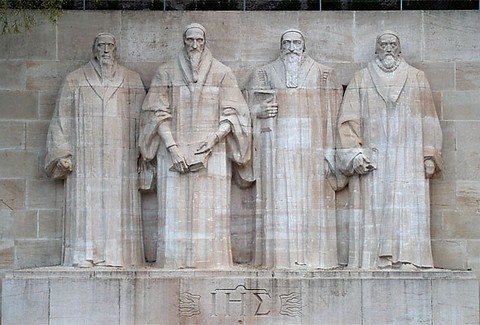
This past Sunday was Reformation Sunday and I am a Calvinist (I use the word Calvinist for simplicity in communicating a range of doctrine - I am not attempting to be technically accurate). Coincidently (odd choice of words in reference to Calvinism - oops, and now I said choice ... spooky), I had a chat with several friends regarding the Doctrine of Grace. As in the photo above, their view on Reformed Theology and specifically the points regarding salvation were distorted. Without critiquing whether they are right or wrong in their theology, they certainly did not understand what they were arguing against.
Related to that, Trav, a commenter here and a seemingly nice fellow, raised similar concerns. Trav wonders "why a Calvinist, believing God is in control and elects only a few, would ever have children?" I couldn't answer him in a few short words there nor will I attempt to here.
But all of this reminded me that Geoff asked me a long time ago if I would write a short piece on why I am a Calvinist and that I still haven't met his request. I don't think I will answer that question here but I want to provide some simple reference material (other then Scripture) for those seriously interested in what they are arguing against.
Here's my short story on how I became one. Way back in my college days a friend of mine moved away and fell into Satan's trap - yep, he got connected with a group known as Presbyterians. I know, what's up with that? Anyway, before long he started asking me what this predestination thing was about. I felt up to the task. I honestly thought to myself, "how long could it possibly take to disprove this obscure heresy?"
So with my Thompson Chain in hand (not wanting to be tainted by commentary - and thinking I wouldn't need it), I set off to read the relative Scriptures. It didn't take long before I realized things weren't as clear cut as I previously thought. The week I originally planned turned into months. The more I read the more I found tension in my non-Calvinist position. Eventually I started thinking that the weight of Scripture was toward Calvinism and more interesting, I was finding that it seemed all of Scripture was somehow connected. Passages that I thought would be unrelated either drove me more toward Calvinism or made much more sense to me with a Calvinistic undergirding. It was effecting my general Bible reading - not only when I was trying to study this topic.
Eventually I gave up. I just figured I wasn't smart enough. After college I became close to my pastor and since he was an educated man I asked him about this. He gave me the, "it's like the two parallel rails of a train track" line. That stirred me up. I couldn't see it - these tracks were not parallel - they contradicted each other. The more I thought about it the more I realized that this stuff was effecting my thinking in almost every other area of theology and that to leave it undecided as my pastor had done was not ok.
I'm not sure why but around that same time I got turned on to RC Sproul's books. Specifically, Grace Unknown and Chosen by God. Wow! These books provided a clear framework for the Scriptures I had been wrestling with. Since then I've found many great authors (e.g., Wayne Grudem, John Piper, etc.) who God has used to shed even more light on the topic.
My recommendation to you, if you really want to understand what you are fighting against, is to read these two books by Sproul and then as a good general Bible study, work through Grudem's Systematic Theology.
These may not change your doctrine but at least you might be able to drop the rhetoric so often employed by those less informed. For me, not only was my doctrine changed, but in my heart, my love and awe of God took a giant step in the right direction. I stand in wonder at His great sovereignty and His amazing grace in my life. Who knows, perhaps you will experience the same.
Technorati Tags: Calvinism

Sunday, November 02, 2008
the christian worldview
He who with his whole heart believes in Jesus as the Son of God is thereby committed to much else besides. He is committed to a view of God, to a view of man, to a view of sin, to a view of redemption, to a view of the purpose of God in creation and history, to a view of human destiny, found only in Christianity. ~ James Orr, The Christian View of God and the World
HT:FE
I have many friends committed to what the perceive are right views on a variety of points but they do not stem from a right view of Christ. Or equally wrong, they believe it is possible to have a right view of these other things without having a right view of Christ. Without the latter, all the rest is at best distorted.
HT:FE
I have many friends committed to what the perceive are right views on a variety of points but they do not stem from a right view of Christ. Or equally wrong, they believe it is possible to have a right view of these other things without having a right view of Christ. Without the latter, all the rest is at best distorted.
Friday, October 31, 2008
Thursday, October 30, 2008
how do you see
This video brought to my attention by iggy reminded me of an expression I've used when discussing how we interact with the world.
Do you see people as scenery, machinery, or opportunity?
Do you see people as scenery, machinery, or opportunity?
- Scenery - could those around you just as easily be scenery? Do you even notice them or do they mostly blend in with the background?
- Machinery - could those around you just as easily be a machine? When you got served lunch at the fast food place, was the person around you a person or a machine serving your needs?
- Opportunity - do you see people as individuals that matter to God?
Wednesday, October 29, 2008
Monday, October 27, 2008
wrong righteousness
Before you can ever make a clean and unamended confession of your sin, you have to first begin by confessing your righteousness. It’s not just your sin that separates you from God; your righteousness does as well. Because, when you are convinced you are righteous, you don’t seek the forgiving, rescuing, and restoring mercy that can be found only in Jesus Christ. ~ Paul David Tripp, Whiter Than Snow
HT:FE
HT:FE
Sunday, October 26, 2008
the cross
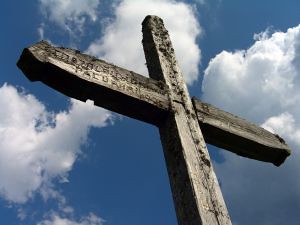 Before we can begin to see the cross as something done for us (leading us to faith and worship), we have to see it as something done by us (leading us to repentance). Indeed, 'only the man who is prepared to own his share in the guilt of the cross', wrote Canon Peter Green, 'may claim his share in its grace.' ~ John Stott, The Cross of Christ
HT:JH
covenants

In the Old Testament there were two kinds of covenants; those of promise (e.g., Gen 15) and those of law (e.g. Exo 24). These varied covenants fit under a simple structure of two overarching covenants, that of Grace and of Works. Therefore these multiple covenants can be viewed as ratifications of continuous overall covenant. That is, those covenants made with Abraham, Isaac, Jacob, and Israel are all part of the covenant of Grace first promised in the garden (Ge 3.15).
This is important to understand so that we do not mistakenly begin to view the Old Testament as essentially the Law and the New Testament as essentially the Gospel. There is one Gospel (Gal 3.8), one plan of Salvation (Eph 1.4-6), and one common faith (Eph 4.4-6).
As Kim Riddlebarger writes;
The individual covenants with Abraham, Moses, and David foreshadowed as part of a larger covenantal structure the new covenant ratified by Christ's blood (Heb 10.11-18). The great redemptive events found throughout the Old Testament are unintelligible apart from this covenantal structure and an emphasis on God's promise of a coming Redeemer, who is also the covenant Mediator.
Adam was the first breaker of the Covenant of Works. He failed in perfect obedience anf received the consequence of such (Gen 2.17). This act of rebellion brought the curse of death upon all humanity. This has never been abrogated and for any of us to now be saved, someone must fulfill all of the terms of the original covenant (Mt 5.48; 1 Pet 1.16). Bad news - all of us are guilty of the same (Hos 6.7). Good news = Jesus Christ completely met all all of the requirements of the Covenant of Works in thought, word, and deed (Rom 5.12-21). And more so, overcoming the penalty of death is demonstrated in His resurrection as the Lord of Life (Rom .25).
future things

Eschatology is about the past, present and future. As Christians we are concerned with all three (Eph 1.3-14).
In very broad terms the biblical sweep is from creation to the new creation by way of redemption, which is, in effect the renewing of creation. yet the end is not merely a return to the beginning ... ~ William Dumbrell, The Search for Order: Biblical Eschatology in Focus
God's creation was good. Man fell into sin and paradise was lost. God however promised redemption which has begun and will ultimately be fulfilled. But that fulfillment will be more than a return to paradise. It will be paradise glorified.
Technorati Tags: eschatology
Wednesday, October 22, 2008
forward hope
From first to last, and not merely in the epilogue, Christianity is eschatology, is hope, forward looking and forward moving, and therefore also revolutionizing and transforming the present. The eschatological is not one element of Christianity, but it is the medium of Christian faith as such, the key in which everything in it is set, the glow that suffuses everything here in the dawn of an expected new day. … Hence eschatology cannot really be only a part of Christian doctrine. Rather, the eschatological outlook is characteristic of all Christian proclamation, of every Christian existence and of the whole Church. There is therefore only one real problem in Christian theology … : the problem of the future. ~ Jürgen Moltmann, Theology of Hope
Technorati Tags: eschatology
Monday, October 20, 2008
receiving sinners
Some folks wonder how I can be a Calvinist and not see the ugly side of this theology. Well I am and I don't.
The Calvinist is the man who has seen God, and who, having seen God in His glory, is filled on the one hand with a sense of his own unworthiness to stand in God's sight as a creature, and much more as a sinner, and on the other hand, with adoring wonder that nevertheless this God is a God who receives sinners. ~ BB Warfield
The Calvinist is the man who has seen God, and who, having seen God in His glory, is filled on the one hand with a sense of his own unworthiness to stand in God's sight as a creature, and much more as a sinner, and on the other hand, with adoring wonder that nevertheless this God is a God who receives sinners. ~ BB Warfield
Technorati Tags: Calvinism
Sunday, October 19, 2008
the fatherhood of god
You sum up the whole of New Testament teaching in a single phrase, if you speak of it as a revelation of the Fatherhood of the holy Creator. In the same way, you sum up the whole of New Testament religion if you describe it as the knowledge of God as one’s holy Father. If you want to judge how well a person understands Christianity, find out how much he makes of the thought of being God’s child, and having God as his Father. If this is not the thought that prompts and controls his worship and prayers and his whole outlook on life, it means that he does not understand Christianity very well at all. For everything that Christ taught, everything that makes the New Testament new, and better than the Old, everything that is distinctively Christian as opposed to merely Jewish, is summed up in the knowledge of the Fatherhood of God. ‘Father’ is the Christian name for God. ~ J.I. Packer, Knowing God
HT:JF
HT:JF
think about god
What comes into our minds when we think about God is the most important thing about us. ~ A.W. Tozer
What do you think about when you think about God?
What do you think about when you think about God?
live for christ
To live for yourself is to rob yourself of your own humanity. It is only in living for Christ that we actually begin to become what we were meant to be. ~ Paul David Tripp, A Quest for More
HT:FE
HT:FE
Friday, October 17, 2008

finally
Finally, this is the kind of politicking I like ...
McCain at the Alfred E. Smith Memorial Dinner part 1
McCain at the Alfred E. Smith Memorial Dinner part 2
Obama at the Alfred E. Smith Memorial Dinner part 1
Obama at the Alfred E. Smith Memorial Dinner part 2
McCain at the Alfred E. Smith Memorial Dinner part 1
McCain at the Alfred E. Smith Memorial Dinner part 2
Obama at the Alfred E. Smith Memorial Dinner part 1
Obama at the Alfred E. Smith Memorial Dinner part 2
Thursday, October 16, 2008
i don't get it
Someone was making the argument that John McCain voted with George Bush 95% of the time and since Bush's approval rating is roughly 29%, McCain must be bad.
That's odd logic to me but that aside, since Barack Obama voted with his party 96% of the time and the Democrat controlled Congress has a 13% approval, does that make Obama worse?
I hardly think so. But then why do people argue like that. As I've contended, too many people are anxious to display their ignorance. Me, I like to try to hide mine.
That's odd logic to me but that aside, since Barack Obama voted with his party 96% of the time and the Democrat controlled Congress has a 13% approval, does that make Obama worse?
I hardly think so. But then why do people argue like that. As I've contended, too many people are anxious to display their ignorance. Me, I like to try to hide mine.
Technorati Tags: politics
facts, what are they?
Tuesday, October 14, 2008
wealthspread
Obama's WealthSpread™: I Can't Believe It's Not Earned!
 While canvassing neighborhoods in Ohio this Sunday, Barack Obama advised a tax-burdened plumber not to worry about money because under his presidency money will disappear since it will no longer have any meaning anyway. Instead, all Americans will be living off Obama's highly nutritive WealthSpread™ formula that is surprisingly low in effort and is being promoted by a group of leading nutritionists known as the Cook Fringe of the Democrat Party under the brand name "I Can't Believe It's Not Earned!"
"Your new tax plan is going to tax me more, isn't it?" the plumber asked, complaining that he was being taxed "more and more for fulfilling the American dream."
"It's not that I want to punish your success," Obama responded. "I just want to make sure that everybody who is behind you, that they've got a chance for success too ... I think when you spread the wealth around, it's good for everybody."
Read the rest ...
And, in a bold move to woo offended female votes ...

While canvassing neighborhoods in Ohio this Sunday, Barack Obama advised a tax-burdened plumber not to worry about money because under his presidency money will disappear since it will no longer have any meaning anyway. Instead, all Americans will be living off Obama's highly nutritive WealthSpread™ formula that is surprisingly low in effort and is being promoted by a group of leading nutritionists known as the Cook Fringe of the Democrat Party under the brand name "I Can't Believe It's Not Earned!""Your new tax plan is going to tax me more, isn't it?" the plumber asked, complaining that he was being taxed "more and more for fulfilling the American dream."
"It's not that I want to punish your success," Obama responded. "I just want to make sure that everybody who is behind you, that they've got a chance for success too ... I think when you spread the wealth around, it's good for everybody."
Read the rest ...
And, in a bold move to woo offended female votes ...
Monday, October 13, 2008
Sunday, October 12, 2008
keller on the gospel
In a comment made here, Darryl Dash pointed me to Tim Keller's excellent post about the Gospel in all its forms. Keller opens with the age old yet accurate adage:
Keller contends that while there must be one Gospel, there are many forms in which that Gospel can be expressed. He uses Simon Gathercole's formula to provide a three-point outline of the Gospel.
1) Jesus was the promised Messianic King and Son of God come to earth as a servant, in human form (Ro 1.3-4; Phil 2.4ff)
2) By his death and resurrection, Jesus atoned for our sin and secured our justification by grace, not by our works (1 Cor 15.3ff)
3) On the cross Jesus broke the dominion of sin and evil over us (Col 2.13-15) and at his return he will complete what he began by the renewal of the entire material creation and the resurrection of our bodies (Ro 8.18ff)
Keller summarizes as follows:
I like how Keller then summarizes how he uses the Gospel.
1. I don't put all the gospel points into any one gospel presentation.
2. I use both a gospel for the "circumcised" and for the "uncircumcised."
3. I use both a "kingdom" and an "eternal life" gospel.
4. I use them all and let each group overhear me preaching to the others.
The gospel has been described as a pool in which a toddler can wade and yet an elephant can swim. It is both simple enough to tell to a child and profound enough for the greatest minds to explore.
Keller contends that while there must be one Gospel, there are many forms in which that Gospel can be expressed. He uses Simon Gathercole's formula to provide a three-point outline of the Gospel.
1) Jesus was the promised Messianic King and Son of God come to earth as a servant, in human form (Ro 1.3-4; Phil 2.4ff)
2) By his death and resurrection, Jesus atoned for our sin and secured our justification by grace, not by our works (1 Cor 15.3ff)
3) On the cross Jesus broke the dominion of sin and evil over us (Col 2.13-15) and at his return he will complete what he began by the renewal of the entire material creation and the resurrection of our bodies (Ro 8.18ff)
Keller summarizes as follows:
Through the person and work of Jesus Christ, God fully accomplishes salvation for us, rescuing us from judgment for sin into fellowship with him, and then restores the creation in which we can enjoy our new life together with him forever.
I like how Keller then summarizes how he uses the Gospel.
1. I don't put all the gospel points into any one gospel presentation.
2. I use both a gospel for the "circumcised" and for the "uncircumcised."
3. I use both a "kingdom" and an "eternal life" gospel.
4. I use them all and let each group overhear me preaching to the others.
no further questions
This settles it. I thought my mind was already made up but this clinches it.

Technorati Tags: politics
Saturday, October 11, 2008
maria ruiz
NSV is one of several partners of a JEM Ministries in Juarez, Mexico. JEM Ministries serves the orphaned and marginalized of Juarez by meeting the spiritual and practical needs of the community.
For the past 7 years we've served in Juarez, and for the last 2, have specifically been building on a 12,000 square foot orphanage/trade school campus for JEM. JEM Ministries is lead by Pastor Jesus Ruiz and his wife, Maria. Maria was awarded CNN's Heroes award for her daily commitment to crossing the border from El Paso to Juarez, MX. And she's now made the final top ten 'Heroes' and has been rewarded $25,000 for their ministry.
But that's not all. If she wins the top 'Hero of the Year' award, which is announced on Thanksgiving night on CNN (9pm EST), she will win an additional $100,000 dollars. The winner is based on who gets the most votes. Go vote now! Please.
Here's their CNN video segment and story.
So again, go VOTE here.
For the past 7 years we've served in Juarez, and for the last 2, have specifically been building on a 12,000 square foot orphanage/trade school campus for JEM. JEM Ministries is lead by Pastor Jesus Ruiz and his wife, Maria. Maria was awarded CNN's Heroes award for her daily commitment to crossing the border from El Paso to Juarez, MX. And she's now made the final top ten 'Heroes' and has been rewarded $25,000 for their ministry.
But that's not all. If she wins the top 'Hero of the Year' award, which is announced on Thanksgiving night on CNN (9pm EST), she will win an additional $100,000 dollars. The winner is based on who gets the most votes. Go vote now! Please.
Here's their CNN video segment and story.
So again, go VOTE here.
Friday, October 10, 2008
Thursday, October 09, 2008
the fear of the lord
I like this, from chapter 2 of Porn-Again, "Wisdom is living your life in congruence with the will of God by walking in grace with him. Wisdom begins with fearing God (Prov. 1:7)."
Mark Driscoll does a great job reminding us of how seriously God takes sin.
In chapter 3, Driscoll outlines;
I'm always amazed when people argue over what is pornography. I never get the intent of that. What is pornographic to me may not be to you. But either way, we both know it and we both work hard to excuse it. Stop.
Mark Driscoll does a great job reminding us of how seriously God takes sin.
In chapter 3, Driscoll outlines;
The Bible is emphatically clear that God’s men should abstain from certain sins that war against their souls. First, God’s men should not commit adultery (Ex. 20:14). Second, God’s men should not covet their neighbor’s wife, even if her clothes leave little to the imagination (Ex. 20:17). Third, God’s men should not participate with prostitutes who use their bodies as a commodity to be rented for a good time or a good photo (Prov. 23:26–27; 1 Cor. 6:15–16). Fourth, God’s men should not be polygamous, because their father Adam and Head Jesus each had one bride (Eve and the Church). Fifth, God’s men should not be fornicators who slide their hands, which God made to lift up in prayer (1 Tim. 2:8), up the shirt of their girlfriend, even if she asks (1 Cor. 6:9–13).
... Practically, ... only you and God truly know your heart and, rather than trying to obey legalistic rules, you must be honest about the lusts in your heart and reduce those triggers that stimulate you.
I'm always amazed when people argue over what is pornography. I never get the intent of that. What is pornographic to me may not be to you. But either way, we both know it and we both work hard to excuse it. Stop.
it's about a person
Christianity’s change process does not revolve around a system of redemption but around a person who redeems. The Bible calls us to focus on Christ our Redeemer - the Word of God made flesh - who gives us the pattern and power for change. Christ is our hope. He links the forgiveness of the past to the growth of the present to the hope of the future. ~ Timothy Lane & Paul David Tripp, from How People Change
HT:TW via PC
HT:TW via PC
Wednesday, October 08, 2008
change
Yes, this video happens to be against democrats but I'm sure there is footage to match of the republicans doing the same.
Bottom-line, if the best you can do is accusation, you should give up. I like Bob Hyatt's words on this.
Bottom-line, if the best you can do is accusation, you should give up. I like Bob Hyatt's words on this.
I think "change" and "hope" and "reform" (even the mavericky kind) start during the campaign, and so far, I'm not seeing much of it.
gospel again
Darryl Dash writes:
In the context of the Gospel of the Cross - he is exactly right!
In the context of the Gospel of the Kingdom, then I would not agree with him as he wrote it. But then I don't think he was making this distinction and I'm sure both he and I would agree that the former is a prerequisite to the latter.
I continue to struggle with several friends trying to get them to understand this. They continuously confuse, even defend, that good works is the Gospel. They say that in spite of it being nearly 100% within their natural means and devoid of any "Gospel of the Cross". I'm befuddled.
Our efforts to promote justice, obey God, and love others are necessary implications of the Gospel, but they are not the Gospel itself. It is wrong to ignore the implications; it is also wrong to confuse the them with the Gospel.
In the context of the Gospel of the Cross - he is exactly right!
In the context of the Gospel of the Kingdom, then I would not agree with him as he wrote it. But then I don't think he was making this distinction and I'm sure both he and I would agree that the former is a prerequisite to the latter.
I continue to struggle with several friends trying to get them to understand this. They continuously confuse, even defend, that good works is the Gospel. They say that in spite of it being nearly 100% within their natural means and devoid of any "Gospel of the Cross". I'm befuddled.
what if ...
John Mark Reynolds reflects on why he is afraid of both US presidential candidates and I have to agree with him. In his post he lists four government actions and his perception of the inevitable outcome. My thoughts are similar. Fundamental, and this is what candidates cannot say, there is nothing they can do. The problem is people. People ranging from greedy politicians, greedy folks in the financial world, greedy consumers trying to live outside their means, etc.. All of us. It's the rich trying to get richer and the poor trying to act unpoor.
Reynolds writes that, "I think some rules and regulations are helpful as sign posts to right behavior . . . but if our leadership class (on Wall Street and Washington) has become corrupt, then what group will we count on to enforce the laws?" He's correct. I'm not sure we need more laws. We need to put some people in jail based on the current laws.
Along those lines, we need to force Congressmen to put there name next to every earmark they propose on a given bill. I think if this data were readily available our job as voters would be much easier by cutting through the rhetoric. Just give me a tally of the bills they proposed and the earmarks they attached to others. I can decide from there.
On that note, as my wife and I watch the candidates speak of how the both warned of the coming crisis, we couldn't help but think that they both just admitted to being ineffectual. The harder folks work to blame others, the worse they look themselves.
Anyway, my mind is made up, one of the candidates is at least on a team that is pretending to point in a general direction that I like while the other is not. Both parties and both candidates have significant issues and I cannot help but wonder why Christians are so vocal on choosing sides and worse getting caught up in attacking the other side. I have many friends that just cannot see the difference. They want to argue for their candidate or accuse the other but for some reason do not want to pick a topic (e.g., abortion, how to run a healthy economy, etc.). And worse, they justify their passion by saying politics are important, as Christians we should ... you can fill it in. Then I wonder why the only time they have this passion is during election time. I wonder ...
Reynolds writes that, "I think some rules and regulations are helpful as sign posts to right behavior . . . but if our leadership class (on Wall Street and Washington) has become corrupt, then what group will we count on to enforce the laws?" He's correct. I'm not sure we need more laws. We need to put some people in jail based on the current laws.
Along those lines, we need to force Congressmen to put there name next to every earmark they propose on a given bill. I think if this data were readily available our job as voters would be much easier by cutting through the rhetoric. Just give me a tally of the bills they proposed and the earmarks they attached to others. I can decide from there.
On that note, as my wife and I watch the candidates speak of how the both warned of the coming crisis, we couldn't help but think that they both just admitted to being ineffectual. The harder folks work to blame others, the worse they look themselves.
Anyway, my mind is made up, one of the candidates is at least on a team that is pretending to point in a general direction that I like while the other is not. Both parties and both candidates have significant issues and I cannot help but wonder why Christians are so vocal on choosing sides and worse getting caught up in attacking the other side. I have many friends that just cannot see the difference. They want to argue for their candidate or accuse the other but for some reason do not want to pick a topic (e.g., abortion, how to run a healthy economy, etc.). And worse, they justify their passion by saying politics are important, as Christians we should ... you can fill it in. Then I wonder why the only time they have this passion is during election time. I wonder ...
Technorati Tags: politics
just the facts jack
Ok - another debate has gone by and we know less ...
Some of the lowlights from FactCheck.org ...
Some of the lowlights from FactCheck.org ...
- McCain proposed to write down the amount owed by over-mortgaged homeowners and claimed the idea as his own: “It’s my proposal, it's not Sen. Obama's proposal, it's not President Bush's proposal.” But the idea isn’t new. Obama had endorsed something similar two weeks earlier, and authority for the treasury secretary to grant such relief was included in the recently passed $700 billion financial rescue package.
- Both candidates oversimplified the causes of the financial crisis. McCain blamed it on Democrats who resisted tighter regulation of federal mortgage agencies. Obama blamed it on financial deregulation backed by Republicans. We find both are right, with plenty of blame left over for others, from home buyers to the chairman of the Federal Reserve.
- Obama said his health care plan would lower insurance premiums by up to $2,500 a year. Experts we’ve consulted see little evidence such savings would materialize.
- McCain misstated his own health care plan, saying he’d give a $5,000 tax credit to “every American” His plan actually would provide only $2,500 per individual, or $5,000 for couples and families. He also misstated Obama’s health care plan, claiming it would levy fines on “small businesses” that fail to provide health insurance. Actually, Obama’s plan exempts “small businesses.”
- McCain lamented that the U.S. was forced to “withdraw in humiliation” from Somalia in 1994, but he failed to note that he once proposed to cut off funding for troops to force a faster withdrawal.
- Obama said, “I favor nuclear power.” That’s a stronger statement than we've heard him make before. As recently as last December, he said, “I am not a nuclear energy proponent.”
- McCain claimed “1.3 million people in America make their living off eBay.” Actually, only 724,000 persons in the U.S. have income from eBay, and only some of them rely on it as their primary source.
Technorati Tags: politics
for geoff
Since my friend Geoff bit on the joke about the physical appearance of some of US political players, I just had to toss this one in ...
"What's the difference between Sarah Palin and Barack Obama?"
"One is a well turned-out, good-looking, and let's be honest, pretty sexy piece of eye-candy.
"The other kills her own food."
"What's the difference between Sarah Palin and Barack Obama?"
"One is a well turned-out, good-looking, and let's be honest, pretty sexy piece of eye-candy.
"The other kills her own food."
Tuesday, October 07, 2008
virus alert!
If you get an e-mail with "Nude Photos of Sarah Palin" in the subject line, do not open it. It might contain a virus.
If you get an e-mail with "Nude Photos of Hillary Clinton," do not open it. It might contain nude photos of Hillary Clinton.
If you get an e-mail with "Nude Photos of Hillary Clinton," do not open it. It might contain nude photos of Hillary Clinton.
prophesy and politics
Dan Edelen has this to say:
When Christians repent of their sins and distractions (including political distractions), when they humble themselves and cast off their mistaken notions of power, when they pray to stay true to the focus of the only genuine Kingdom, then God will heal their land through their sharing of the Good News with the lost and the making of disciples. When Christians live out the high calling of the Gospel before earthly kingdoms and shame those unworthy imitations with their service to the only True Kingdom, then God will heal their land.
But when Christians look to earthly kingdoms, when Christians take their focus off the Lord and put their faith in power systems rooted in sin and compromise, they will wind up off course, off message, off purpose, and ultimately disappointed. God does not heal the land through man’s elections but through Christians living out their allegiance to Christ’s unearthly Kingdom by concentrating on making disciples and serving the least of these no matter what government is in power.
Sunday, October 05, 2008
Friday, October 03, 2008
toilet water
Jer 2:13 - God people tend to satisfy their thirst not by drinking from his streams of living water, but instead drinking from man-made toilets. From the first chapter of Mark Driscoll's Porn-Again. He continues, "the church alone has access to the living water from God’s perfect Word, but largely fails to teach men masculinity in any area, particularly regarding their sexuality." The chapter ends with this summary:
In our age of lewdness and perversion we, like our Father, must avoid crassness, while wisely and boldly speaking frankly about the joy and beauty of sexual intimacy when it is confined by the loving directions of the God who created both us and our desires. And, we must refuse to speak in sanitized clinical euphemisms like calling adulteries “affairs,” fornication “dating,” and perverts “partners” because God uses frank words for deplorable sin so we will feel its sickness without anesthesia.
fact checking
FactCheck.org's summary on the VP debate is in ...
- Palin mistakenly claimed that troop levels in Iraq had returned to “pre-surge” levels. Levels are gradually coming down but current plans would have levels higher than pre-surge numbers through early next year, at least.
- Biden incorrectly said “John McCain voted the exact same way” as Obama on a controversial troop funding bill. The two were actually on opposite sides.
- Palin repeated a false claim that Obama once voted in favor of higher taxes on “families” making as little as $42,000 a year. He did not. The budget bill in question called for an increase only on singles making that amount, but a family of four would not have been affected unless they made at least $90,000 a year.
- Biden wrongly claimed that McCain “voted the exact same way” as Obama on the budget bill that contained an increase on singles making as little as $42,000 a year. McCain voted against it. Biden was referring to an amendment that didn't address taxes at that income level.
- Palin claimed McCain’s health care plan would be “budget neutral,” costing the government nothing. Independent budget experts estimate McCain's plan would cost tens of billions each year, though details are too fuzzy to allow for exact estimates.
- Biden wrongly claimed that McCain had said "he wouldn't even sit down" with the president of Spain. Actually, McCain didn't reject a meeting, but simply refused to commit himself one way or the other during an interview.
- Palin wrongly claimed that “millions of small businesses” would see tax increases under Obama’s tax proposals. At most, several hundred thousand business owners would see increases.
Technorati Tags: politics
Thursday, October 02, 2008

economic crisis
FactCheck.org says everyone is to blame for the current economic crisis. I'm not ok with that so I'm officially blaming Randy Noblog.
doubt again
Simply put: defeat doubt by immersing your mind in the Word of God. This is the ordained means by which the Spirit will indelibly imprint on your heart the joyful and undeniable assurance that what God has said, God will do.
Paul said much the same thing when he prayed that the Romans might ‘abound in hope’ Romans 15:13b). But abundant hope or full assurance only comes ‘in believing’ (Romans 15:13a) or in connection with and as a result of our faith in what God has made known. Sin-killing, Satan-silencing confidence doesn’t fall from heaven like manna, nor do we serendipitously bump into it as we skip blissfully and ignorantly down the yellow brick road to a heavenly Oz. The Spirit imparts hope and confidence and assurance by means of and only in connection with our growth in the knowledge and understanding of God in his Word. ~ Sam Storms, The Hope of Glory
HT:PC
Paul said much the same thing when he prayed that the Romans might ‘abound in hope’ Romans 15:13b). But abundant hope or full assurance only comes ‘in believing’ (Romans 15:13a) or in connection with and as a result of our faith in what God has made known. Sin-killing, Satan-silencing confidence doesn’t fall from heaven like manna, nor do we serendipitously bump into it as we skip blissfully and ignorantly down the yellow brick road to a heavenly Oz. The Spirit imparts hope and confidence and assurance by means of and only in connection with our growth in the knowledge and understanding of God in his Word. ~ Sam Storms, The Hope of Glory
HT:PC

Wednesday, October 01, 2008
moralism
L.B. Graham states the following in regard to Christian writing and specifically fiction but I've edited because I think it applies to the whole of Christian living.
Christianity is not about moralism ... Christianity revolves, not around good behavior, but around God’s mercy shown to man in the death and resurrection of Christ. However, even though we know this to be theologically true, I think we struggle to remember this as we go about our daily lives ...
doubt
When the Christian trusts, he is happy; when he doubts, he is miserable. When the believer looks to his Master and relies upon him, he can sing; when he doubts his Master, he can only groan. What miserable wretches the most faithful Christians are when they once begin doubting and fearing! It is a trade I never like to meddle with, because it never pays the expenses, and never brings in any profit —the trade of doubting. ~ Charles Spurgeon, Fear Not
HT:JH
HT:JH
Subscribe to:
Posts (Atom)