Tuesday, October 22, 2013

act your part well

From Brett & Kate McKay - What E'er Thou Art, Act Well Thy Part:


actwell
Over the door of a building that sits close to the Stirling Castle in southern Scotland, hangs a curious stone designed by John Allan, a 19th century architect known for his peculiar designs, as well as including inscriptions in his work.
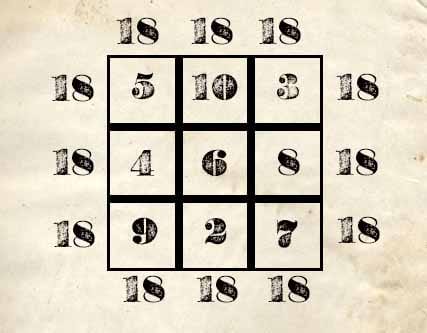
At the top of this particular piece, Allan had carved a quote typically attributed to Shakespeare: “What e’er thou art, act well thy part.” Below the quotation sits a grid of nine squares, each bearing different symbols and shapes.
square
The design forms what is called a “magic square.” Each of the symbols represents a numerical value, and no matter which way you add the numbers up, they always total 18. If any of the numbers are moved or replaced with another, the tiles will no longer add up to 18, and the square will lose its “magic.” Each symbol has an irreplaceable part to play in contributing to the whole.
I have a replica of the Stirling stone sitting in my office. It reminds me that whatever part I have to play in my family, community, or work — whether it’s a big role or a seemingly minor one — it’s up to me to carry out my responsibilities the very best I can. The Stirling stone also reminds me that true happiness and fulfillment in life comes not from being recognized, but from beinguseful to the world around me.
For any group or culture to function as it was intended and reach its full potential, everyone must pull their own weight, from those doing the “grunt” work to those at the top of the pile. The idea that you should do your best – even in the small and obscure roles of life —  isn’t a particularly sexy principle, but one much needed in our world.

halloween

Interesting ...


Halloween: Trick or Treat? from 10ofthose.com on Vimeo.

worship

Sam Storms discusses worship in the context of the cessationist/continuationist discussion.

What both groups share in common is their conviction that worship must be theocentric: it is concerned with glorifying God. Where they differ is on the ways and means. Cessationists believe God is most glorified when biblical truths about him are accurately and passionately proclaimed in song, liturgy, and recitation of Scripture. The focus of worship is to understand God and to represent him faithfully in corporate declaration. Worship is thus primarily didactic and theological and their greatest fear is emotionalism.

Charismatics or Continuationists, on the other hand, believe God is most glorified not only when he is accurately portrayed in song but when he is experienced in personal encounter. Charismatic worship does not downplay understanding God but insists that he is truly honored when he is enjoyed. Worship is thus not only theological but also emotional and relational in nature and their greatest fear is intellectualism.

Admittedly this is perhaps a bit too tidy. Cessationists would no doubt agree that God is to be enjoyed, but they see this as primarily a cognitive experience. Charismatics contend for a more holistic enjoyment. God is not merely to be grasped with the mind but felt in the depths of one’s soul. The mind is expanded but the affections are also stirred (and the body may well move!).

Perhaps the best way to illustrate this difference is the way both groups think of God’s presence in times of corporate praise. Think of it this way. When you gather in corporate assembly with God’s people, whether on a Sunday morning or in a small group during the week, what are your expectations with regard to God? Do you view God’s presence as a theological doctrine to be extolled and explained or do you think of it as a tangible reality to be felt. Those hymns that are more traditional in their focus stress divine transcendence. God is “out there,” beyond us, above us, and we sing about him. The songs you hear in a more charismatic setting stress divine immanence. God is “down here,” very near us, close to us, and we sing to him.

Sunday, October 20, 2013

homosexual, libertarian, christian

The following is a well thought out post by Mark W. Gaither:

Here is a response that my (C. Michael Patton) friend Mark Gaither, Th.M., Dallas Theological Seminary and author of Redemptive Divorce, wrote to my post on Homosexual Marriage. It is very well thought out and provides a helpful perspective that, while we may disagree, is important.

With great respect to my friend and colleague, Michael Patton—and I mean that sincerely—I take issue with his article, “Changing our Thinking about Same-Sex Marriage.”

First, I find the starting premise flawed. The thesis states: “The government should NOT make homosexual marriage illegal.” The word “illegal” makes the premise factually incorrect. To make something illegal is to prohibit certain actions or behaviors. The various “Defense of Marriage” propositions do not make homosexual marriage illegal (assigning punishments to people claiming same-sex unions); these proposals seek to define marriage a certain way so as to determine how to apply privileges and protections to people based on marital status. That is a crucial distinction.

His article also proposed that “the government should stay out of the marriage business all-together.” The line of argument then proceeds from there, the core of which really turns on this question:Should Christians in America become libertarian? The issue of same-sex marriage turns out to be a good test case for this question, prompting us to reconsider the role of government in marriage and, as he suggests, all other theological matters. Consider the following line of reasoning based on what I consider a better starting premise.

In the United States, our laws reflect the collective theology of citizens on any given issue. The definition of marriage by the government does not presume to determine theology; it is the other way around in a participatory government such as ours. “The government” is us, “we the people.” The U.S. Constitution does not erect a wall of separation between church and state; Jefferson overstates its political-social impact. Our founding document establishes an officially secular government with these intended benefits: every philosophical persuasion is given a voice in government and religious institutions are protected from official government intrusion. Our democratic-republican form of legislature then permits—indeed expects!—government to reflect the collective values of its citizens, who may or may not hold religious values.

As it relates to the issue of marriage . . .

The “definition of marriage” in the legal sense merely identifies who shall be subject to our laws concerning marriage. Our government recognizes and honors the institution of marriage with certain privileges and burdens because “we the people” wanted it that way. The government deemed certain unions “valid” based on criteria stipulated by its citizens, who were informed and influenced by the Bible—at least in days gone by.

It is true that our government is officially secular. Rather than choose a particular moral code on which to base its laws, the U.S. Constitution frames a system whereby the legal code reflects the values of U.S. citizens. Put simply, if the preponderance of citizens believe stealing is good, then robbery will be legalized. (That’s obviously hyperbole, but you get the point.) Historically, our laws concerning marriage reflected a Judeo-Christian code of ethics. This is undeniable, regardless of whether the Founders were evangelical Christian or deist or atheist in their personal beliefs. (Even atheists today draw their personalized moral systems from their Judeo-Christian forebears, whether they realize it or not.) Today, however, with more people drifting away from the biblical view of homosexuality as sin, an ethic of equality has begun to take precedence.

The question then becomes, What is our role as Christians in all of this? A more libertarian stance would be to offer the following compromise: remove the issue of marriage from politics and government altogether; recognize no civil union, whether traditional or homosexual. Should we take a more libertarian stance or pursue an even more active role in shaping our government to reflect our values?

Jesus left His followers on earth not merely to preach the good news and make disciples. We have a duty to the biblical definition of divine justice, we have a responsibility as heavenly envoys to transform our world until every human institution in every corner of the earth reflects the values of God’s kingdom. We must pursue this through our own personal interactions and en masse through churches and para-church organizations using any suitable means available. Fortunately, our participatory government gives us a divinely orchestrated opportunity to do just that in the United States.

I have considered the libertarian compromise myself because I, like many Christians, would prefer to keep theological debates out of the courts and in the public square. Unfortunately, the libertarian ideal, which seeks a minimalist government, is a good idea that will never gain traction. Unless everyone agrees to minimalist government, no one can reasonably expect it. Too many other factions want a bigger, more active government. In the debate over the legal definition of marriage, we can withdraw our theological argument, but our opposition will not. And, frankly, I’m not ready to cede the argument because I have a duty, as a Christian and as a voice in participatory government, to have God’s view of marriage prevail.

The non-viability of the libertarian ideal notwithstanding, I still considered the proposed compromise myself. Stated again, it is to remove the issue of marriage from politics and government altogether, to recognize no civil union, whether traditional or homosexual.

That appears reasonable until you begin to consider all the implications. The traditional view of marriage as the union of a man and woman—in the eyes of all religions, not only Christianity—is woven into the fabric of every human institution and government in the world. Now, homosexuals want to co-opt the institution of marriage—a religious invention older than recorded history—yet without accepting the entanglements of religious devotion. To save all religions from having to rewrite their ancient texts or forsake their sacred traditions and grant homosexuals their face-value demand for equal status under the law, we must scrub our legal code of any privileges or considerations for married couples. Individual taxes for all, no community property except by contract, no marital consideration in probate, etc., etc., etc., so that all people are treated as individuals, regardless of who plays house with whom. That would be like unweaving a sweater to remove a particular color yarn only to re-knit it anew. Possible, I suppose, but quite a task.

In the end, however, I think this compromise will not help matters. As it stands right now, homosexuals can cohabit with no governmental intrusion. They can call themselves anything they want without governmental sanction or prohibition. Most of what they seek in terms of privileges can be obtained through legal instruments, such as living wills, medical power-of-attorney documents, trusts, etc. So, let us not think the debate is merely about civil equality. Homosexuals crave, more than anything, legitimacy. Not merely tolerance. And gay rights activists won’t be happy until everyone in America calls homosexuality “good” and “natural.”

Michael’s article asked, “If the government eventually ‘legalizes’ all gay marriage, so what?” This libertarian-style retreat merely cedes ground to our opposition in the sincere hope that it will stop there. Make no mistake, the agenda won’t end with marriage laws. Homosexual activists have patterned their movement after the black civil rights movement, seeking the same protections and provisions of the law as it relates to race. Holding the theological position that homosexuality is a sin will become no less a crime than declining to hire someone based on color. The social groundwork has been laid. The Supreme Court has fallen. Capitol Hill next. Hobby Lobby is fighting for its life. Soon our churches. Homosexuals will not be satisfied until they receive complete sanction for their lifestyle choice or all opposition has been stamped out, leaving no one to call it sin.

I would rather not compromise until defeated. I think an America that adheres to and honors divine truth is a stronger, better nation. Our Constitution provides a God-ordained opportunity to have the kind of influence Christians could only dream of having in centuries past, a privilege they most certainly would have exercised. As it happens, we have a practical means of shaping our country to be more godly rather than less. Consequently, I cannot be libertarian. I cannot compromise.

take the best and go

Tri Robinson wrote the wonderful reminder some time ago but I am just now catching up on my reading ... timely.

A Bounded Set

In 1991 John Wimber stood before the Vineyard leaders at a national pastors’ conference in Yorba Linda and projected a bell-shaped curve on the large screens above him. He told us that historically every Christian movement lasts only about 20 years before losing its life and effectiveness. Previously he had spoken to us about a concept he referred to as a centered set, fuzzy set and bounded set. He learned this concept from Paul Hiebert, a colleague from Fuller Seminary. John explained that movements birthed by the Holy Spirit always begin very simply. They are not birthed out of a refined and defined theology or pre-established methodologies and practices, but rather from a fresh revelation of Jesus and His Kingdom. Most often they are conceived out of a recognizable move of the Holy Spirit. He explained that over time leaders are raised up who find themselves living in the midst of a pioneer experience where there is little structure and much chaos. The problem with authentic moves of God is that they attract many people—and people bring their own agendas to the experience often causing strife and confusion. This threatens to derail what God is doing and thus requires the leadership to bring greater definition and even policy to control the direction of the movement. Many of these imposed rules are responsibly based on Scripture but also require human interpretation. As a result, this refines orthodoxy, which can be clarified and thus used as a means of correction. Every time this process takes place, polity is established and, in a sense, a little bit of freedom is exchanged for the ability to maintain order. (See Vineyard documents – Vineyard Refections – in tabs at the top of this page.)


When a movement of God begins, it is a centered set event with few restrictions in place allowing all kinds of people to join in. The centered set phase is an exciting time, generally led by charismatic vision and the exhilaration of life-changing ministry that is fresh and constantly spawning new life. It draws in the churched and unchurched alike. There is salvation of new believers and rededication of faith by those disillusioned or disappointed by past negative church experiences. This life-giving time with all the exuberance of craziness soon leads to an increase of policy and measures of control which closes in the center that once drew people together. Slowly but surely the centered set movement evolves into what Hiebert referred to as a “fuzzy set.” This process happens one decision at a time, each time adding one dot of confinement until the dots become so numerous that they begin to close off the very life that started the movement in the first place. The restricted flow of new life is much like a clogged artery that finally ends in a heart attack stopping life altogether. This is what Hiebert called the “bounded set” and what ultimately causes the death of what was once a dynamic move of God. John warned us that historically many authentic moves of God gravitate into over structured institutions that are dead for years before they are even aware of it.

As gloomy as this lecture seemed to me when John first presented it, I soon realized his message wasn’t just a message of warning, but one of hope. That’s when he added a second bell-shaped curve that swung upward again from the descending side of the first one. It was then that he exhorted us to “take the best and go.” Knowing that he might not be around when this event was to happen, John challenged us as leaders to be honestly aware of where we were on the curve and make a decision to start over, taking the best of who we were and leaving the worst behind. I’ll never forget sitting there in that large sanctuary along with hundreds of other young developing leaders being shocked as he announced with great passion that when this event occurred he would be the first to go. For me, it was a profound moment and one which I can’t help but revisit at this particular time of my journey.

I’ll be the first to say that I don’t pretend to have all the answers. But I do have a few questions that may well be the elephant in the room many of us are afraid to publicly ask. We might ask, “How do we discern when we are on the descending side of the curve? How do we know when we are becoming a bounded set? How do we know when orthodoxy has become more esteemed than orthopraxy?” No one would deny that sound theology is crucial in keeping a movement doctrinally sound and on track (Word), but when do we spend more time discussing what is right and true than investing our energy in the activities of doin’ the stuff (Spirit)? At what point do we become so defined by our theological and philosophical thought that we push away those who were once so powerfully drawn toward the life we radiated? Recently I was reminded of a prophetic exhortation given to us by Jack Hayford at a past national conference. He warned us about this very issue.

A Jack Hayford’s six minute exhortation to the Vineyard leadership.


Should we see the decline of our church membership as God’s pruning, or consider that it might possibly be the atrophy that comes before death? At what point do we honestly admit our movement is no longer moving? Until we sincerely ask the crucial questions, we have no hope of realizing and understanding our dilemma so that we might “take the best and go.”

The second issue I want to consider is this: What is the “best”? What is it that we should take, both new and old, and what should we leave behind? I can’t speak for others, but in my heart I have felt a sad loss of freedom. Retaining the best requires good administration, and courageous healthy leadership that empowers and releases people to pursue their passions. The best is when local churches enter into functional missional partnerships, working together for common Kingdom causes both nationally and internationally.

Being in the Vineyard as long as I have, I recognize that as a movement we have undergone constant change through our many phases of growth. People have always had conflicting ideas about what the Vineyard really is. I have often said that it’s like the three blind men who tried to describe the elephant based on what they felt and experienced. In the same way those who joined us at different times in our history have defined what they thought to be “authentic Vineyard” by what we were experiencing as a movement at that time. Some saw us as a movement of signs and wonders, some as a prophetic movement, some as a church planting or church growth movement. Still others viewed us as an innovative, evangelistic movement, and in later years a movement of social justice – compassion and mercy. As for me, it’s all Kingdom stuff, and because of it I see it all as being the “best.” In the end, the best is ALL of the Jesus we see in the gospels and as interpreted for the churches by the letters. The real questions are not, in my opinion, about what an authentic Vineyard is by exegeting John Wimber but by returning to the gospels, as John did, and try to emulate all that we see there. It’s about who was Jesus, what did he do, and what did he tell us to do?

I also see the best as being dozens of seasoned, passionate, committed Vineyard leaders who survived all of our ups and downs. Many of these are being used more powerfully outside of the Vineyard family than inside. The best would be our ability to harness this gifting and use it more effectively to train and equip our own emerging leadership. I see numbers of new rising millennial leaders who not only share in our conviction for the Kingdom but understand and have access to their own generation. These gifted young leaders are standing ready to help us reignite the youthful spirit that once birthed us. This is a treasure that must be at the top of our list of the “best” things.

We need a fresh new vision that unites and inspires us to jump on the new curve together, rallying us around these “best” things for a new season of work together. We must define ourselves not by the things we are against, but rather by what we are passionately for. I believe we must revisit the principles of decentralization we once decided upon at the Columbus Accords in hopes of regaining greater freedom and a movement based more on relationship than structure. This would enable younger men and women the opportunity to organically emerge as leaders and energetically help take us up the next rising curve.

John Wimber once said with great passion, “The Vineyard must die!” I can still remember him saying it and at the time not understanding what he meant. Now, as I approach my golden years of leadership I think I do. The Vineyard needs to do the very thing that every Christian must do. We must die to ourselves even to the point of surrendering leadership roles and unnecessary polity, giving our movement back to God once again. We must not define ourselves in such narrow ways that we make leaders who have been among us for years feel marginalized and pushed out. In recent years, many have come to feel they are on the outer edge of our DNA, either for their evangelical conservativeness, their perceived liberal views or their charismatic or Pentecostal practices. We need to learn to get along; understanding that the Body of Christ has many parts and the Vineyard needs every diverse part in order to reach this out-of-control broken world. We need to major on the majors (that is Jesus and His Kingdom) and let the minors take care of themselves.

Many have interpreted the teaching to “take the best and go” as leaving the Vineyard, but why would anyone want to leave the only family they have ever known? I don’t. But if we go, we must all go together, taking with us the best of who we are.

on that wondrous cross


John Stott in The Cross of Christ:

We strongly reject, therefore, every explanation of the death of Christ which does not have at its center the principle of 'satisfaction through substitution,' indeed divine self-satisfaction through divine self-substitution.... The theological words 'satisfaction' and 'substitution' need to be carefully defined and safeguarded, but they cannot in any circumstances be given up.

The biblical gospel of atonement is of God satisfying himself by substituting himself for us.

Saturday, October 19, 2013

farewell john macarthur

Adrian Warnock sums it up ...
Christians have a long history of disagreeing with each other over doctrine. There is nothing new about that. Sometimes that disagreement can get quite heated. So for example, in the time when Wesley and Whitefield were arguing over Calvinism, Charles Wesley wrote a shameful hymn called “The Horrible Decree” which says of Calvinism:
O HORRIBLE DECREE
Worthy of whence it came!
Forgive their hellish blasphemy
And much more besides.
As I concluded my post responding to MacArthur’s first session, such violent disagreements do dishonor to the one who saved us, and who prayed that we might be one.
I was saddened then by the hubris and the grandstanding, and even by the predictable confusion about exactly what happened when Mark Driscoll turned up (in a moment of high emotion its easy for people to get conflicting impressions of what transpired).
Since I reported that MacArthur accused the Charismatic Movement on mass of blasphemy against the Holy Spirit I have been very concerned. That concern has not abated as the conference progressed.
During the confernce the following Tweet appeared on MacArthur’s account, and I replied with an open question to him:

To be clear, the only reason I mentioned “reformed” charismatics in that tweet was because it seemed to me that he had already determined that  the many non-reformed charismatics that I would count as my brothers and friends were not saved.
MacArthur’s closing address contained a few quotes that give an answer of sorts to that question (thanks to Cripplegate for the transcript from which these were taken):
“We have also been accused of being divisive. I would agree with that. Truth by its very nature is divisive. It’s why Jesus said I came to bring a sword, to divide people, families. Truth by its very nature is separated from error. And it is far more important to be divided by the truth than united by error . . .
There are others who criticized by saying, “You’re attacking brothers.” I wish I could affirm that. We’ve said this one way or another this week: this is a movement made up largely of non-Christians .  . .
I’m convinced that the broader charismatic movement has opened the door to more theological error than any other theological aberration in this day. Liberalism, psychology, ecumenism, pragmatism, mysticism, are all bad. Nothing is as bad as Charismaticism because of its extensive impact. And once that kind of experientialism gets a foothold, there’s no brand of heresy that won’t ride it into the church.
Charismatic theology becomes the strange fire of our generation and we have no business flirting with it at any level.”
So, there you have it, I am a part of a movement which, according to MacArthur, is worse than liberalism, and which he said in the first session, has nothing good to offer the church, oh and “most” of us are not even Christians.
To be very clear, I have no problem with other Christians holding to a different posisition on the gifts of the Holy Spirit than I do. I do also recognise, as I have outlined in my Charismatic Spectrum there are many different possible positions. MacArthur seems to have missed all these nuances and simply want to reject all charismatic thinking as heretical.
In particular there is little or no attempt in this conference to separate doctrine and experience. What I mean is, when MacArthur claims a long stream of Christians in church history were theologically cessationist, he is absolutely correct.  Yet, for many of the people he cites, including many of the reformers, (see this talk), the Puritans (see this talk), Spurgeon, and others, despite their views on the supremacy of  Scripture, there was a strong focus on an experience of God.
This experientialism was key to the worldview of the Puritans. An awareness of the power of the risen Jesus at work in us was once seen as vital to the Christian walk by all. MacArthur even warns against books on prayer by E.M. Bounds in one of the Q and A sessions. It is very sad indeed if, as it at least appeared to me from this conference, that strong tradition has also been rejected.   Phil Johnson seems aware of our concern on this point and even quoted me in his second talk, as follows:
“What I want to know about Phil is not whether he speaks in tongues . . . but rather does he have an intimate, experience of the Spirit?” He went on to suggest that cessationism portrays God as “a passive and absent figure who has left us only an intellectual relationship with the Bible.”
But in the rest of his talk he doesn’t address at all the sense some Christians have of a real relationship with God. Perhaps many cessationists do feel they have such a personal relationship, but as Packer has once pointed out today most people dont like talking about such things. Piper speaks openly about “meeting God” in his quiet times, and this would be very similar to countless experiences described by Christians of old. This experiential Christianity from the past is something I outline in part of my own book Raised With Christ which deliberately does not mention charismatic gifts, but strongly advocates this historic stream of knowing Jesus.
What is fascinating also is that there are many examples of respected Christian leaders who would not have had a charismatic theology but who had experiences which we today would call prophecy. So you see for example please do watch clip of Sam Storms describing Spurgeon’s remarkable experiences with this while preaching:

Clearly Spurgeon didn’t really have a category within his theology to explain things like that.
If MacArthur had said something like “Of course God grants certain experiences to people today, and they are even quite important at times, but we need to be more theologically precise about how we describe them,” that would have been one thing, to deny such experiences as demonic is something totally different.
Indeed, it is very possible to argue that between some more moderate cessationists and some more moderate charismatics many of the differences are ones of semantics.  Vern Poythess has argued this case in a couple of papers that are worth reading.  But MacArthur is apparently eager to throw out any chance of such experiences, and even the modern worship songs written by charismatics. To be consistent he would have to reject what is possibly the most popular modern hymn: In Christ Alone.
But to be fair to MacArthur, he does seem to allow two exceptions to the rule that even Reformed Charismatics have nothing good to offer: John Piper and Wayne Grudem.  But it is interesting the way he speaks about them in a Q and A session:
With John Piper, that is a complete anomaly. That is just so off everything else about him. It’s not that he speaks in tongues or prophesies. He admits that. But there’s this anomaly in his mind that’s open to that. He’s always stated it that way. He’s even made statements like, “I don’t know, I’m not sure, I don’t know exactly what to think.” That’s’ a far cry from propagation. Even Wayne Grudem. I look at this as an anomaly [in his theology]. I don’t know and don’t need to know where this impulse comes from. But I do know the great body of work that John Piper has done is true to the faith. John is a friend not only whom I admire but whom I love. I don’t know why on this front he has that open idea, but it’s not an advocacy position for the movement and he would join us in decrying the excesses of that movement for sure, and even the theology of it.
MacArthur doesn’t seem to give any credence to the idea that Piper may think the way he does about the charismatic because he is convinced by biblical arguments. But throughout the Strange Fire Conference there was no real attempt at interacting with charismatic theology, and our actual reasons for believing what we do. So RC Sproul outlined his case for baptism of the Holy Spirit not being a subsequent experience, but didnt address Lloyd-Jones famous comment:
“There is nothing, I am convinced, that so ‘quenches’ the Spirit as the teaching which identifies the baptism of the Holy Ghost with regeneration. . .  Got it all? Well, if you have ‘got it all’, I simply ask in the Name of God, why are you as you are? If you have ‘got it all’, why are you so unlike the Apostles, why are you so unlike the New Testament Christians?” READ MORE
Perhaps the closest to actually engaging us was Tom Pennington’s talk, The case for cessastionsim, but even there little of what we actually think was addressed as my friend Andrew Wilson has ably pointed out.
As another example of a failure to engage with other perspectives, several times during the event the blatantly unbiblical claim that prophecies and other gifts were only ever given to authenticate Scripture-writers was made. As I outlined in a post before the conference began, it is patently clear that much prophecy discussed in the Bible had nothing to do with creating Scripture.
Instead of engaging theologically with our views, they either outlined their own, or as is in both the talks by Conrad Mbewe went into detail of the many horrid things that some in the charismatic movement do. Some sessions were spent watching video clips and simply mocking the extremes which are then used as a stick to beat us all over the head with.
To be honest, watching Phil Johnson’s first talk did make me ask myself: do I speak out about charismatic abuses often enough? Its not that I don’t recognise the problem. For example, I could easily speak volumes about the horror I felt when I watched the broadcast of God TV rehabilitating Todd Bentley and justifying restarting screening his bizarre meetings. Once I start down that route, though, where do I stop? As I said, in a tweet do I really have the time?

For that matter, surely spending my focus on highlighting the good things is a better use of my time? If people are taught to recognise real money by studying it, when fake currency turns up they will identify it in an instant.  I am surprised how much time some of these folks seems to spend hunting out increasingly bizzare YouTube videos. Surely building and declaring a true model of the Christian life is a better use of our time?
Some of what MacArthur said during this event was patantly and blatantly untrue. For example he claimed that charismatics are not engaged in social action:
People who have any connection to Judaism and Christianity have a connection to philanthropy. It is a striking anomaly, however, that there is essentially zero social benefit to the world from the charismatic movement. Where’s the charismatic hospital? Social services? Poverty relief? This is a scam. SOURCE
Has he never heard of YWAM’s Mercy Ministries, of Rick Warren’s PEACE campaign?  The list goes on and on. It is simply an untruth to claim that charismatics don’t care for the worlds poor.
I’d like to end with a video which demonstrates that it is possible for us to talk about issues that we disagree strongly about without rejecting one another as brothers and sisters in Christ. Thanks to Justin Taylor for posting this earlier this week.

gospel transformation bible

Some great quotes from the ESV Gospel Transformation Bible:

From the introduction —

Since God’s love for us is the soil in which love for God grows, identifying his grace in all the Scriptures is not simply an interpretive scheme. It is supremely practical. For regular exaltation of the gospel is what ignites love for God in the hearts of believers. We identify the grace pervading Scripture in order to fan into flame our zeal for the Savior. Our goal is not merely good interpretation but stimulation of a profound love for God that bears holy fruit, as pleasing the One we love above all brings our most profound and compelling joy.

From the note on Genesis 17:15–18:15 —

Nothing is too hard for God. Indeed, he has already done the hardest thing, in becoming one of us and dying for us (Rom. 5:9–10; 8:32); shall he fail to care for us in a thousand lesser ways?

From the note on Exodus 6:1–9 —

It is God’s covenant that sustains us when our sin and our circumstances threaten to overwhelm us. Have we taken our hearts to God’s covenant promises in the midst of our struggle with sin? If we have been united to Christ, his work of grace in our life is assured (redemption). Christ has secured the eternal love of the heavenly Father for us (relationship). We will be brought to heaven, in spite of all our sin and failure (rest).

From the note on Numbers 35:25 —

The high priest’s last act of atonement was his own death, bearing the bloodguilt of accidental manslaughter away so that the one who killed without intent was finally freed to leave the city of refuge and return home. This law is significant inasmuch as Moses’ death appears to reflect something of this pattern in Deuteronomy: God’s people cannot enter the Promised Land until after he dies (Deut. 3:25–28; 34:1–5). Even more meaningful for us, Jesus Christ the Mediator and High Priest of the new covenant ushers us into the heavenly presence of God, ultimately in the new creation, through his atoning death on the cross (Heb. 10:19–22). Every moment of our lives in the land of glory will be but the fruit of the shed blood of Christ’s death on our behalf, and so will be lived in praise of him (Rev. 5:11–14; 21:27).

From the note on Ecclesiastes 1:14 —

Ecclesiastes was written to depress us into dependence on our joyous God and his blessed will for our lives.

From the note on Ecclesiastes 2:24–26a —

If we neglect God in our pursuit of joy, everything good in life — e.g., health, possessions, sensual pleasures — slips through our grasp or fails to satisfy. But if we see that what we have is God’s provision and give “thanks to God the Father” — ultimately through Christ (Col. 3:17) — for all his gifts, then whatever we receive from him is seen as a gift that brings true joy — joy in God.

From the note on Proverbs 15:15 —

Cheerfulness is wise — and surprising. This proverb does not contrast the afflicted with the cheerful of heart. Rather, this cheerful person is an afflicted believer, going through evil days, who nevertheless enjoys a spiritual feast within (cf. Acts 5:40–41; 16:25; 2 Cor. 4:8; 6:10; Heb. 10:34). Joy comes naturally to the wise (Prov. 8:30–31), and joyous vitality grows within us through the fear of the Lord (3:7–8), humble contentment (15:16–17), and frequent exposure to the good news of the gospel (v. 30). The joy of believers’ fellowship is also contagious: “The light of the eyes [of a radiant, glowing believer] rejoices the heart [of someone else]” (v. 30). Ultimately, “Blessed are the people who . . . walk, O Lord, in the light of your face” (Ps. 89:15; cf. John 15:11). With so much pain in this world, we need to know that misery is not ultimate, but that the joy of Christ is ultimate and final and victorious. We can look at the saddest thing that has ever happened — the cross — and see the greater joy beyond it: “[Christ] for the joy that was set before him endured the cross, despising the shame, and is seated at the right hand of the throne of God” (Heb. 12:2).

From the note on Psalm 16:11 —

The God who came to David’s side is the God who came to be “with us” through Christ and who will exalt the Christian to his right hand (v. 11). Here is the doctrine of the two ways. The way of self-trust results in sorrows, blood, abandonment, and corruption. But the way of the gospel provides refuge, good, excellence, delight, pleasantness, beauty, counsel, instruction, stability, gladness, security, fullness of joy, and pleasures forevermore. Peter revealed that in Psalm 16 David was speaking ultimately about Jesus Christ (Acts 2:25–33). The believer’s union with Jesus’ resurrection and exaltation to the right hand of God is the ultimate source of our infallible protection.

From the note on Song of Solomon 5:2–6:3 —

Jesus will ultimately epitomize the self-denial that results in a more perfect union. In humility he “emptied himself” and “humbled himself by becoming obedient to the point of death . . . on a cross” (see Phil. 2:3–8). Your marriage is designed to look like Christ’s crucifixion, where selfless love and selfless submission collide for the sake of another (see Eph. 5:22–33). The result is that both husband and wife can say, “God has given me a lover whose care sings to me the story of our salvation — of God having reconciled selfish sinners through his selfless Son.”

From the note on Mark 3:1–17 —

At the exodus from Egypt, the Lord made a way through the Red Sea; he now makes a way through the Jordan River into Canaan. All of this prepares us for the way he has made through his own Son, who himself walked on the sea as if it were dry land (Mark 6:45–52). The way to ultimate rest in God himself is made for us through Christ’s death and resurrection, as he atones for the sins of fallen humans — we who invariably seek to make our way in life through our own means.

From the note on Mark 16:1–8 —

He who was punished and died on our behalf overcame judgment and death by divine vindication and physical resurrection. Discipleship now takes on a new dimension: Christ, as the living Master, will no longer be challenged by any satanic, human, or physical power (Col. 1:15–17). The follower can be assured of what Paul says: “For I am sure that neither death nor life, . . . nor anything else in all creation, will be able to separate us from the love of God in Christ Jesus our Lord” (Rom. 8:38–39). For Christ has been raised. In him, the final age, the new creation, has dawned. Joy is invincibly washing over this fallen world, for Jesus has been raised.

From the note on John 19:1–16 —

When Pilate labeled Jesus “King of the Jews,” he was saying more than he knew. Jesus was never more sovereign than when he submitted to death on the cross. This is why the refrain “to fulfill the Scripture” runs through the entire crucifixion story (vv. 24, 28, 36). Nothing was left to chance. No enemies — even as they acted according to their own volition — did anything that was unanticipated or outside the purpose of God’s sovereign providence and redemptive plan (Isa. 53:10; Rev. 13:7–8). This was the climax of all of human history. Jesus is not only the main character in this doxological drama of redemptive history; he is its writer, director, and producer.

From the note on 2 Corinthians 4:7–18 —

The Christian life is paradoxical because it is built upon the ultimate paradox, the death of Christ, where perfect divinity and beauty was horribly killed. Through that tragedy, life for sinners blossomed.

From the note on 1 John 1:1–4 —

Christianity is not a vague, abstract set of ideas or an ethical system. It is, above all, the good news of what God has done in our space-and-time history in the real, tangible experience of sending his Son to rescue us from the destruction that our own sins are bringing upon us, apart from him.

From the note on 1 John 3:20 —

We remember the great consolation of 1 John 3:20: when we feel accused and condemned, we can look to Christ and know that all sin is forgiven. God’s sentence of acquittal overrules our heart’s sentence of condemnation. And that is not because God does not see all the facts or has overlooked some of our failures; quite the contrary, ‘he knows everything’ (v. 20) but forgives us anyway! This is profound liberation to haunted consciences.

From the note on Hebrews 9:11–15 —

Christ’s atonement frees us to serve God by cleansing our consciences. All human beings’ consciences (except those hardened beyond feeling) act as internal sin detectors, sometimes “going off” when we do wrong. Only Christ’s atoning death can wash our consciences and liberate us to serve God with the sincerity and zeal that he deserves. His cross work was “a labor of love” (if there ever was one!) that fuels our Christian lives by cleansing our consciences. He freed us to “love [him who] first loved us” (1 John 4:19). This means that by God’s grace set forth in Jesus’ death and resurrection we can now enjoy God, walk with him, and do his will.

From the note on Jude 3–4 —

Grace liberates us not only by forgiving us but also by freeing us from bondage to sin by instilling loyalty to Christ in our hearts. Because he has given himself for us, we give ourselves to him. The gospel transforms our desires from the inside out. We are led into righteousness by discovering that our life and joy are most full as we serve the One we most love.

From the note on Jude 24–25 —

Jude’s concluding doxology is stirring, connecting God’s infinite worth to our “great joy.” The affirmation of Christ’s ability to “keep [us] from stumbling” is an echo of verse 1, which assures us that we are being “kept for Jesus Christ.” There is an inextricable connection between God’s glory and our salvation. Were it not for God, we would be falling from grace every waking second. It is he who keeps us from stumbling; it is he who qualifies us as blameless. So Jude wants to ascribe to God all that he is due: glory (credit), majesty (beauty), dominion (jurisdiction), and authority (power).

From the note on Revelation 5:9–14 —

At the exodus, Israel was redeemed from physical slavery, but Christ has redeemed and ransomed us from the power of sin and death and the just punishment of hell. At the exodus, Israel was redeemed and made a nation, but Christ has redeemed those “from every tribe and language and people and nation” (Rev. 5:9) and, as in 1:6, he has made them “a kingdom and priests to our God” (5:10). Jesus is a king and a priest, and he makes his people, those united to him, who will conquer as he has conquered (cf. 12:11), like himself. The book of Revelation consistently portrays those who enjoy the benefits of the gospel praising the one who made those benefits possible (5:9–14). Because of the way that Christ has laid down his life for others, he is worthy to receive everything (v. 12) from everyone (vv. 11, 13–14). We delight to praise him.

From the note on Revelation 22:6–21 —

Jesus was punished so that we could be delivered. He was forsaken so that we could be befriended. He was cast out so that we could be brought in. All for free. All God asks is that we lay down our insistence on contributing to God’s estimation of our merits and embrace Christ’s record as our own. Nothing is to be added or subtracted from this message of salvation in Christ Jesus our Lord (vv. 18–19).

doing god's will


After my message to the Liberty University student body last week, a perceptive student asked this clarifying question: So you don’t believe that altruistic acts are possible or desirable?

I asked for his definition of altruism so that I could answer what he was really asking. He said, “Doing a good deed for others with no view to any reward.” I answered: that’s right, whether or not it’s possible, I don’t think it’s desirable, because it’s not what the Bible teaches us to do; and it’s not what people experience as genuine love. Because it isn’t genuine love.

When God Is Glorified

I had said in the convocation message: Doing right for right’s sake is atheistic. Christians should do what’s right for God’s sake; because the Bible teaches us to do everything for the glory of God (1 Corinthians 10:31). But God is not glorified if we leave him out of account, and say that doing a right deed is its own justification. Nothing is its own justification, if God is left out.

Christians should do what God says is right because in doing it we enjoy more of God. Jesus was motivating us to be generous to others when he said, “It is more blessed to give than to receive” (Acts 20:35). I’m simply saying that this motivating, promised “blessedness” is not mainly more money, but more God. God delights to reveal more of himself to the generous than to the stingy (John 14:23).

This motive glorifies God. God is glorified when he is desired as a treasure. If we want a deeper fellowship with him because he makes us happier than anyone else, we glorify him. So to be motivated to do right by the desire for more of God glorifies God.

How Jesus Motivates

Jesus said that when we are slandered as Christians we should rejoice (Matthew 5:12) and love our enemies (Matthew 5:44) “for great is your reward in heaven” (Matthew 5:12), and “so that you may be sons of your Father who is in heaven” (Matthew 5:45). The motivation he appeals to is that the path of sacrificial love leads to an increase of joy in our relationship to God as Father.

Jesus motivated us to “invite the poor, the crippled, the lame, the blind” to our feast “because they cannot repay [us].” Then he added: “For you will be repaid at the resurrection of the just” (Luke 14:13–14). In other words: Be generous; make sacrifices in this world; because great is your reward in heaven.

This reward, of course, includes everything in God’s inheritance. You will be an “heir of the world” (Romans 4:13). “All things are yours” (1 Corinthians 3:21). The meek “shall inherit the earth” (Matthew 5:5). Yes, the reward includes earthy things. But in that day there will be no danger of idolatry. The earth and the heavens and all things will declare the glory of God, and the essence of our joy in them will be joy in him. What makes our reward truly great is the greater fullness of our fellowship with God: “in your presence there is fullness of joy; at your right hand are pleasures forevermore” (Psalm 16:11).

This “fullness” and this “forever” are behind the motivation of the early Christians when they did what was right and suffered for it. They visited fellow Christians in prison because they saw this reward: “You had compassion on those in prison, and you joyfully accepted the plundering of your property, since you knew that you yourselves had a better possession and an abiding one” (Hebrews 10:34). They rejoiced in persecution because their reward was great in heaven. That’s where they got the courage to risk their lives: It “had great reward” (Hebrews 10:35).

So I answer again: “Doing a good deed for others with no view to any reward” is unbiblical and atheistic. It dishonors God. He offers more joy in his fellowship to those who do right “for his sake” than “for right’s sake.” If we don’t embrace the offer of this reward in doing good, we belittle him. But if do embrace the offer, we show him as our supremely desired treasure — above all the rewards of doing wrong.

Our Joy in Loving Others

Finally, I said to the student’s good question: Not only does trying to do right for right’s sake dishonor God, it doesn’t show love to others. People don’t experience it as love. But why would they experience the good we do for them as love, if we are seeking our greater joy in God? Aren’t they just being used?

No. It’s because part of the greater joy we seek in God, by doing them good, is the inclusion of them in our joy. Our joy in God would be expanded by their joy in God. We are not using them for our greater joy. We are wooing them into our greater joy, and desiring that they become part of it.

But doing right for right’s sake does not have this effect. Suppose I go to visit Ethel in the hospital, an older lady who just had a heart attack. I lay my hand on her tiny arm and she opens her eyes and says, “O pastor, you didn’t need to come.” Suppose I respond, “I know, but it was my duty to come. It was the right thing to do for its own sake. So I came.” That answer does not make Ethel feel loved.

But suppose I say, “I know, but it always makes me happier in God, Ethel, to bring some encouragement to you, and lift you up into what the Lord has promised.” Ethel would never say, “You are so selfish. All you ever think about is what makes you happy.” She wouldn’t feel this, even though I did say, “It always makes me happier. . .” And the reason she wouldn’t is that my pursuit of more joy in God by doing good to her, and wanting her to be part of it, is what genuine love is.

May God protect us from the atheistic notion of doing right for right’s sake. And may he make us into the kind of strange and wonderful lovers who deny ourselves the “fleeting pleasures of sin,” and “choose to be mistreated with the people of God,” because we “look to the reward” (Hebrews 11:25–26).

god's forgiveness


David F. Wells in The Courage to Be Protestant:

The majesty of God’s forgiveness is lost entirely when we lose what has to be forgiven. What has to be forgiven is not just what we do but who we are, not just our sinning but our sinfulness, not just our choices but what we have chosen in place of God.

When we miss the biblical teaching, we also miss the nature of God’s grace in all its height and depth. In biblical faith it is God’s grace through Christ that does for us what we cannot do for ourselves.

Friday, October 18, 2013

cessationism and strange fire


I'm thankful to Andrew Wilson and folks like him for taking the effort to calmly address the sad state of John MacArthur's theology. Although, MacArthur and team have been intelligently confronted, they continue to try to bully the church into abandoning the wonder of God. Here's Wilson's post:

It’s good to face robust challenges to what you believe, every now and then. The more deeply held a belief is, the harder it is to think it through afresh, and the more possibility there is that you will become hardened in a wrong position. To that extent, I’m grateful for John MacArthur and co for putting on “Strange Fire”, an anti-charismatic conference which is nothing if not robust, even if I remain convinced that the tone in which MacArthur in particular has spoken of hundreds of millions of Christians has not been especially helpful. Wrestling with the content of the sessions has been sharpening and illuminating, although admittedly difficult and painful in places.

In this post I want to respond specifically to one of the more measured messages to emerge from the conference: Tom Pennington’s admirably clear case for cessationism. There are two reasons for this – firstly, it is easier to respond to a logically laid out case than a rhetorical appeal, and secondly, it is the foundation for all the other sessions, since (as I’m sure MacArthur and others would agree) if cessationism is not demonstrably biblical, then many of the criticisms of charismatics in the conference carry less weight. (There may be weight to some of them, of course, because one does not need to be a cessationist to be troubled by much of the contemporary charismatic movement. I am myself, for example, for reasons that will become clear if you read this). An extremely helpful and sympathetic summary of all the messages, including the one I’m quoting from here, can be found at Tim Challies’ excellent website.

Pennington begins by explaining what cessationism is: the belief that the miraculous gifts have ceased, including tongues, prophecy and healing. This is clarifying, because often the discussion involves all sorts of misunderstandings about exactly what different groups affirm and deny. The debate is not about “the gifts”: cessationists believe many of these (teaching, leadership, government, etc) continue. Nor is it about “miracles”: salvation is itself a miracle, for most if not all cessationist thinkers, and God also answers prayer. Rather, it is about “miraculous gifts”: tongues, prophecy and healing, and presumably also the gift of miracles, which Paul distinguishes from the gift of healing in 1 Corinthians 12. That’s what the debate is about.

Pennington then summarises what he believes are the four chief arguments for the continuation of the gifts, and comments on each:

(1) The New Testament doesn’t say they have ceased. But then again, it doesn’t say that they won’t either.

This sounds like a brilliant leveller: since the New Testament doesn’t make explicit statements either for or against the continuation of the gifts, its silence doesn’t suggest anything. This, however, is clearly fallacious. The burden of proof is firmly on the shoulders of the one who would place a break at the end of the New Testament period, for the simple reason that, throughout Scripture, substantial changes in the way God communicates with people – and cessationism posits a substantial change, from “eagerly desire to prophesy” to “none of that here, please” – are clearly communicated. God, we all agree, speaks clearly. If we imagine the Corinthian church in the late first century, still cherishing, copying and publicly reading Paul’s letters to them, it is easy to see that they would have no way of knowing his instructions to them (1 Cor 14:1 is a particularly clear example) no longer applied. Unless the covenant between God and man has since changed (which it hasn’t), and/or there are clear indications that certain instructions no longer apply (which there aren’t), we should assume that New Covenant imperatives apply to New Covenant believers.

(2) 1 Corinthians 13:10 – they say this means that only when Christ returns will the partial gifts of tongues and prophecies cease. This implies that the gifts continue. But this is an uncertain interpretation.

It really isn’t, though. We may not put things as bluntly as Mark Driscoll, who described the cessationist exegesis of this chapter as the second worst he had ever seen next to that of a Canadian nudist arsonist cult he once did some research on, but the charismatic case here is immensely strong (and the overwhelming scholarly consensus in the commentaries would confirm this). For Paul, the imperfect (prophecy, tongues, knowledge) will cease at the arrival of the perfect (the return of Christ, when we shall see him face to face). Not much uncertainty there.

(3) The New Testament speaks only of the church age, and so, they argue, the gifts that began the church age should continue throughout it. They say we artificially divide it between apostolic and post-apostolic eras. But they do this, too, by not believing that the apostolic office still continues.

Actually, a huge number of charismatics don’t believe this at all. Many believe, for reasons outlined in my recent article inJETS, that even in the New Testament period there were eyewitness apostles (the twelve, Paul, James) and people who never witnessed the resurrection but were referred to as apostles anyway (Apollos, very likely Barnabas, Silas, possibly Timothy, and so on), and that while the eyewitness category ceased with Paul, the other category didn’t. But even where that is what charismatics believe, the difference between this and the cessationist position makes the continuationist case brilliantly: the resurrection appearances of Christ are explicitly said to have ended with Paul (1 Cor 15:8), whereas there is no such statement concerning the miraculous gifts, despite the obvious relevance this would have for Christian communities within a few years of the epistles. There is a huge gulf between saying “eyewitnesses of Christ have ceased, because the NT says so” and “all miraculous gifts have ceased, despite the fact that the NT doesn’t say so”.

(4) 500 million professing Christians who claim charismatic experiences can’t all be wrong. But if we accept this, then logically we should accept the miracles attested to by one billion Catholics in the world. The truth is that 500 million + people can be wrong.

This is not really a fair representation of any responsible charismatic argument. Of course billions of people can be wrong: billions of people do not believe the gospel, and virtually no charismatic would contest that. A fairer representation would be to say that, in order to explain the enormous number of miraculous experiences testified to by charismatics (see Craig Keener’s recent book on Miracles for some well-documented examples), a cessationist has to resort to an awful lot of accusations of fraud, deliberate deceit and delusion amongst some extremely level-headed, critical and theologically informed individuals, many of whom used to be cessationists themselves.

Pennington’s list ends with those four, but he omits what is perhaps the most compelling argument for continuationism, which is eschatological. Joel 2, which clearly played a hugely important role in the pneumatology (and Christology, given Romans 10) of the early church, famously speaks of the “last days” as being an era when God would pour out his Spirit on all flesh, and they would prophesy, and see visions, and everyone who calls on the name of the Lord would be saved. For Peter on the day of Pentecost, and for Paul in numerous places, the eschatological, miracle-working, prophecy-bringing Spirit had been poured out, as Joel 2 (alongside Ezekiel 36-37, and Isaiah 32-35, and so on) predicted he would be. So it places unbearable strain on the text of Joel, let alone biblical theology, to suggest, as Liam Thatcher neatly tweeted this morning, that it actually means, “In the last days, I will pour my Spirit on all flesh, and your sons and daughters will prophesy, and your young men will see visions, and your old men will dream dreams – but in the days directly after that, I won’t, and they won’t.” The eschatological age of the Spirit is accompanied by prophecies, signs, wonders and visions; we still live in the eschatological age of the Spirit; so we should expect prophecies, signs, wonders and visions. Like New Testament churches apparently did (Rom 12:3-8; 1 Cor 12-14; Gal 3:3-5; 1 Thess 5:19-21; not to mention pretty much all of the book of Acts).

Pennington then moves on to make a positive case for cessationism:

(1) The unique role of miracles. There were only three primary periods in which God worked miracles through unique men. The first was with Moses; the second was during the ministries of Elijah and Elisha; the third was with Christ and his apostles. The primary purpose of miracles has always been to establish the credibility of one who speaks the word of God—not just any teacher, but those who had been given direct words by God.

Crumbs. The crucial word here, which appears twice and is somewhat mysterious on both occasions, is “primary”. Where in the Bible does it say that the miracles of Moses, Elijah or Elisha are more “primary” than those of Joshua (opening the Jordan and stopping the sun in its tracks isn’t bad), or Samuel (who had the odd prophecy), or David or Solomon, or Isaiah, or Daniel, or for that matter any of the canonical prophets (who, by Pennington’s definition, are exercising miraculous gifts)? And where does it say that the “primary” purpose of a miracle is always to establish the credibility of the one who speaks the word of God? One might have thought the primary purpose of the exodus was to lead Israel out of slavery, and the primary purpose of the fall of Jericho was to defeat God’s enemies, and the primary purpose of the destruction of the Assyrians was to preserve Jerusalem, and so on. And even if the “primary” purpose of all miracles was authenticating a preacher, which cannot be shown, it would by no means indicate that this was the only purpose, and therefore that miracles were unnecessary once that had ended. If an argument this weak was advanced in any other context, I suggest, it would be laughed off the stage.

(2) The end of the gift of apostleship. In two places in the New Testament Paul refers to the apostles as one of the gifts Christ gave his church (1 Corinthians 12:28; Ephesians 4).

See my comments on #3, above. This argument takes us nowhere: all agree that the eyewitness apostles have ceased, and all agree that (say) pastors and teachers have not ceased. Only if we can show that all New Testament miracles, prophecies, tongues and healings came via apostles – which is patently not the case – would this hold any water at all.

(3) The foundational nature of the New Testament apostles and prophets. The New Testament identifies the apostles and prophets as the foundation of the church (Ephesians 2:20-22). In the context, it is clear that Paul is referring here not to Old Testament prophets but to New Testament prophets. Once the apostles and prophets finished their role in laying the foundation of the church, their gifts were completed.

This runs aground on the sandbanks of Romans 12 and 1 Corinthians 12-14 in particular, in which it is assumed that local churches experience prophecy in their meetings, yet without such prophecy serving as foundational for the church for all time, or being written down in the canon. Clearly, there is a foundational role for the apostles and prophets of whom Paul speaks in Ephesians (2:20; 3:6), but this in no way implies either that all prophecy has now ceased, or (obviously) that tongues or healings have now ceased.

(4) The nature of the New Testament miraculous gifts. If the Spirit was still moving as he was in the first century, then you would expect that the gifts would be of the same type. Consider the speaking of tongues. At Pentecost, the languages spoken were already existing, understandable languages. The New Testament gift was speaking in a known language and dialect, not an ecstatic language like you see people speaking in today. Prophecies (which were then infallible) and healings are also different in character today from the NT period.

Again, this hits serious problems when it comes to 1 Corinthians 12-14, which scholars widely agree refers to ecstatic speech rather than known earthly languages, and to prophetic revelation which needs to be weighed or judged, rather than instantly being added to the infallible canon of scripture. To say, further, that healings are different in character is to beg the question: there are numerous testimonies out there (I have heard many personally) of blind eyes seeing, deaf ears opening, the lame walking and even the dead being raised, unless one prejudges the veracity of such testimonies by assuming cessationism (or, of course, naturalism).

(5) The testimony of church history. The practice of apostolic gifts declines even during the lifetimes of the apostles. Even in the written books of the New Testament, the miraculous gifts are mentioned less as the date of their writing gets later. After the New Testament era, we see the miraculous gifts cease. John Chrysostom and Augustine speak of their ceasing.

There are two errors here. The first is that miracles are mentioned less in New Testament books that are written later; the book of Acts is certainly written after the books of 1 Thessalonians and James, and very probably after the other Paulines and Petrines, yet contains far more miracles (and John, among the latest books, has one or two miracles in it as well!) The second is that we see the miraculous gifts cease after the New Testament; again, this begs the question by assuming that subsequent accounts of and responses to miraculous or prophetic activity, from the Didache and the Montanists onwards, are inaccurate or exaggerated (see David Bentley Hart’s scholarly and excellent The Story of Christianity for all sorts of examples). In any case, this sort of argument – that, since something gradually disappeared from the church over the course of the first two or three centuries, it must therefore be invalid – should strike any five sola Protestant as providing several hostages to fortune.

(6) The sufficiency of Scripture. The Spirit speaks only in and through the inspired Word. He doesn’t call and direct his people through subjective messages and modern day bestsellers. His word is external to us and objective.

This is not so much an argument for cessationism as a restatement of it. Suffice it to say that James and Paul, to mention just two apostles, envisage Christians being given wisdom by God, experiencing the Spirit crying out “Abba!” in their hearts, and being given spontaneous revelation during church meetings, none of which conflict with their high view of the scriptures.

(7) The New Testament governed the miraculous gifts. Whenever the New Testament gifts of tongues was to be practiced, there were specific rules that were to be followed. There was to be order and structure, as well as an interpreter. Paul also lays down rules for prophets and prophecy. Tragically most charismatic practice today clearly disregards these commands. The result is not a work of the spirit but of the flesh.

I’m not qualified to comment on whether this is true of “most” charismatics, rather than “some”, but to the extent that this is true, I wholeheartedly agree with Pennington that miraculous gifts need to be governed and practiced wisely, in line with the New Testament. Clearly, however, this is not an argument against using charismatic gifts – it is an argument against using charismatic gifts badly.

This has been a long post, and if you’ve stuck with it this far, well done. I am grateful to Tom Pennington, and Tim Challies, for laying the cessationist case out so clearly and without rancour; although finding the arguments unconvincing, I appreciate the spirit in which they have been communicated here, and the desire for biblical faithfulness that pervades what has been said. As will now be clear, I think that the cessationist position is biblically distorted, theologically confused and historically exaggerated, and that a number of the comments being made about charismatics at Strange Fire have been unrepresentative and unfair, and have failed to engage with the opposing position in its strongest form. Nonetheless, Pennington has done us a service by expressing his position with clarity and grace, and that can only be a good thing as we work towards unity in the global church. I sincerely hope that this response comes across in the same spirit.


(For further reading, I recommend Don Carson’s Showing the Spirit, Wayne Grudem’s The Gift of Prophecy, Gordon Fee’s God’s Empowering Presence, and the commentaries on 1 Corinthians by Fee, Anthony Thiselton, and Roy Ciampa and Brian Rosner.)

reftagger