Sunday, June 28, 2009

universalism

Apparently universalism continues to thrive ... too bad. Or maybe it's not universalism but just an emergent understanding of what it means to "be in Christ" or "a child of God" so that folks can continue to mold God into their own image ... even more too bad.

“Now people still have the free will to choose against that if they want – to OPT OUT if they want – and they do so to their own destruction. But the default setting now is that people are in Christ.” ~ Greg Boyd

With cartoon explanation by Jon Birch. :(

Mjrip1

Here's a quick Scripture reminder of "in Christ". I don't see this as descriptive of the default setting for all.

Technorati Tags:

Saturday, June 27, 2009

the book

“…the churches are to read and reread the book in their assembly so that they may continually be reminded of God’s real, new world, which stands in opposition to the old, fallen system in which they presently live. Such a continual reminder will cause them to realize that their home is not in this old world but in the new world portrayed parabolically in the heavenly visions. Continued reading of the book will encourage genuine saints to realize that what they believe is not strange and odd, but truly normal from God’s perspective. They will not be discouraged by outside worldliness, including what has crept into the churches, which is always making godly standards appear odd and sinful values seem normal. John refers to true unbelievers in the book as ‘earth-dwellers’ because their ultimate home is on this transient earth. They cannot trust in anything except what their eyes see and their physical senses perceive; they are permanently earthbound, trusting only in earthly security, and will perish with this old order at the end of time when the corrupted cosmos finally is judged and passes away. On the other hand, Christians are like pilgrims passing through this world. As such they are to commit themselves to the revelation of God in the new order so as progressively to reflect and imitate his image and increasingly live according to the values of the new world, not being conformed to the fallen system, its idolatrous images, and associated values (cf. Rom. 12:2).” ~ G. K. Beale, The Book of Revelation (NIGTC), p. 175

HT:TR

Thursday, June 25, 2009

confession

Confession, for the believer, restores fellowship rather than relationship. ~ Matt Massey

Confession (1 Jn 1.9) involves three things:

1) examination of the heart

[In confession] we are inviting God to move upon the heart and show us areas that need His forgiving and healing touch. ~ Richard Foster, Celebration of Discipline

2) sorrow

3) determination to avoid sin

Give me one hundred [people] who fear nothing but sin, and desire nothing but God, ... such alone will shake the gates of Hell and establish the kingdom of heaven upon earth. ~ John Wesley

Wednesday, June 17, 2009

finished transgressions

Jesus Christ "finished transgressions" (Dan 9.24) in the sense of breaking sin's power over God's people (Rom 6.1-2, 14), taking away sin's condemnation (Rom 5.12-19; 6.23), and atoning for wickedness (Rom 3.21-26) ... through these acts, Jesus Christ will take away all of the consequences of the curse. ~ Kim Riddlebarger

Technorati Tags:

Tuesday, June 16, 2009

vater, alles ist dein

My friend Marlin singing Vater, Alles Ist Dein.


Technorati Tags:

shedding of blood

Hebrews 9.22, "Indeed, under the law almost everything is purified with blood, and without the shedding of blood there is no forgiveness of sins."

Sunday, June 14, 2009

penal substitution again

I read recently read again where someone thinks they have finally put the nail in the penal substitution coffin, i.e., proving that it is not a Biblical teaching. For the most part, this comes from people with little knowledge of the Bible repeating a disagreement that furthers their ability to form God into their own image. In fact, the most recent example was from someone with a history of sloppy exegesis. The best he could do was to point to a fellow that I already credited as making some good arguments against penal substitution. This second person does a good job of pointing out that not all of the arguments used to support penal substitution are as strong as proponents think. I respect this guy for that. He wasn't all giddy thinking he finally stuck it to the "traditional church". And he certainly didn't seem to be out to re-form god to his liking as others seem bent on doing. This guy did a fine job handling Scripture and frankly caused me to do some thinking. In the end I agreed with many of his disagreements but I did not reach the same conclusion he did. That is, I think there is more penal substitution supporting Scriptures than he can dismiss - and I also didn't see him offering a viable alternative to the matter addressed in the penal substitution doctrine. Therefore, overall, I still have to align with the words of Dr. Greg Bahnsen quoted by Peter Cockrell.

The doctrine of penal substitution could be expunged from the Biblical witness only by a perverse and criminal mistreatment of the sacred text or a tendentious distortion of its meaning. What else could Peter have meant by writing to believers in the church that “Christ suffered for you”? The Greek preposition (”for”) has the sense of “in your behalf” or “for your sake.” Was it simply for the sake of a moral example, so that those who “suffer unjustly” (v. 19) might “follow His steps” (v. 21)? Is that the end of the matter (exemplary suffering) or is that not rather the moral application of the fundamental saving significance of Christ’s suffering?

Saturday, June 13, 2009

Transreligious

I supposed it was inevitable given today's technology ... this just in from TBNN ...

Born in an Armenian Body John Knew Early That He Was a Calvinist

John William Henry was always good-looking. His teeth never needed braces. His hair never thinned. He had a symmetrical jaw, a pleasant smile, white teeth, broad shoulders, and a trim waste. But he had a secret. He sometimes, in secret prayer, acknowledged God as sovereign over all things.

"I really wanted to be a Calvinist so bad, and that was one way for me to satisfy those feelings," Henry said. "But I always felt like someone was looking over my shoulder."

The desire to be a Calvinist never went away. At age 27, Henry confessed those feelings to his pastor and started seeing a Christian phychologist who suggested Henry was Armenian to Calvinist transreligious. Through constructive surgeries, reverse electrolysis, simulated scar technology, smoking lessons, and an unhealthy diet, John the Armenian became known as John the Calvinist.

While still relatively rare, one advocate estimates that 0.25 to 0.5 percent of all Calvinists are considered "handsome" or "pretty". The idea of changing physical appearance to be accepted by Calvinists has become more widespread in recent years.

Many people who have transitioned, including Henry, say they knew they had been born into the wrong body from childhood. As early as age 3, Henry, born into a good-looking Armenian family, didn't understand why his father wanted him to ignore certain passages in the Bible. As an Armenian, Henry learned at least 3 versions of the sinner's prayer, wrote his second birth date in his Bible, created Popsicle stick figures of all 12 disciples, and weekly wrote cards to missionaries. But he secretly enjoyed praying each morning on his knees, reading the Bible, and discussing Bible truths with his grandfather.

"Now I get up every morning and say, 'Wow, I can actually look at myself in the mirror,' because I've never been able to do that in my life, because that handsome figure that would stare back at me was not me," Henry said.

Doctors speculate that there is a biological foundation to religious identity, but no one has determined what in the biological makeup determines that religion.

"For people who want an Armenian to Calvinist change on a biological level, the first step is to spend more time on the spiritual aspects of the body than the physical," says Altus Nethammer, a personal trainer with Bodies4Life.

It is rare for people to undergo an Armenian to Calvinist transreligious change and then want to reverse it, especially when substantial changes have been made to diet and exercise routines, experts say.

Some transreligious individuals do face some quandaries. Some churches do not simply look at physical appearances for membership and require people to voice and demonstrate proof of their theological beliefs before becoming members.

Henry has experienced some dismay from others around him. Henry said his mother took five years to adjust. One of his brothers still doesn't speak to him. "For the longest time, I really felt like I had a mental illness, but I don't feel that way anymore," Henry said.

Technorati Tags: ,

Friday, June 12, 2009

post rapture pet care

If you have a pet and you still believe in a rapture (pre or post trib), then you need to contact these people now, Post Rapture Pet Care.

"No one knows the day or the hour when these things will happen, not even the angels in heaven or the Son himself. Only the Father knows" Matthew 24:36

Do you wonder what is going to happen to your pets when Jesus descends from Heaven to re-unite the Church with the Father taking all Christians - dead and alive - up to Heaven? Will your pets be left behind with no-one to care for them?

Have no fear! We at Post Rapture Pet Care are confirmed atheists and as such will be part of the left behind when the time comes. Just because we are atheists doesn't mean we are not animal lovers. We adore all kind of pets and would love to look after your pets after you are gone.
For a small donation of £69.99 pounds, we will make sure your pets are well fed and taken care of long after you and your family have been taken up.

We have representatives in the South East of England and also in the North East of Scotland so can accommodate for most areas of the country giving you peace of mind where ever you are.

This is not a joke. We feel very strongly about pet care and want to offer the best possible services to British pet owners. Feel free to get in touch at pets@postrapturepetcare.com for more info.

"For the Lord Himself will descend from heaven with a shout, with the voice of an archangel, and with the trumpet of God. And the dead in Christ will rise first. Then we who are alive and remain shall be caught up together with them in the clouds to meet the Lord in the air. And thus we shall always be with the Lord." 1 Thessalonians 4:15–17

Technorati Tags:

Thursday, June 11, 2009

eschatological tension

In The Presence of the Future, George Eldon Ladd writes the following regarding the tension between the signs which precede the coming of the Lord and the sudden nature of His coming.

... its primary purpose an ethical objective: to exhort to watchfulness and readiness for the end. ... Jesus was not interested in depicting eschatological conditions but in preparing men for the day of judgment. This ethical concern conditioned Jesus' proclamation of the time of the eschatological event. This is where the Gospels leave us ... Logically, for many, this appears contradictory, but it is a tension with an ethical purpose --to make date-setting impossible and therefore to demand constant readiness.

In regard to the signs of these end times, Kim Riddlebarger adds, "the tribulation the church will face throughout this present evil age are not signs of God's indifference or impotence in coming to their aid. These signs guarantee that Jesus Christ is coming to end this present age. The despair of humanity and the tumult of the earth cry out together for the redemption of all creation. The groaning of the earth tells us that all is not right and that God must intervene to undo the consequences of human sinfulness."

Technorati Tags:

Wednesday, June 10, 2009

jesus

Last week Ray Ortlund reminded us that it is Jesus, Jesus, Jesus (Mt 11.28). Now Kevin DeYoung reminds us just who this Jesus is. The following is his post.

The greatness of God is most clearly displayed in his Son. And the glory of the gospel is only made evident in his Son. That’s why Jesus’ question to his disciples is so important: “Who do you say that I am?”

The question is doubly crucial in our day because not every Jesus is the real Jesus. Almost no one is as popular in this country as Jesus. Hardly anyone would dare to say a bad word about him. Just look at what a super-fly friendly dude he is over there. But how many people know the real Jesus?
  • There’s the Republican Jesus who is against tax increases and activists judges, for family values and owning firearms.
  • There’s Democrat Jesus who is against Wall Street and Wal-Mart, for reducing our carbon footprint and printing money.
  • There’s Therapist Jesus who helps us cope with life’s problems, heals our past, tells us how valuable we are and not to be so hard on ourselves.
  • There’s Starbucks Jesus who drinks fair trade coffee, loves spiritual conversations, drives a hybrid and goes to film festivals.
  • There’s Open-minded Jesus who loves everyone all the time no matter what, except for people who are not as open-minded as you.
  • There’s Touchdown Jesus who helps athletes fun faster and jump higher than non-Christians and determines the outcomes of Super Bowls.
  • There’s Martyr Jesus, a good man who died a cruel death so we can feel sorry for him.
  • There’s Gentle Jesus who was meek and mild, with high cheek bones, flowing hair, and walks around barefoot, wearing a sash and looks very German.
  • There’s Hippie Jesus who teaches everyone to give peace a chance, imagine a world without religion, and helps us remember all you need is love.
  • There’s Yuppie Jesus who encourages us to reach our full potential, reach for the stars, and buy a boat.
  • There’s Spirituality Jesus who hates religion, churches, pastors, priests, and doctrine; and would rather have people out in nature, finding the god within and listening to ambiguously spiritual musical.
  • There’s Platitude Jesus, good for Christmas specials, greeting cards, and bad sermons; he inspires people to believe in themselves, and lifts us up so we can walk on mountains.
  • There’s Revolutionary Jesus who teaches us to rebel against the status quo, stick it to the man, and blame things on the “system.”
  • There’s Guru Jesus, a wise, inspirational teacher who believes in you and helps you find your center.
  • There’s Boyfriend Jesus who wraps his arms around us as we sing about his intoxicating love in our secret place.
  • There’s Good Example Jesus who shows you how to help people, change the planet, and become a better you.
And then there’s Jesus Christ, the Son of the living God. Not just another prophet. Not just another Rabbi. Not just another wonder-worker. He was the one they had been waiting for: the Son of David and Abraham’s chosen seed, the one to deliver us from captivity, the goal of the Mosaic law, Yahweh in the flesh, the one to establish God’s reign and rule, the one to heal the sick, give sight to the blind, freedom to the prisoners and proclaim good news to the poor, the lamb of God come to take away the sins of the world.

This Jesus was the Creator come to earth and the beginning of a new creation. He embodied the covenant, fulfilled the commandments, and reversed the curse. This Jesus is the Christ that God spoke of to the serpent, the Christ prefigured to Noah in the flood, the Christ promised to Abraham, the Christ prophesied through Balaam before the Moabites, the Christ guaranteed to Moses before he died, the Christ promised to David when he was king, the Christ revealed to Isaiah as a suffering servant, the Christ predicted through the prophets and prepared for through John the Baptist.

This Christ is not a reflection of the current mood or the projection of our own desires. He is our Lord and God. He is the Father’s Son, Savior of the world, and substitute for our sins–more loving, more holy, and more wonderfully terrifying than we ever thought possible.

Monday, June 08, 2009

spiritual growth

Peter Edwards spoke yesterday on spiritual disciplines. I thought this built on my thoughts the other day regarding "muscle memory". Edwards outlined that growth comes through several sources. Among them, people (Pro 27.17), circumstances (stories of Jonah and Job), disciplines (Psa 1.1-2; 119.11; Dan 6.10; Neh 1.4). We then looked deeper at discipline (1 Tim 4.7-8).

Spiritual discipline is not:
  • self-reformation (it is a gift from God)
  • a short-cut to maturity
  • an end to itself
Spiritual discipline is:
  • an enabler for growth
  • a way to enter God's presence
  • a channel toward freedom
Richard Foster points out in Celebration of Discipline, "To know the mechanics does not mean that we are practicing the Disciplines. The Spiritual Disciplines are an inward and spiritual reality, and the inner attitude of the heart is far more crucial than the mechanics for coming into the reality of the spiritual life."

Technorati Tags:

small group discuss

Here are some good small group leader reminders by Terrell Clemmons ... Discuss, Don't Dominate - an effective small-group leader directs without dominating. Here are some guidelines for facilitating group discussions.

Wait out the silence. After you ask a questions, don't rush to rephrase or answer it. Allow group members time to think.

Watch faces. If you see the wheels turning, invite members to think aloud: "Mike, did you have a thought you'd like to share?"

Ask follow-up questions. This draws the speaker out and helps everyone think about the subject more thoroughly. You might ask,
- "What do you mean by that?"
- "In what way?"
- "Why do you think that is?"

Know when to contribute. You don't need to do what your group members have already done. If a member has offered a gentle, appropriate correction to a wrong answer, it's not necessary to add to it. If the group has covered a question well and your answer is the same, go to the next question.

However, if you have a different answer to offer, do so respectfully. "I thought of it from a different angle" and, "We really see this differently, don't we?" are good ways to introduce your idea.

Consult the group. When a member asks you a question, let the group add its input first. Someone else may have an excellent response. You can summarize with your answer afterward if it would help.

Monitor tangents. Decide if a tangent fits the purpose of the group. Allow those that are beneficial, but refocus a discussion that's gone too far off subject or degenerated into meaningless chatter. Sometimes a knowing smile and a "Getting back to question seven..." are sufficient. If your group wants to address a tangential issue in more detail, consider scheduling a separate meeting to examine it.

Affirm members' input without condescending. Don't over-comment. Correct their responses gently when necessary.

Encourage quieter members. Some members are more reluctant to share than others. Consider gentle invitations: "Jan, we'd love to hear from you. Do you have any thoughts on this subject?"

Technorati Tags:

Friday, June 05, 2009

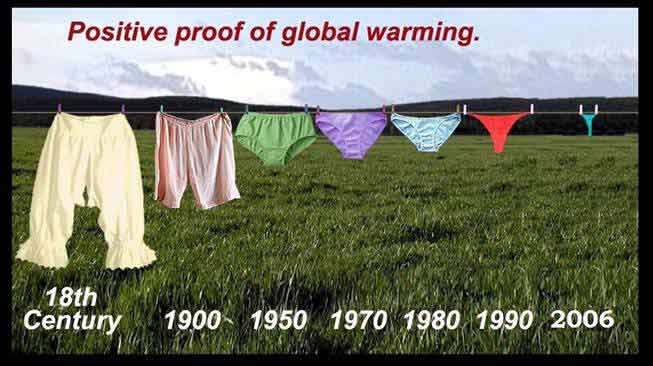
global warming

Global Warming, another reason I support it ...

Global-Warming

Technorati Tags:

Thursday, June 04, 2009

calvinist humor

Ok - Calvinists are typically not very funny but we try. Here Kim Riddlebarger takes a stab at it ... What If Calvinists Became the Majority . . . Not Gonna Happen . . . But What If . . .

Technorati Tags:

Wednesday, June 03, 2009

that old story

Your Bible is not a collection of religious stories. No, it is one story, the grand story of redemption. The Bible has one central character; God himself, specifically in the person of the Lord Jesus Christ. From cover to cover the Bible is a narrative of the wondrous works of a God. Perhaps the four most important words in all of Scripture are the first four words; "In the beginning God..." You simply cannot understand yourself, your world, and the meaning and purpose of life unless you view them from the vantage point of the existence, character, and plan of God. ~ Paul Trip, Psalm 73: The Old Story

HT:DD

Technorati Tags:

inerrancy

The inerrancy of Scripture means that Scripture in the original manuscripts does not affirm anything that is contrary to fact.

Per Wayne Grudem, "This definition focuses on the question of truthfulness and falsehood in the language of Scripture. The definition in simple terms just means that the Bible always tells the truth and that it always tells the truth concerning everything it talks about. This definition does not mean that the Bible tells us every fact there is to know about any one subject, but it affirms that what it does say about any subject is true."

Technorati Tags:

why i'm concerned

The past few days I've posted quite a bit regarding the authority of Scripture and I will probably post a little more on that. I didn't do these posts as some ultimate goal. In fact, I'm a "the Bible is the menu not the meal" kind of guy (see here, here, here, here, here, and likely more). I did it because the emergent trend (not rule) is to claim high regard for Scripture and yet make statements and draw conclusions contrary to that. Frankly, I think Michael Patton hit the nail on the head in noting that many emergents lack notitia and assensus.

One such emergent just quoted Morpheus (The Matrix), "There's a difference between knowing the path and walking the path." That's excellent in it's intent. This is a repeat of the menu v. meal concept and I have no issue with folks rediscovering this truth while thinking it's new. I did the same when I was young. My only issue is that these young people, just as I did at that stage in my life, have developed their own arrogance as they confront the arrogance of the generation before them. That's unfortunate ... worse, it's sinful.

This may seem to much adieu about nothing and if the above were the only example, I'd agree. But here's another quote from the same mind, "if someone discovered the Bible was not perfect, would it change your faith?" Most answered "no". Somehow they are able to have "faith" in a god whose inspired communication to us is not perfect. As I'm trying to express in various posts, this fails logic and is contrary to God's nature. Here are the thoughts generated among the emergent gang interacting with the initial quote:
  • some implied that Scripture has already been discovered to be imperfect
  • God is perfect but not the Bible
  • knowing the Bible is perfect or not does not diminish its value nor faith in it
  • relying on the concepts of infallibility/inerrancy is less than faith without that dependancy
  • inerrancy is not "Biblical", moreover it is a "silly modern" concept and part of a lot of other "crap"
ganz schade ...

Technorati Tags:

Tuesday, June 02, 2009

truthfulness

Psalm 12:6 indicates the absolute reliability and purity of Scripture. Similarly Prov. 30:5 indicates the truthfulness of every word that God has spoken. Though error and at least partial falsehood may characterize the speech of every human being, it is the characteristic of God’s speech even when spoken through sinful human beings that it is never false and that it never affirms error: “God is not man, that he should lie, or a son of man, that he should repent” (Num. 23:19) was spoken by sinful Balaam specifically about the prophetic words that God had spoken through his own lips. ~ Wayne Grudem

Technorati Tags:

god's truth

All of the words in the Bible are God’s words, and therefore to disbelieve or disobey any word in Scripture is to disbelieve or disobey God. The Bible clearly teaches that God cannot lie or speak falsely (2 Sam. 7:28; Titus 1:2; Heb. 6:18). Therefore, all the words in Scripture are claimed to be completely true and without error in any part (Num. 23:19; Pss. 12:6; 119:89, 96; Prov. 30:5; Matt. 24:35). God’s words are, in fact, the ultimate standard of truth (John 17:17).

Technorati Tags:

reftagger