Monday, June 23, 2008

love gone awry

As my regular readers (both of them) know, I have been in discussion with a really great guy, Jonathan Brink, who proffers that God's dominant characteristic is love. Based on this, Jonathan defines God's other attributes. I disagree with Jonathan - not because I do not think God is love but because I think it is improper and unhealthy to elevate one characteristic of God (who is in unity) above others. I would say this regardless of the attribute Jonathan would have picked.

Linked to this idea, Jonathan recently pointed to a post, Are We Worthy of God's Love?, by Rachel Held Evans. Jonathan agrees with Evans that creation (no distinction between pre or post redemption and the context indicates pre) is worthy of God's love. Although Jonathan tells us that Doug Pagitt agrees, I do not see that Scripture agrees. The logic of the post feels a bit like an attempt to force fit the world into the aforementioned starting assumption. Nicole seems to share the concern.

Evans begins by celebrating that God loves creation. So far so good.

Evans then quotes the following from Doug Pagitt's A Christianity Worth Believing:

God loves this world and all who are in it. God not only loves humanity but created humanity as the ideal partner for bringing about all that God desires for the world. We are not working against our lesser nature when we seek to live with God; on the contrary, we are living as we were created. The joy of this proper understanding is that we no longer have to feel ashamed of our humanity. It is not a sin to be alive.

This is true but the "we seek to live with God" and "we are living as we were created" are only possible post-redemption.

Then Evans mistakenly describes the "T" part of TULIP, total depravity, as meaning we are totally evil. She doesn't understand that this is not the message of the Doctrine of Election. R.C. Sproul coined the phrase “Radical Corruption” to better articulate the “T” in TULIP. To quote Sproul:

The Bible teaches the total depravity of the human race. Total depravity means radical corruption. We must be careful to note the difference between total depravity and "utter" depravity. To be utterly depraved is to be as wicked as one could possibly be. Hitler was extremely depraved, but he could have been worse than he was. I am sinner. Yet I could sin more often and more severely than I actually do. I am not utterly depraved, but I am totally depraved. For total depravity means that I and everyone else are depraved or corrupt in the totality of our being. There is no part of us that is left untouched by sin. Our minds, our wills, and our bodies are affected by evil. We speak sinful words, do sinful deeds, have impure thoughts. Our very bodies suffer from the ravages of sin.

Perhaps "radical corruption" is a better term to describe our fallen condition than "total depravity." I am using the word "radical" not so much to mean "extreme," but to lean more heavily on its original meaning. "Radical" comes from the Latin word for "root" or "core." Our problem with sin is that it is rooted in the core of our being. It permeates our hearts. It is because sin is at our core and not merely at the exterior of our lives that the Bible says: "There is none righteous, no not one; there is none who understands; there is none who seeks after God. They have all turned aside; they have together become unprofitable; there is none who does good, no, not one." Romans 3:10-12

Evans then states, "I’ve always found it curious that Christians so passionately defend the sanctity of life, when so many seem to think that human beings are, by their very nature, an affront to God." Well actually, by our very fallen nature we are enemies of God. But GOOD NEWS, He redeems us. So Evans seems a bit confused here. God is really not pleased with rebellious man.

She furthers her error with. "we honor and revere new life because we know all people are created in the image of God and are…dare I say…worthy of being loved by Him and by us." Had she stopped with "we honor and revere new life because we know all people are created in the image of God" she would have been ok. But somehow, because we are created in God's image, she thinks we are worthy of love - apparently missing the Biblical fact that we are broken image-bearers and worthy of wrath. It's marvelous that God loves us in spite of that.

Evans closes with:

What do you think? Are humans inherently good (but in need of a repaired relationship with God) or inherently evil (and incapable of doing any good on their own)? I honestly don’t know the answer to this question. … But I’ve got this nagging and relentless hope that God indeed "adores His creation."

God does love His creation. We are not worthy. We are not inherently good. As she said, we are in need of repair and until then, we are slaves to sin.

I do not know Evans. I sense she is asking honest questions. My concern is the conclusion she and others may (or have drawn). To quote one commenter, "in the end, we must be worthy of God's love, because that love is lavished upon us often." Wrong. How about referencing the Bible instead of this feel-good, humanistic philosophy?

Unorthodoxy thinks, "Humans aren't inherently good or inherently evil. We inherently are. ... No one is worthy of love. It is not earned. It is only given." Of course the Bible tells us a bit different than that. We are unworthy of love but we are loved. And even better, once redeemed, we are really worthy of love - in Christ.

even more on the gospel

Jim Meredith writes the following.

But what is, precisely, the Gospel? I am reminded of a verse I learned years ago:

“You are writing a gospel, a chapter each day, by the deeds you do and the words you say. Men read what you write, distorted or true; now tell me,what is the Gospel according to you?”

...

One of the ... organizations of which I am closely associated has adopted what it calls, “three story evangelism”, or good news from three different perspectives… God’s, mine and yours! Obviously the most important story is God’s, He is Creator, Sustainer, God-in-the-flesh-Man, Savior, Lover, Pursuer, Friend, etc. Anything that is permanent, lasting and good, God is. There are not enough adjectives or names in one’s vocabulary to ever describe Him adequately. But we each one want to talk about him – “our story” – when we are in love with Him, because we always want to talk about the person or thing with which we are in love! ... Then there is “your story”. What is or is not happening in your life as you respond (or fail to) to God’s story? And God’s love story is no more succinctly summarized than John 3:16, “For God so loved the world that He gave His only begotten son, that whosoever believes in Him, might not perish, but have eternal life.” Such a verse showing up in placards at sporting events,billboards, etc. is bound to be trivialized and may escape being included in “my story” or “your story”, but it is true nevertheless, and is the essence of God’s story. Candidly put, Jesus alone is the story.

...

Jesus is forever the bearer in the fleshof God’s story. He did “write” the gospel by his deeds and the words he said! Jesus simply is the Gospel. He brought good news and an invitation forus to return to Him: “Repent (do anabout face; stop going your ‘death’way; follow me the Lifegiver) for the Kingdom of Heaven (the only real Kingdom that has eternal life and hope and happiness) has arrived!”

(An amplification of Matthew’s story, Chapter 4:17) Jesus demonstrated God’s forgiveness for human failings and doing life “my way”, gave hope for eternal life through the then unheard of resurrection of his body from death back again to life, and relentlessly invited (not coerced) all to follow Him. And all of this was neither in mathematical nor doctrinal equations. For those religious leaders of His day, the man Christ had little good to say:“white washed tombs”… “blind leading the blind”… “searchers of Scriptures who have ‘missed’ that it is all about me!” Jesus lived God’s story; He “was” the story; and He told His story in relevant parables so that common folk like you and me could understand. We should do no less.

Trekker, there is a lot of ferment today about what is preeminent in proclaiming the Gospel. Is it proclaimed best through “Four Spiritual Laws”?(The Pharisee’s certainly had more than four laws, so we are ‘making progress’.)Is it proclaimed best through a set procedure of doctrinal propositions? Maybe. I believe the Gospel is proclaimed best when we reveal God as a relentless lover (the prodigal son will always be one of the greatest stories ever told because it is really all about the Father’s love, not the son’s sins), not as a cruel, demanding law giver and taskmaster. Today, as 2000 years ago, Jesus offers a reserved place in the Kingdom of God to all who will “receive Him” (check John’s story, Chapter 1,vs. 10-13), follow Him (not self or self-serving creeds about Him), continue to love Him and love each other.

Expectations are simple and straightforward. Live and tell “His story”. Then “your story” is His story. Lovingly invite others into the family! Trekker, let’s become good storytellers. What are your parables, your metaphors, the deeds you do and the words you say? Storytelling will trump arguments every time. That’s why the Lord did it; that’s why we love a good story; that’s why we can be included in the greatest story ever told!

TULIP revisited

Ok listen, I'm a "Calvinist" and I post many jokes about Calvinists so I'm declaring that I'm qualified to poke fun at those who are not. So, no need to beat me up for this one just in from Reformed Voices.

Mclaren-Tulip
On a serious note I found this timely because I am beginning to engage with some "emerging" types. I formerly thought predisposed, judgmental, lack-of-facts thinking was reserved for the Evangelical camp. I am now finding that Emergers are like other people, they do the same thing.

I have to laugh (or cry) because this has been one of the constants I've seen in my nearly 30 years as a believer. We too often become what we hate. And this isn't just in the big stuff. I remember how we prided ourselves in the early days regarding proper attire for "church" meetings. We weren't like those stuffy religious types who confused their faith with their apparel. They were pharisees and we were normal (well, even better, we were cool - and that was pre-Apple Mac). But it wasn't too many years into it before it was clear that we also had a church uniform. It was easy to spot us and we even mocked those that dressed different.

Ah these emergent kids ... they like us refuse to learn from the mistakes of those that have gone before.

Technorati Tags: , ,

the gospel

To grow in your passion for what Jesus has done, increase your understanding of what He has done. Never be content with your grasp of the gospel. The gospel is life-permeating, world-altering, universe-changing truth. It has more facets than any diamond. Its depths man will never exhaust. ~ C.J. Mahaney, The Cross Centered Life

HT:FE

Saturday, June 21, 2008

piper on god's schizophrenia

I align with this line from John Piper, "as a hearty believer in unconditional, individual election I rejoice to affirm that God does not delight in the perishing of the impenitent, and that he has compassion on all people."

This is from Are There Two Wills in God? Piper opens the piece with this ...

My aim here is to show from Scripture that the simultaneous existence of God's will for "all persons to be saved" (1 Tim. 2:4) and his will to elect unconditionally those who will actually be saved is not a sign of divine schizophrenia or exegetical confusion. A corresponding aim is to show that unconditional election therefore does not contradict biblical expressions of God's compassion for all people, and does not nullify sincere offers of salvation to everyone who is lost among all the peoples of the world.

Technorati Tags:

rambo jesus

Nakedpastor delivers again ... I know Christians that act like this ... but I also know Christians that presume many Christians that wear certain labels act like this. I don't know which group bothers me more.

Rambojesus

lloyd-jones on reconciliation

God never leaves us in a negative position. God does not merely forgive us our sins. It is possible for somebody to forgive you and yet to feel rather distant towards you ... Forgiveness is only the negative aspect and God never stops at that. God always goes on. God is never satisfied with anything less than reconciliation. ~ Dr Martyn Lloyd-Jones - "Romans 3:20 - 4:25: Atonement and Justification"

regeneration

Our theological word of the day ....

Regeneration
[ree-jehn’-uh-ray‘-shun]

(Latin regenerare, “to reproduce”)

The doctrine of spiritual renewal, otherwise known as being born-again. According to Titus 3:3-7, in his mercy God saves us by washing away our old nature through the power of the Holy Spirit, so that being justified by his grace we might become heirs according to the hope of eternal life, as verse 7 states. There is some controversy as to when regeneration happens in the ordo salutis (order of salvation). Calvinists assert that regeneration happens before faith; Arminians believe it happens after faith evidences itself.

i'm a piper heretic

Oh no ... it finally happened (I suppose it was inevitable) ... I read something from John Piper that I disagree with. Who is the man in Romans 7? I'm with Warnock (and Virgo and Lloyd-Jones) on this one.

the books have been opened

Well, the books have been opened and the data analyzed ...

20080617-Goingtohell3
I can't explain it ... talk to this guy ... but what's spooky is I bet a lot of folks think like the above.

Technorati Tags:

macarthur on theology

Our theology must be biblical before it can be systematic. We must start with a proper interpretation of Scripture and build our theology from there, not read into God's Word unwarranted presuppositions. Scripture is the only appropriate gauge by which we may ultimately measure the correctness of our doctrine. ~ John MacArthur, The Gospel According to the Apostles

wordle

There's a cool on-ling thingy called wordle ... here's what it did with the text from my current blog page ...


the environment

We recently concluded a series of discussions in my small group regarding the environment, dominion, etc.. It was great in that I learned some simple facts but mostly it challenged some stale thinking I had. In the end however I'm not going "green". On the other hand, I like some of Mark Heath's thoughts and will certainly be making an effort to be a better steward of God's wonderful creation.

It seems that the consensus is that global warming is real and man-made, although every now and then I come up against skeptics (some more believable than others). To be honest, I'm not sure I really need to know. Most of the "good for the environment" things you can do have merits of their own irrespective of whether the planet is in immanent peril or not.

...

Conventional wisdom at the moment claims that Christians don't care about the environment because of their eschatology - Jesus is coming back and he'll clean up the mess for us. Maybe there is a little of that, but I'm not sure for two reasons.

First, the reason many Christians don't talk a lot about "the environment" is because we have a different name for it. We call it "Creation", and can be found singing about how wonderful it is almost every week at church. In fact a healthy doctrine of seeing our world as God's creation entrusted to us as responsible stewards should be all the impetus we need to cause us to work against those things that destroy our environment.

Second, I think the reason so many Christians care so little about environmental issues is nothing to do with their eschatology but rather because of syncretism. We have made it possible to mix Christianity with secular materialistic consumerism.

I also just read Virgil Vaduva's take on some environmental issues and I agree with his viewpoint.

As Christians we believe that we are entrusted by our Creator with a planet we need to watch over and maintain for our children and grandchildren; we need to be the kind of "environmentalists" that God wants us to be, to love and care for the world we live in, but not do so by allowing Communists in Gore clothing to manipulate us as they are attempting to do.

Wednesday, June 18, 2008

the name of jesus

Speaking of the characteristics of God ... Nicole does an interesting analysis regarding how the name of Jesus appears in the Bible.

discernment

John MacArthur posts today on Thinking Biblically. This is a call to discernment which is a good encouragement at all times for all Christians everywhere. I will add two comments:

1) Discernment is not the first step nor the last. That is, it starts with a life-changing touch by the Holy Spirit, a knowledge of some Truth, repentance, etc.. But more, our life does not end with discernment, it is about living Christ-like, day in and day out, moment by moment.

2) The second point builds on the first. I know discerning people our are not Christ-like. They discern all but themselves. Actually that's too harsh. Sometimes they fail to discern the time, that is it may not be the right time to confront a given issue. More often they fail to discern the bigger picture. I suppose I want to say that their use of discernment is not very discerning. Can one say that?

For the purpose of his post, MacArthur did a fine job with his definition: "Discernment — the ability to think biblically about all areas of life — is indispensable to an uncompromising life." In a larger context I might have used the phase "think and act" over "think". I also prefer "Christ-like" over "biblically" - while these may seem the same I think the implication is great.

reformed website scandal

Dr. Charles Hollingsworth, senior pastor, Liberty Baptist Church in Battle Creek, MI, has been caught in a reformed website scandal. His undoing is thanks to Covenant Eyes, a web browsing monitoring software designed to "fight internet temptation". I fear this is just the tip of the iceberg. There are likely many more like Hollingsworth. These men need help. They surf the internet endlessly. They are compelled yet filled with shame. And I suspect their number is growing.

The full story here.

Technorati Tags:

spurgeon on revival

Ah ... the quotable C.H. Spurgeon. Here he speaks on revival. I like his words. Some are slinging these as warning to the Lakeland happenings. I don't know about that. But regardless the words are timeless and true.

Every attempt at revival of religion which proves a failure,—and fail it must without the presence of God,—leaves the Church in a worse condition than it was before; because, if it should prove a failure, from the want of any stir at all; then God's people fall back into their former lethargy, with an excuse for continuing in it; or if a false stir be made, a reaction follows of a most injurious character. I suppose the worst time in the Christian Church is generally that which follows the excitement of a revival; and if that revival has had no reality in it, the mischief which is done is awful and incalculable. If no excitement shall come at all, the mischief is still as great; God's people, being disappointed, have little heart to listen to further exhortations to future zealous action, become contented with their Laodicean lukewarmness, and it becomes impossible to bestir them again. If a revival should apparently have success and yet God be not in it, perhaps this is even worse. The wild-fire and madness of some revivals have been a perfect disgrace to the common sense of the age, let alone the spirituality of the Church.

Tuesday, June 17, 2008

wrath and love

Let us not trifle with God or trivialize his love. We will never stand in awe of being loved by God until we reckon with the seriousness of our sin and the justice of his wrath against us. But when, by grace, we waken to our unworthiness, then we may look at the suffering and death of Christ and say, “In this is love, not that we have loved God but that he loved us and sent his Son to be the [wrath-absorbing] propitiation for our sins” (1 John 4:10). ~ John Piper, Fifty Reasons why Christ Came to Die

From Theological Dictionary of the New Testament, "Only he who knows the greatness of wrath will be mastered by the greatness of mercy. The converse is also true: Only he who has experienced the greatness of mercy can measure how great wrath must be. For the wrath of God arises from His love and mercy. Where mercy meets with the ungodly will of man rather than faith and gratitude, with goodwill and the response of love, love becomes wrath."

John Stott uses this concept in The Cross of Christ.

"We saunter up to God to claim His patronage and friendship; it does not occur to us that He might send us away. We need to hear again the apostle Peter's sobering words: 'Since you call on a Father who judges each man's work impartially, live your lives....in reverent fear' (1 Pet 1:7). In other words, if we dare to call our Judge our Father, we must beware of presuming on Him. It must even be said that our evangelical emphasis on the atonement is dangerous if we come to it too quickly. We learn to appreciate the access of God which Christ won for us only after we have first seen God's inaccessibility to sinners. We can cry 'Hallelujah' with authenticity only after we have cried 'Woe is me, for I am lost.' In Dale's words, 'it is partly because sin does not provoke our own wrath, that we do not believe that sin provokes the wrath of God'.

We must, therefore, hold fast to the biblical revelation of the living God who hates evil, is disgusted and angered by it, and refuses ever to come to terms with it. In consequence, we may be sure that, when he searched in His mercy for some way to forgive, cleanse and accept evil-doers, it was not along the road of moral compromise. It has to be a way which was expressive equally of His love and of His wrath. As Brunner put it, 'where the idea of the wrath of God is ignored, there will also be no understanding of the central conception of the Gospel: the uniqueness of the revelation of the Mediator'. Similarly, 'only he who knows the greatness of wrath will be mastered by the greatness of mercy'.

...If we bring God down to our level and raise ourselves to His, then of course we see no need for a radical salvation, let alone for a radical atonement to secure it. When, on the other hand, we have glimpsed the blinding glory of the holiness of God, and have been so convicted of our sin by the Holy Spirit that we tremble before God and acknowledge what we are, namely 'hell-deserving sinners', then and only then does the necessity of the cross appear so obvious that we are astonished we never saw it before."

There is an inevitable collision between Divine perfection and human rebellion. There's an enormous gulf between God as He is and us as we are. Neither our sin nor our guilt alone is what separates us, but also the Divine reaction towards guilty sinners. God's nature demands that He express his holy love without compromising his holiness, and his holiness in judging sinners without frustrating his love.

The idea that God is Holy is foundational to Biblical religion and sin is incompatible with his holiness. Closely related to Gods holiness is his wrath, which is his holy reaction to evil.

good news

Good news for Jews ... giraffes declared kosher. Yep, both the meat and milk of this cloven-hoofed, cud-chewin' beast is kosher. I bet that's good news to someone ... except the giraffe.

Monday, June 16, 2008

justice and love

Nicole pointed me toward John Piper's Fifty Reasons why Christ Came to Die. I had planned to read it while on vacation but just couldn't wait. This excerpt from at the beginning of chapter 1 is great. If the rest of the book is anything like this I am in for a treat.

Christ redeemed us from the curse of the law by becoming a curse for us — for it is written, “Cursed is everyone who is hanged on a tree.” Galatians 3:13

God put [Christ] forward as a propitiation by his blood, to be received by faith. This was to show God’s righteousness, because in his divine forbearance he had passed over former sins. Romans 3:25

In this is love, not that we have loved God but that he loved us and sent his Son to be the propitiation for our sins. 1 John 4:10

If God were not just, there would be no demand for his Son to suffer and die. And if God were not loving, there would be no willingness for his Son to suffer and die. But God is both just and loving. Therefore his love is willing to meet the demands of his justice.

gospel jazz

We do not need to jazz up or somehow enhance a weak gospel. We need to faithfully teach and preach the biblical gospel and see to it that identifiably faithful men will take the unadulterated gospel to the next generation. That is how to grow a church biblically. ~ Steve Martin, p. 310, Dear Timothy: Letters on Pastoral Ministry

HT:JB

kids' rock

This is great ... Kids' Rock by Tim Hawkins.


HT:TR

Technorati Tags: ,

incommunicable attribute - omnipresence

From Wayne Grudem, Systematic theology : An introduction to biblical doctrine (173)...

Just as God is unlimited or infinite with respect to time, so God is unlimited with respect to space. This characteristic of God’s nature is called God’s omnipresence (the Latin prefix omni- means “all”). God’s omnipresence may be defined as follows: God does not have size or spatial dimensions and is present at every point of space with his whole being, yet God acts differently in different places.

The fact that God is Lord of space and cannot be limited by space is evident first from the fact that he created it, for the creation of the material world (Gen. 1:1) implies the creation of space as well. Moses reminded the people of God’s lordship over space: “Behold, to the Lord your God belong heaven and the heaven of heavens, the earth with all that is in it” (Deut. 10:14).

a. God Is Present Everywhere: Yet there are also specific passages that speak of God’s presence in every part of space. We read in Jeremiah, “Am I a God at hand, says the Lord, and not a God afar off ? Can a man hide himself in secret places so that I cannot see him? says the Lord. Do I not fill heaven and earth? says the Lord” (Jer. 23:23–24). God is here rebuking the prophets who think their words or thoughts are hidden from God. He is everywhere and fills heaven and earth.

God’s omnipresence is beautifully expressed by David:

Whither shall I go from your Spirit?
Or whither shall I flee from your presence?
If I ascend to heaven, you are there!
If I make my bed in Sheol, you are there!
If I take the wings of the morning
and dwell in the uttermost parts of the sea,
even there your hand shall lead me,
and your right hand shall hold me. (Ps. 139:7–10)

There is nowhere in the entire universe, on land or sea, in heaven or in hell, where one can flee from God’s presence.

b. God Does Not Have Spatial Dimensions: While it seems necessary for us to say that God’s whole being is present in every part of space, or at every point in space, it is also necessary to say that God cannot be contained by any space no matter how large. Solomon says in his prayer to God, “But will God indeed dwell on the earth? Behold, heaven and the highest heaven cannot contain you; how much less this house which I have built!” (1 Kings 8:27). Heaven and the highest heaven cannot contain God; indeed, he cannot be contained by the largest space imaginable (cf. Isa. 66:1–2; Acts 7:48). While the thought that God is everywhere present with his whole being ought to encourage us greatly in prayer no matter where we are, the fact that no one place can be said to contain God should also discourage us from thinking that there is some special place of worship that gives people special access to God: he cannot be contained in any one place.

We should guard against thinking that God extends infinitely far in all directions so that he himself exists in a sort of infinite, unending space. Nor should we think that God is somehow a “bigger space” or bigger area surrounding the space of the universe as we know it. All of these ideas continue to think of God’s being in spatial terms, as if he were simply an extremely large being. Instead, we should try to avoid thinking of God in terms of size or spatial dimensions. God is a being who exists without size or dimensions in space. In fact, before God created the universe, there was no matter or material so there was no space either. Yet God still existed. Where was God? He was not in a place that we could call a “where,” for there was no “where” or space. But God still was! This fact makes us realize that God relates to space in a far different way than we do or than any created thing does. He exists as a kind of being that is far different and far greater than we can imagine.

We must also be careful not to think that God himself is equivalent to any part of creation or to all of it. A pantheist believes that everything is God, or that God is everything that exists. The biblical perspective is rather that God is present everywhere in his creation, but that he is also distinct from his creation. How can this be? The analogy of a sponge filled with water is not perfect, but it is helpful. Water is present everywhere in the sponge, but the water is still completely distinct from the sponge. Now this analogy breaks down at very small points within the sponge, where we could say that there is sponge at one point and not water, or water and not sponge. Yet this is because the analogy is dealing with two materials that have spatial characteristics and dimensions, while God does not.

hold me

Hold Me
(John Barnett)

Father, You’re so good
Father, You’re so wise
There’s healing in Your hands
Compassion in Your eyes
And what is to become of me?
I’m captured by Your love
You touch the deepest part of me
I just can’t get enough

You are everything to me
I come like a child
Lift my arms like a child
Oh hold me
Hold me, right now

the answer to everything

This cartoon reminded me of someone I know ... actually, it reminds me of almost everyone I know. Most of my friends are very passionate about some small number of things. For me it's small groups and community. Almost any time I speak with someone, the solution to whatever we discuss is small groups. I was thinking about another friend who has found help framing everything about God using the term love. I have another friend with whom every conversation circled back to the Doctrine of Election/Grace. And so it goes.

I like my friends. I like that they have passion. Even if it makes us looks silly.


Technorati Tags:

egalitarianism

Today's theological word of the day ...

Egalitarianism
French egal “equal”

Theological position which believes that the Bible does not teach that women are in any sense, functionally or ontologically, subservient to men. Women and men hold positions in society, ministry, and the family according to their gifts, not their gender. The principle of mutual submission teaches that husbands and wives are to submit to each other equally. Promenade egalitarians include Doug Groothuis, Ruth Tucker, William Webb, Gorden Fee, and Linda Belleville.

Technorati Tags:

Sunday, June 15, 2008

incommunicable attribute - eternity

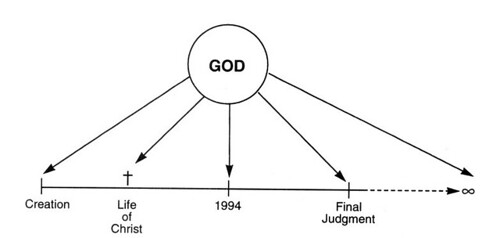
Another wonderful characteristic of God is Hie eternity. That is, He has no beginning, end, or succession of moments in His own being, and he sees all time equally vividly, yet sees events in time and acts in time. Time does not limit or change God. Wayne Grudem writes clearly on this in Systematic theology : An introduction to biblical doctrine (168).

Time has no effect on God’s knowledge. He never learns new things or forgets things - He always knows perfectly, i.e., He knows past, present, and future equally vividly.

2580627238 2839Fc1Afe
God Is timeless is seen in Psalm 90:2: “Before the mountains were brought forth, or ever you had formed the earth and the world, from everlasting to everlasting you are God.” Similarly, in Job 36:26, Elihu says of God, “the number of his years is unsearchable.” He always exists. “I am the Alpha and the Omega,” says the Lord God, who is and who was and who is to come, the Almighty” (Rev. 1:8; cf. 4:8).

God’s own being does not have a succession of moments or any progress from one state of existence to another. To God himself, all of his existence is always somehow “present".

For I am God, and there is no other;
I am God, and there is none like me
declaring the end from the beginning
and from ancient times things not yet done
saying, “My counsel shall stand,
and I will accomplish all my purpose.
(Isa. 46:9–10)

God somehow stands above time and is able to see it all as present in his consciousness.

Even so, God sees events in time and acts in time. Paul writes, “when the time had fully come, God sent forth his Son born of woman, born under the law, to redeem those who were under the law” (Gal. 4:4–5). God observed clearly and knew exactly what was happening with events in his creation as they occurred over time. We might say that God watched the progress of time as various events occurred within his creation. Then at the right time, “when the time had fully come,” God sent forth his Son into the world.

It is evident throughout Scripture that God acts within time and acts differently at different points in time. For example, Paul tells the men of Athens, “The times of ignorance God overlooked, but now he commands all men everywhere to repent, because he has fixed a day on which he will judge the world in righteousness by a man whom he has appointed...” (Acts 17:30–31). This statement includes a description of a previous way in which God acted, God’s present way of acting, and a future activity that he will carry out, all in time.

Indeed, the repeated emphasis on God’s ability to predict the future in the Old Testament prophets requires us to realize that God predicts his actions at one point in time and then carries out his actions at a later point in time. And on a larger scale, the entire Bible from Genesis to Revelation is God’s own record of the way he has acted over time to bring redemption to his people.

We must therefore affirm both that God has no succession of moments in his own being and sees all history equally vividly, and that in his creation he sees the progress of events over time and acts differently at different points in time; in short, he is the Lord who created time and who rules over it and uses it for his own purposes. God can act in time because he is Lord of time.17 He uses it to display his glory. In fact, it is often God’s good pleasure to fulfill his promises and carry out his works of redemption over a period of time so that we might more readily see and appreciate his great wisdom, his patience, his faithfulness, his lordship over all events, and even his unchangeableness and eternity.

complementarianism

Here's our theological word of the day ...

Complementarianism

Theological position held by many Christians believing the Bible teaches that men and women are of equal worth, dignity, and responsibility before God (ontological equality), but that men and women have different roles to play in society, the family, and the church (relational distinct roles). For the complementarian, these roles do not compete but complement each other. Prominent modern complementarian are Tomas Schreiner, Wayne Grudem, and John Piper.

Technorati Tags:

the larger story

Only as we see our story enfolded in the larger story of redemption will we begin to live God-honoring lives. Lasting change begins when our identity, purpose, and sense of direction are defined by God’s story. When we bring this perspective to our relationships, we will have a dramatically different agenda. It will take the principles and commands of Scripture and use them as God intended. We will see how each principle, promise, and command finds its meaning and fulfillment in Christ. Separate them from Christ and they lose their God-intended meaning and get hijacked by other agendas. ~ Paul David Tripp, Instruments in the Redeemer’s Hands

HT:FE

piety

While I don't share the degree of concern regarding the 'target' to whom this particular quote has been reapplied, I certainly agree with the quote itself.

Pushing aside important [doctrinal] differences makes the church more energetic about a moralism focused on man than true piety focused on God. This in turn creates a pragmatism, and eventually a relativism, that will destroy the love of truth and with it the sense of oughtness that gives perseverance to righteous action. ~ Tom Nettles

We most be very careful to sort out what is foundational and to not compromise that. Of course even what constitutes the basics seems to be up for debate these days but surely something fits that category and whatever it is, it should not be compromised.

With that said I should add that the converse of the quote is also true. A piety toward God that does not result in a love for His creation demonstrated through good words and deeds leads toward legalism. This ultimately results in a lost focus on our true love Himself.

Saturday, June 14, 2008

the problem with religion

Here's a good word from Tim Keller to Christians regarding the problem with religion.

scandel

There's a lot of talk regarding the Lakeland 'scandel' but I heard one today that tops that.

The ultimate scandal of Christianity is in this: that God is merciful to the undeserving, to sinners, to those who have no merit but the merit of Christ to plead, and no argument but the humble, believing cry, 'God, be merciful to me a sinner.' ~ Alistair Beg, What Angels Wish They Knew

HT:RV

what a friend i've found


What A Friend I've Found

What a friend I've found
Closer than a brother
I have felt your touch
More intimate than lovers

Jesus, Jesus
Jesus, friend forever

What a hope I've found
More faithful than a mother
It would break my heart
To ever lose each other

Written by Martin Smith ©1996 Curious? Music UK

laughing

PunchlineThis simple cartoon by NakedPastor reminded me of the time I was sitting at my friend Randy Clark's church in St. Louis in the mid-80's. David Ruis was speaking. It wasn't so interesting. Nothing funny was happening. I hadn't been drinking. But suddenly I fell out of my seat onto the floor laughing.

I couldn't stop. I didn't want to do that (no one else was). It was if someone was tickling me and I couldn't resist. I somehow knew it was God. I asked Him to stop. I was laughing so hard tears were in my ears, my side was hurting, etc.. I asked Him again and again.

He said, "No - you need to lighten up and I won't stop until you really agree."

I did.

Technorati Tags:

unchangeable

Today's attribute of God is His unchangeableness (or immutability). God is unchanging in his being, perfections, purposes, and promises, yet God does act and feel emotions, and he acts and feels differently in response to different situations.

Psalm 102 contrasts things that we may think to be permanent such as the earth or the heavens to God.

Of old you laid the foundation of the earth,
and the heavens are the work of your hands.
They will perish, but you endure;
they will all wear out like a garment.
You change them like raiment, and they pass away;
but you are the same, and your years have no end.

(Ps. 102:25–27)

Again Wayne Grudem sheds some good light on the topic (Systematic theology : An introduction to biblical doctrine, p163) [emphasis mine].

God existed before the heavens and earth were made, and he will exist long after they have been destroyed. God causes the universe to change, but in contrast to this change he is “the same.”

Referring to his own qualities of patience, long-suffering, and mercy, God says, “For I the Lord do not change; therefore you, O sons of Jacob, are not consumed” (Mal. 3:6). Here God uses a general statement of his unchangeableness to refer to some specific ways in which he does not change.

James reminds his readers that all good gifts come ultimately from God “with whom there is no variation or shadow due to change” (James 1:17). His argument is that since good gifts have always come from God, we can be confident that only good gifts will come from him in the future, because his character never changes in the slightest degree.

The definition given above specifies that God is unchanging—not in every way that we might imagine, but only in ways that Scripture itself affirms. The Scripture passages already cited refer either to God’s own being or to some attribute of his character. From these we can conclude that God is unchanging, at least with respect to his “being,” and with respect to his “perfections” (that is, his attributes or the various aspects of his character).

The great Dutch theologian Herman Bavinck notes that the fact that God is unchanging in his being is of the utmost importance for maintaining the Creator/creature distinction, and for our worship of God:

The doctrine of God’s immutability is of the highest significance for religion. The contrast between being and becoming marks the difference between the Creator and the creature. Every creature is continually becoming. It is changeable, constantly striving, seeks rest and satisfaction, and finds this rest in God, in him alone, for only he is pure being and no becoming. Hence, in Scripture God is often called the Rock....

The definition given above also affirms God’s unchangeableness or immutability with respect to his purposes. “The counsel of the Lord stands for ever, the thoughts of his heart to all generations” (Ps. 33:11). This general statement about God’s counsel is supported by several specific verses that talk about individual plans or purposes of God that he has had for all eternity (Matt. 13:35; 25:34; Eph. 1:4, 11; 3:9, 11; 2 Tim. 2:19; 1 Peter 1:20; Rev. 13:8). Once God has determined that he will assuredly bring something about, his purpose is unchanging, and it will be achieved. In fact, God claims through Isaiah that no one else is like him in this regard:

I am God, and there is none like me,
declaring the end from the beginning
and from ancient times things not yet done,
saying, “My counsel shall stand,
and I will accomplish all my purpose” . . .
I have spoken, and I will bring it to pass;
I have purposed, and I will do it.

(Isa. 46:9–11)

Furthermore, God is unchanging in his promises. Once he has promised something, he will not be unfaithful to that promise: “God is not a man, that he should lie, or a son of man, that he should repent. Has he said, and will he not do it? Or has he spoken, and will he not fulfil it?” (Num. 23:19; cf. 1 Sam. 15:29).

Friday, June 13, 2008

is god narcissistic?

We have been taught that WE are the center of His universe. We have been shown verse after verse that talks about His love for us. Which is, of course, true, but there is context for that as well… We believe that God cannot possibly love God most - that would be narcissistic. And yet, could God be holy, if He placed infinite worth on anything but that which is infinitely valuable?? Namely Himself? ~ Nicole Sagert

a jealous god

From Sam Storms today ... this is excellent and fits well with my continuing posts regarding the nature of God. Here we can see that love and jealousy work together, they are not contradictory, nor is one above the other.

In fact, if I had any disagreement with Storms it would be that at one point in this he elevates jealousy above other attributes (using words such as primary and defining). God's attributes are in balance and in unity with each other. I believe Storms holds them in balance but I resisted the urge to edit his language to one of more balance. I resisted for the sake of those that want to contend some other characteristic might be His defining characteristic. I think every attribute of God is so awesome that anyone could easily argue that any one of them is the primary, most wonderful, defining, whatever one. We must resist that. We must step back and marvel in the beauty of the unity and integration of all that defines God.

Now ... to Stoms' piece.

The Jealousy of God in the Heart of a Human
(2 Corinthians 11:1-2)

"I feel a divine jealousy for you," says Paul, "for I betrothed you to one husband, to present you as a pure virgin to Christ" (2 Cor. 11:2). There is much in this passage to note, but here I want to focus solely on the "divine jealousy" that fills Paul's heart.

This statement in v. 2 might more literally be rendered, "I am jealous for you with God's own zeal" or the jealousy that comes from God himself or, perhaps, my heart is filled with a jealousy that is just like God's.

Whoah! God gets jealous? Are you kidding? No, I'm deadly serious, and so is God. Consider just a few texts that affirm this remarkable truth.

"You shall not make for yourself a carved image, or any likeness of anything that is in heaven above, or that is in the earth beneath, or that is in the water under the earth. You shall not bow down to them or serve them, for I the Lord your God am a jealous God, visiting the iniquity of the fathers on the children to the third and the fourth generation of those who hate me" (Exod. 20:4-5; emphasis mine).

Or again,

"for you shall worship no other god, for the Lord, whose name is Jealous, is a jealous God" (Exod. 34:14; emphasis mine).

Here we see that the primary reason for worshiping God alone is the fact that God's name is Jealous! In the ancient world one's name was not merely a label or a tag, but a declaration of one's character. Thus, in the very depths of God's divine character burns the fire of jealousy. Jealousy is central to the essence of who God is. Jealousy is at the core of God's identity as God. Jealousy is that defining characteristic or personality trait that makes God God. Whatever other reasons you may find in Scripture for worshiping and serving and loving God alone, and there are many of them and they are all good, paramount among them all is the fact that our God burns with jealousy for the undivided allegiance and affection of His people.

Consider also these texts:

"Phinehas the son of Eleazar, son of Aaron the priest, has turned back my wrath from the people of Israel, in that he was jealous with my jealousy among them, so that I did not consume the people of Israel in my jealousy" (Num. 25:11).

"For the Lord your God is a consuming fire, a jealous God" (Deut. 4:24).

"You shall not go after other gods, the gods of the peoples who are around you, for the Lord your God in your midst is a jealous God, lest the anger of the Lord your God be kindled against you, and he destroy you from off the face of the earth" (Deut. 6:14-15; cf. 29:20).

"They stirred him to jealousy with strange gods; with abominations they provoked him to anger" (Deut. 32:16; cf. 32:21).

An especially interesting text is the following passage from Ezekiel.

"He put out the form of a hand and took me by a lock of my head, and the Spirit lifted me up between earth and heaven and brought me in visions of God to Jerusalem, to the entrance of the gateway of the inner court that faces north, where was the seat of the image of jealousy, which provokes to jealousy" (Ezek. 8:3).

The Israelites had placed an idol of some sort at the entrance to the north gate of the temple. Literally, it reads "the jealousy that provokes jealousy", a reference to the passion that this object ignites in God's heart. "Look," says the Lord, "look at that abominable statue which draws away the hearts of my people. They are loving it, not Me. They are bowing down to it, not Me. I am red hot with jealousy, for I will not stand for anything or anyone to come between me and the devotion of my bride!"

The pervasive presence in Scripture of this remarkable truth is simply undeniable. I encourage you to read 1 Kings 14:22; Ezekiel 16:38,42; 23:25; 36:5ff; 38:19; 39:25; Joshua 24:19; Psalm 78:58; 79:5; Joel 2:18; Nahum 1:2; Zephaniah 1:18; 3:8; Zechariah 1:14; and 1 Corinthians 10:22.

God is an emotional being. He experiences within the depths of his being genuine passions and affections. The fact that we balk at the suggestion that God is jealous indicates that we have a weak, insipid view of the divine nature. Absolutely fundamental to God's being God is the presence in his nature of an inextinguishable blaze of immeasurable love called jealousy.

Most of us have seen or felt or been on the receiving end of human jealousy that is destructive and sinful and ugly. We naturally recoil from the suggestion that God might to any degree be tainted with such a terrible flaw of character. But to say that God is jealous certainly does not mean that he is suspicious because of some insecurity in his heart. This kind of jealousy is the result of ignorance and mistrust, features that are utterly absent from the heart of God. Neither does it mean he is wrongfully envious of the success of others. Jealousy that is sinful is most often the product of anxiety and bitterness and fear. But surely none of this could be true of God. Sinful jealousy is the sort that longs to possess and control what does not properly belong to oneself; it is demanding and cares little for the supposed object of its love.

But as J. I. Packer explains, "God's jealousy is not a compound of frustration, envy, and spite, as human jealousy so often is, but appears instead as a . . . praiseworthy zeal to preserve something supremely precious" (Knowing God, 153). Divine jealousy is his zeal to protect a love relationship or to avenge it when it is broken. Jealousy in God is that passionate energy that provokes and stirs and moves him to take action against whatever or whoever stands in the way of his enjoyment of what he loves and desires. The intensity of God's anger at threats to this relationship is directly proportionate to the depths of his love.

This is no momentary or sporadic or infrequent or occasional burst of anger or minor irritation in the heart of God. This is no passing twinge in God's mind. This is the incessant, intensely persistent burning in the heart of the infinitely powerful, uncreated God. In the ancient near east, the word for "jealousy" literally meant to become intensely red, a reference to the effects of anger on one's facial complexion. Jealousy in God is not a "green-eyed monster" but a "red-faced lover" who will brook no rivals in his relationship with his people. Let's look briefly at the two primary ways this jealousy is expressed.

First of all, God is most jealous for his own glory, fame, and honor. He desires above all else that his name be preserved and promoted and he will act quickly and powerfully to vindicate his glory. "The jealousy of Yahweh," writes Ray Ortlund, "is his profoundly intense drive within to protect the interests of his own glory (Ex. 20:4-6; Ezk. 39:25), for he 'will admit no derogation from his majesty.'" (Whoredom: God's Unfaithful Wife in Biblical Theology) [Grand Rapids: Eerdmans, 1996], p. 29, n. 15).

Second, God is also jealous for the devotion and wholeheartedness and loyalty and love of his bride, his people. Just as a husband cannot be indulgent of adultery in his wife, so also God cannot and will not endure infidelity in us. What would we think of a man or woman who does not experience jealous feelings when another person approaches his/her spouse and threatens to win his/her affection? We would regard such a person as deficient in moral character and lacking in true love. John Calvin explains:

"The Lord very frequently addresses us in the character of a husband . . . As He performs all the offices of a true and faithful husband, so He requires love and chastity from us; that is, that we do not prostitute our souls to Satan . . . As the purer and chaster a husband is, the more grievously he is offended when he sees his wife inclining to a rival; so the Lord, who has betrothed us to Himself in truth, declares that He burns with the hottest jealousy whenever, neglecting the purity of His holy marriage, we defile ourselves with abominable lusts, and especially when the worship of His deity, which ought to have been most carefully kept unimpaired, is transferred to another, or adulterated with some superstition; since in this way we not only violate our plighted troth, but defile the nuptial couch by giving access to adulterers" (Institutes, II.viii.18).

In summary, the fire of divine zeal will consume and destroy and leave in a pathetic rubble of worthless ash, anything and everything that we have built or worked for or given our hearts to or relied upon that in any way or to any degree detracts from the glory of his name or threatens the purity of his relationship with his bride, the Church.

And it is this very jealousy, this same divine and godly zeal, that now fills the heart of Paul as he contemplates the dangerous path down which so many of the Corinthians appear to be walking. It is this jealousy that alone accounts for the passionate appeal that is to follow. In Paul's case it is a "mixture of love, outrage, and fear: love for the Corinthians manifest in deep concern for their spiritual well-being; outrage at their fickleness, the ease and speed by which they have been seduced; fear for their future if they do not repent and return to the Lord" (Carson, 85).

Yes, our God is a jealous God in whose heart burns a passionate love for his people, a love that will forever labor to win our full affection and unqualified devotion.

in christ

On "...in Christ at Colossae" (Col 1v2): Remember... whatever geographical location you call home that you are in Christ. They are true simultaneously. You do not live in Christ only while you are at church, on your knees, or in a home group, then return to being simply in your city when you leave that more holy atmosphere. Your 'in-Christness' is not simply a heavenly reality that obtains only somewhere up there. You are in Christ even when you are in sin, although the reality of the former ought to progressively diminish your experience of the later. ~ Sam Storms ; The Hope of Glory

HT:PD

Wow!!!!!

resolved

There's a great post by Steven Lawson at Ligonier Ministries entitled Resolved. Lawson writes:

Edwards began his Resolutions with what he desired to be the driving force of his life -- an all-absorbing passion to pursue the glory of God.

"Resolved: that I will do whatsoever I think to be most to God's glory and to my own good, profit, and pleasure, in the whole of my duration, without any consideration of the time, whether now or never so many myriads of ages hence. Resolved: to do whatever I think to be my duty, and most for the good and advantage of mankind in general. Resolved: to do this whatever difficulties I meet with, how ever so many and how ever so great."

...

What is the glory of God? The Bible speaks of it in two ways. First, there is His intrinsic glory, the revelation of all that God is. It is the sum total of all His divine perfections and holy attributes. There is nothing that man can do to add to His intrinsic glory. Second, there is God's ascribed glory, which is the praise and honor due His name. This is the glory that man must give to God.

For Edwards, to be resolved to live for God's glory means to exalt His most glorious name. It means to live consistently with His holy character. It means to proclaim and promote His supreme greatness. This is the highest purpose for which God created us.

Why did Edwards place this resolution first? He understood that Scripture places the glory of God first in all things. Edwards was gripped with a transcendent, high view of God. As a result, in writing his "resolutions," he knew he must live wholeheartedly for this awesome, sovereign God.

Thus, Edwards intentionally chose to "do whatsoever I think is most to God's glory." Here is the interpretive principle for everything in life. You want to know what God's will is? You want to know whom to marry? You want to know what job to take? You want to know what ministry to pursue? You want to know how to invest your resources? You want to know how to spend your time?

There it is! Everything in life fits under this master theme. Anything out of alignment with this principle pursuit is in dangerous territory. Sometimes our decisions are not between right and wrong. Sometimes they are between good, better, and best. These are sometimes the hardest decisions. Edwards said that he would not live for what is merely good. Nor for what is better. He purposed to live only for what is best. Whatever is most to the glory of God -- that is what is best!

Edwards believed that God's glory was inseparably connected with his "own good, profit, and pleasure." Whenever he sought God's glory, he was confident that it would inevitably yield God's greatest good for his life. The glory of God produced his greatest "pleasure." So it is with us. Would you know unspeakable joy? Abundant peace? True contentment? Then pursue God's glory.

With unwavering determination, young Edwards chose this first resolution to mark "the whole of my duration." As long as he was alive, this was to be the driving thrust of his life. He must always live for God's glory. He would never outgrow this central theme. He must never exchange it for a lesser glory.

Also, Edwards' believed that his commitment to God's glory would bring the greatest "good of mankind." By seeking God's honor, the greatest advantage would accrue to others. Thus, living for the glory of God would lead to the greatest influence of the Gospel upon the world. Souls would be converted. Saints would be edified. Needs would be met.

Would you have maximum impact upon this world? Would you lead others to Christ? Would you live for eternity? There it is! Live for God's glory.

No matter what, Edwards resolved to live for God's glory despite "whatever difficulties I meet with, how ever so many and ever so great." Regardless the cost, despite the pain, he would pursue God's honor. Even if it meant persecution or poverty, his mind was made up, his will resolved. He would pay any price to uphold the glory of God, regardless of the hardship that awaited him.

This is my challenge to the next generation: Would you seek the highest goal? Would you know the deepest joy? Would you realize the greatest good? Would you cast the widest influence? Would you overcome the greatest difficulties?

Then make this first resolution of Jonathan Edwards your chief aim. Be resolved to live for God's glory.

incommunicable attribute - independence

Independence - God does not need us or the rest of creation for anything, yet we and the rest of creation can glorify him and bring him joy.

I like that this is coincidently the first attribute listed by Wayne Grudem. I say that because some would say that love is God's base attribute that defines all others. Here, God's independence is not defined by love but instead His independence gives greater meaning to how deep His love is. He would still be independent if He didn't love and we can understand His love more accurately by understanding His independence. A wrong definition of love is possible (even probable) without a right understanding of His independence.

The following is from Wayne Grudem, Systematic theology : An introduction to biblical doctrine (160):

God does not need any part of creation in order to exist or for any other reason. God is absolutely independent and self-sufficient. Paul proclaims to the men of Athens, “The God who made the world and everything in it, being Lord of heaven and earth, does not live in shrines made by man, nor is he served by human hands, as though he needed anything since he himself gives to all men life and breath and everything” (Acts 17:24–25). The implication is that God does not need anything from mankind.
God asks Job, “Who has given to me, that I should repay him? Whatever is under the whole heaven is mine” (Job 41:11). No one has ever contributed to God anything that did not first come from God who created all things. Similarly, we read God’s word in Psalm 50, “every beast of the forest is mine, the cattle on a thousand hills. I know all the birds of the air, and all that moves in the field is mine. If I were hungry, I would not tell you; for the world and all that is in it is mine” (Ps. 50:10–12).

People have sometimes thought that God created human beings because he was lonely and needed fellowship with other persons. If this were true, it would certainly mean that God is not completely independent of creation. It would mean that God would need to create persons in order to be completely happy or completely fulfilled in his personal existence.

Yet there are some specific indications in Jesus’ words that show this idea to be inaccurate. In John 17:5, Jesus prays, “Father, glorify me in your own presence with the glory which I had with you before the world was made.” Here is an indication that there was a sharing of glory between the Father and the Son before creation. Then in John 17:24, Jesus speaks to the Father of “my glory which you have given me in your love for me before the foundation of the world.” There was love and communication between the Father and the Son before creation.

These passages indicate explicitly what we can learn elsewhere from the doctrine of the Trinity, namely, that among the persons of the Trinity there has been perfect love and fellowship and communication for all eternity. The fact that God is three persons yet one God means that there was no loneliness or lack of personal fellowship on God’s part before creation. In fact, the love and interpersonal fellowship, and the sharing of glory, have always been and will always be far more perfect than any communion we as finite human beings will ever have with God. And as the second verse quoted above speaks of the glory the Father gave to the Son, we should also realize that there is a giving of glory by the members of the Trinity to one another that far surpasses any bestowal of glory that could ever be given to God by all creation.

With regard to God’s existence, this doctrine also reminds us that only God exists by virtue of his very nature, and that he was never created and never came into being. He always was. This is seen from the fact that all things that exist were made by him (“For you created all things and by your will they existed and were created” [Rev. 4:11]; this is also affirmed in John 1:3; Rom. 11:35–36; 1 Cor. 8:6). Moses tells us that God existed before there was any creation: “Before the mountains were brought forth, or ever you had formed the earth and the world, from everlasting to everlasting you are God” (Ps. 90:2). God’s independence is also seen in his self-designation in Exodus 3:14: “God said to Moses, “I AM WHO I AM.”’ It is also possible to translate this statement “I will be what I will be,” but in both cases the implication is that God’s existence and character are determined by himself alone and are not dependent on anyone or anything else. This means that God’s being has always been and will always be exactly what it is. God is not dependent upon any part of creation for his existence or his nature. Without creation, God would still be infinitely loving, infinitely just, eternal, omniscient, trinitarian, and so forth.

God’s being is also something totally unique. It is not just that God does not need the creation for anything; God could not need the creation for anything. The difference between the creature and the Creator is an immensely vast difference, for God exists in a fundamentally different order of being. It is not just that we exist and God has always existed; it is also that God necessarily exists in an infinitely better, stronger, more excellent way. The difference between God’s being and ours is more than the difference between the sun and a candle, more than the difference between the ocean and a raindrop, more than the difference between the arctic ice cap and a snowflake, more than the difference between the universe and the room we are sitting in: God’s being is qualitatively different. No limitation or imperfection in creation should be projected onto our thought of God. He is the Creator; all else is creaturely. All else can pass away in an instant; he necessarily exists forever.

The balancing consideration with respect to this doctrine is the fact that we and the rest of creation can glorify God and bring him joy. This must be stated in order to guard against any idea that God’s independence makes us meaningless. Someone might wonder, if God does not need us for anything, then are we important at all? Is there any significance to our existence or to the existence of the rest of creation? In response it must be said that we are in fact very meaningful because God has created us and he has determined that we would be meaningful to him. That is the final definition of genuine significance.

God speaks of his sons and daughters from the ends of the earth as “every one who is called by my name, whom I created for my glory whom I formed and made” (Isa. 43:7). Although God did not have to create us, he chose to do so in a totally free choice. He decided that he would create us to glorify him (cf. Eph. 1:11–12; Rev. 4:11).

It is also true that we are able to bring real joy and delight to God. It is one of the most amazing facts in Scripture that God actually delights in his people and rejoices over them. Isaiah prophesies about the restoration of God’s people:

You shall be a crown of beauty in the hand of the Lord,
and a royal diadem in the hand of your God.
You shall no more be termed Forsaken
and your land shall no more be termed Desolate;
but you shall be called My delight is in her,
and your land Married;
for the Lord delights in you
and your land shall be married....
as the bridegroom rejoices over the bride
so shall your God rejoice over you. (Isa. 62:3–5)

Similarly, Zephaniah prophesies that the Lord “will rejoice over you with gladness, he will renew you in his love; he will exult over you with loud singing as on a day of festival” (Zeph. 3:17–18). God does not need us for anything, yet it is the amazing fact of our existence that he chooses to delight in us and to allow us to bring joy to his heart. This is the basis for personal significance in the lives of all God’s people: to be significant to God is to be significant in the most ultimate sense. No greater personal significance can be imagined.

Thursday, June 12, 2008

scripture brings life

Matthew 5:17-19; Do not think I have come to abolish the law and the prophets. I have come, not to abolish them, but to fulfill them. v. 17

John Michael Talbot explains:

Jesus was not a rebel, he was a good Jew and an obedient son of an ancient faith - the faith of Abraham, Moses, and the prophets. All of Jesus’ actions and teachings were based on the law. Although he sometimes seemed to break the law, he always fulfilled the heart of the law, and he supported his action with scripture.

Jesus, the Living Word, appointed living men to be his apostles and preach his word of salvation. They were anointed by the Spirit of the living God at Pentecost and empowered to fulfill their commission. Thus it was that the living God sent a living Word to a living people through the life of Jesus Christ and the apostles. The word is not written in stone, it is written in the life of Christ! "He is the God of the living, not of the dead."

The early church of Acts 2 did not follow scripture alone, it followed "apostolic instruction." From this living apostolic tradition, the Old Testament was interpreted, and the New Testament itself was brought forth. It is because of this living tradition that Paul was able to say, "Owe no debt to anyone except the debt that binds us to love one another. He who loves his neighbor has fulfilled the law ... love never wrongs the neighbor, hence love is the fulfillment of the law."

Do we see the scriptures as oppressive laws from the past or as life-giving guidance for the future? Do we seek to "flesh out" the authority of scripture within the authority of the Spirit-filled church? Do we let both the scripture and the church speak to us with God-given authority?

Do the laws of Scripture and the church become complicated and burden some to us, or do we retain the simplicity of love through them all? Remember, Jesus said, "You shall love the Lord your God with your whole heart, with your whole soul, and with your whole mind ... you shall love your neighbor as yourself. On these two commandments the whole law is based, and the prophets as well."

god's name

In the Bible, a person’s name is a description of his or her character. This is certainly true of the names of God.

There are many individual names given to God in Scripture, all of which reflect some true aspect of his character. Many of these names are taken from human experience or emotions in order to describe parts of God’s character, while many other names are taken from the rest of the natural creation. In a sense, all of these expressions of God’s character in terms of things found in the universe are “names” of God because they tell us something true about him.

The following is from Grudem, W. A., Systematic theology : An introduction to biblical doctrine (157); emphasis mine ...

Herman Bavinck, in The Doctrine of God gives a long list of such descriptions of God taken from creation: God is compared to a lion (Isa. 31:4), an eagle (Deu 32:11), a lamb (Isa. 53:7), a hen (Mat 23:37), the sun (Psa 84:11), the morning star (Rev 22:16), a light (Psa 27:1), a torch (Rev 21:23), a fire (Heb 12:29), a fountain (Psa 36:9), a rock (Deu 32:4), a hiding place (Psa 119:114), a tower (Pro 18:10), a shadow (Psa 91:1), a shield (Psa 84:11), a temple (Rev 21:22), and so forth.

Taken from human experience, Bavinck finds an even more extensive list, which is reproduced here only in part: God is called bridegroom (Isa. 61:10), husband (Isa. 54:5), father (Deut. 32:6), judge and king (Isa. 33:22), man of war (Ex. 15:3), builder and maker (Heb. 11:10), shepherd (Ps. 23:1), physician (Ex. 15:26), and so forth. Furthermore, God is spoken of in terms of human actions such as knowing (Gen. 18:21), remembering (Gen. 8:1; Ex. 2:24), seeing (Gen. 1:10), hearing (Ex. 2:24), smelling (Gen. 8:21), tasting (Ps. 11:5), sitting (Ps. 9:7), rising (Ps. 68:1), walking (Lev. 26:12), wiping away tears (Isa. 25:8), and so forth. Human emotions are attributed to God, such as joy (Isa. 62:5), grief (Ps. 78:40; Isa. 63:10), anger (Jer. 7:18–19), love (John 3:16), hatred (Deut. 16:22), wrath (Ps. 2:5), and so forth.

Even though God does not have a physical body, Scripture uses various parts of the human body to describe God’s activities in a metaphorical way. Scripture can speak of God’s face or countenance (Ex. 33:20, 23; Isa. 63:9; Ps. 16:11; Rev. 22:4), eyes (Ps. 11:4; Heb. 4:13), eyelids (Ps. 11:4), ears (Ps. 55:1; Isa. 59:1), nose (Deut. 33:10), mouth (Deut. 8:3), lips (Job 11:5), tongue (Isa. 30:27), neck (Jer. 18:17), arms (Ex. 15:16), hand (Num. 11:23), finger (Ex. 8:19), heart (Gen. 6:6), foot (Isa. 66:1), and so forth. Even terms describing personal characteristics such as good, merciful, gracious, righteous, holy, just, and many more, are terms whose meaning is familiar to us through an experience of these qualities in other human beings. And even those terms that seem least related to creation, such as eternity or unchangeableness, are understood by us not intuitively but by negating concepts that we know from our experience (eternity is not being limited by time and unchangeableness is not changing).

The point of collecting all these passages is to show, first, that in one sense or another all of creation reveals something about God to us and that the higher creation, especially man who is made in God’s image, reveals him more fully.

The second reason for mentioning this long list is to show that all that we know about God from Scripture comes to us in terms that we understand because they describe events or things common to human experience. Using a more technical term, we can say that all that Scripture says about God uses anthropomorphic language—that is, language that speaks of God in human terms. Sometimes people have been troubled by the fact that there is anthropomorphic language in Scripture. But this should not be troubling to us, for, if God is going to teach us about things we do not know by direct experience (such as his attributes), he has to teach us in terms of what we do know. This is why all that Scripture says about God is “anthropomorphic” in a broad sense (speaking of God either in human terms or in terms of the creation we know). This fact does not mean that Scripture gives us wrong or misleading ideas about God, for this is the way that God has chosen to reveal himself to us, and to reveal himself truly and accurately. Nonetheless, it should caution us not to take any one of these descriptions by itself and isolate it from its immediate context or from the rest of what Scripture says about God. If we did that, we would run the risk of misunderstanding or of having an imbalanced or inadequate picture of who God is. Each description of one of God’s attributes must be understood in the light of everything else that Scripture tells us about God. If we fail to remember this, we will inevitably understand God’s character wrongly.

For example, we have an idea of love from human experience. That helps us to understand what Scripture means when it says that God is love, but our understanding of the meaning of “love” when applied to God is not identical with our experience of love in human relationships. So we must learn from observing how God acts in all of Scripture and from the other attributes of God that are given in Scripture, as well as from our own real-life experiences of God’s love, if we are to refine our idea of God’s love in an appropriate way and avoid misunderstanding. Thus, anthropomorphic language about God is true when it occurs in Scripture, but it can be understood rightly only by continual reading of Scripture throughout our lives in order that we may understand this language in the context of all of Scripture.

There is yet a third reason for pointing out the great diversity of descriptions about God taken from human experience and from the natural world. This language should remind us that God made the universe so that it would show forth the excellence of his character that is, that it would show forth his glory. God is worthy to receive glory because he created all things (Rev. 4:11); therefore, all things should honor him.

Psalm 148 is an example of all creation being summoned to give praise to God:

Praise him, sun and moon,
praise him, all you shining stars!...
Praise the Lord from the earth,
you sea monsters and all deeps,
fire and hail, snow and frost,
stormy wind fulfilling his command!
Mountains and all hills,
fruit trees and all cedars!...
Kings of the earth and all peoples...
Let them praise the name of the Lord,
for his name alone is exalted;
his glory is above earth and heaven. (Ps. 148:3, 7–11, 13)

As we learn about God’s character from Scripture, it should open our eyes and enable us to interpret creation rightly. As a result, we will be able to see reflections of the excellence of God’s character everywhere in creation: “the whole earth is full of his glory” (Isa. 6:3).

It must be remembered that though all that Scripture tells us about God is true, it is not exhaustive. Scripture does not tell us everything about God’s character. Thus, we will never know God’s full or complete “name” in the sense that we will never understand God’s character exhaustively. We will never know all there is to know about God. For this reason theologians have sometimes said, “God has many names, yet God has no name.” God has many names in that we know many true descriptions of his character from Scripture, but God has no name in that we will never be able to describe or understand all of his character.

human history

Put simply, the Christian story unravels unless God brings the entire course of human history under His visible and perfect judgment, unless God’s justice is perfectly displayed, unless the Christ is revealed in glory so that every knee bows and every tongue confesses that Jesus Christ is Lord to the glory of God the Father [Phil. 2:11], unless Christ claims His redeemed people, unless God’s triumph in Christ over death, sin, evil, and injustice is made universal. Put simply, unless every eye is dry and every tear is wiped away.

There is no Christian Gospel if history simply unwinds into a meaningless puddle, if the cosmos simply escapes into a cataclysmic black hole, or if the universe finally dies of exhausted energy. Without belief in a biblical eschatology, there is no Christian hope. Without a sense of perfect moral judgment in the end, the human heart is homeless. ~ Albert Mohler, The End of History — The Moral Necessity of Eschatology

HT:OFI

I thought this interesting in light of the current "theme" of some of my recent and future posts, i.e., "is the base characteristic of God love?" I believe the Mohler quote to be true and in it I clearly see the love of God but in it I also see the beauty and truth of some of His other characteristics. If I strip away the others and focus on love, I am left answerless to some important questions that spring from this. And more so, the enormity of the overall concept becomes lost.

justification and imputed righteousness

A simple explanation by R.C. Sproul on the concept of justification and imputed righteousness. I like it. In Christ, we are just.


HT:SOS

Technorati Tags:

Wednesday, June 11, 2008

attributes of god

When we think of attributes of God, it is a little helpful to think of them in two categories because it is impossible to say everything the Bible teaches about God's character all at once. As with nearly anything helpful, this approach has inherent risk but I find it useful so I'll go with it. These categories are:
  • Incommunicable - those attributes that God does not share or “communicate” to others
  • Communicable - those attributes that God shares or “communicates” with us
The following is taken directly from Grudem, W. A. (1994). Systematic theology : An introduction to biblical doctrine (156). I post this as part of several potential posts related to some excellent dialog I've had with Jonathan Brink. The stems from his posts here and here (and even here, here, here, ...) and relates to an important post I made here and a lesser one here. Note; Jonathan is a really good guy. He loves God. This is not to debate him but to simply record some thoughts. You will see Jonathan is original while I am not - I typically quote someone who says what I want to say but does it better. That doesn't mean I have no thoughts, I just don't think I'm a good communicator. Anyway, here's Grudem on at least part of the topic.

Examples of the incommunicable attributes would be God’s eternity (God has existed for all eternity, but we have not), unchangeableness (God does not change, but we do), or omnipresence (God is everywhere present, but we are present only in one place at one time). Examples of the communicable attributes would be love (God is love, and we are able to love as well), knowledge (God has knowledge, and we are able to have knowledge as well), mercy (God is merciful, and we are able to be merciful too), or justice (God is just and we, too, are able to be just). This classification of God’s attributes into two major categories is helpful, and most people have an initial sense of which specific attributes should be called incommunicable and which should be called communicable. Thus it makes sense to say that God’s love is communicable but his omnipresence is not.

However, upon further reflection we realize that this distinction, although helpful, is not perfect. That is because there is no attribute of God that is completely communicable, and there is no attribute of God that is completely incommunicable! This will be evident if we think for a moment about some things we already know about God.

For example, God’s wisdom would usually be called a communicable attribute, because we also can be wise. But we will never be infinitely wise as God is. His wisdom is to some extent shared with us, but it is never fully shared with us. Similarly, we can share God’s knowledge in part, yet we shall never share it fully, for God’s thoughts are higher than ours “as the heavens are higher than the earth” (Isa. 55:9). We can imitate God’s love and share in that attribute to some degree, but we will never be infinitely loving as God is. So it is with all the attributes that are normally called “communicable attributes”: God does indeed share them with us to some degree but none of these attributes is completely communicable. It is better to say that those attributes we call “communicable” are those that are more shared with us.

Those attributes we call “incommunicable” are better defined by saying that they are attributes of God that are less shared by us. Not one of the incommunicable attributes of God is completely without some likeness in the character of human beings. For example, God is unchangeable, while we change. But we do not change completely, for there are some aspects of our characters that remain largely unchanged: our individual identities, many of our personality traits, and some of our long-term purposes remain substantially unchanged over many years (and will remain largely unchanged once we are set free from sin and begin to live in God’s presence forever).

Similarly, God is eternal, and we are subject to the limitations of time. However, we see some reflection of God’s eternity in the fact that we will live with him forever and enjoy eternal life, as well as in the fact that we have the ability to remember the past and to have a strong sense of awareness of the future (unlike much of God’s creation; cf. Eccl. 3:11). God’s attributes of independence and omnipresence are perhaps those that are least easy to see reflected in our own natures, but even these can be seen to be faintly reflected in us when we compare ourselves with much of the rest of God’s creation: as we grow to adulthood we attain some degree of independence from others for our existence; and, though we cannot be at more than one place at one time, we have the ability to act in ways that have effects in many different places at once (this again sets us apart from most of the rest of creation).

These are not entirely precise classifications (there's a lot of overlap) but they serve the purpose of providing a grid for further discussion.

knowledge of the holy

We cannot grasp the true meaning of the divine holiness by thinking of someone or something very pure and then raising the concept to the highest degree we are capable of. God’s holiness is not simply the best we know infinitely bettered. We know nothing like the divine holiness. It stands apart, unique, unapproachable, incomprehensible and unattainable. The natural man is blind to it. He may fear God’s power and admire His wisdom, but His holiness he cannot even imagine. Only the Spirit of the Holy One can impart to the human spirit the knowledge of the holy. ~ A.W. Tozer, The Knowledge of the Holy

HT:KMC

weird stuff

Matt Dabbs brought my attention to this video that he guarantees will make you "feel like you just lost one standard deviation of IQ." Here it is, Party in My Tummy.


And then Prodigal Jon brings us this quiz to determine how metrosexual your worship leader is. I sent it to ours. Here are some of the questions:

3. Has Rob Bell, black rimmed glasses = +1

4. They are not prescription, but just for effect = +2

11. Has a goatee = +2

13. Drinks coffee on stage = +1

14. Drinks some kind of coffee you did not know existed = +2

15. Brings a French Press on stage and makes his own coffee during service = +5

18. Has a haircut that covers one of his eyes while singing = +1

34. Has a man bag or European Carry All = +2

35. Brings said bag on stage with him = +2

36. Has a tattoo = +2

37. Has a visible tattoo = +4

44. Owns every Nooma video = +2

45. Has a soul patch = +3

Technorati Tags:

photos

Just when I think I am making some progress in my photography I come across stuff like this.

Technorati Tags:

law and grace

The law took the disobedience of Adam and condemned us all - grace took the obedience of Jesus and declared us all to be perfectly righteous in the Father's eyes. ~ Rob Rufus - "Do Christians Need To Confess Their Sins To God?" - City Church International, Hong Kong - Sunday 8th June 2008

HT:DB

Technorati Tags:

propagation

I like Steve Addison's post Life with Limits:

Every living thing has limits to growth. Ever living thing dies. Growth has its boundaries in both space and time.

God made elephants big. He made whales enormous. But even their size has is finite. There are trees on this planet that last thousands of years. Even they die.

Growth is not the point. Size is not the point. Long life is not the point.

In this fallen world everything dies. Everything has limits.

There’s only one way for life to continue. It’s called propagation. In the real world if you’re not propagating, you’re finished. Eventually.

You can be a mega church of 10,000. You can be a cafe church of 10. If you’re not reproducing, you’re finished.

Church growth is not the point. Church propagation is.

We were created to (1) be image bearers and (2) propagate the earth with more image bearers. I suggest to those I can that "Healthy things give birth to healthy things; healthy Christians bear healthy Christians, healthy small groups bear healthy small groups, and healthy churches bear healthy churches." That's not a "church growth" thing - that's a healthy living thing.

The other aspect to this is that one measure of healthy offspring is when they give life to another. So one cannot draw conclusions from the first generation, it's about having grandkids.

Technorati Tags:

Tuesday, June 10, 2008

from inside out


From The Inside Out

A thousand times I've failed
Still your mercy remains
And should I stumble again
Still I'm caught in your grace

Everlasting, Your light will shine when all else fades
Never ending, Your glory goes beyond all fame
In my heart, in my soul, Lord I give you control
Consume me from the inside out Lord
Let justice and praise become my embrace
To love You from the inside out

Your will above all else, my purpose remains
The art of losing myself in bringing you praise

Everlasting, Your light will shine when all else fades
Never ending, Your glory goes beyond all fame
In my heart, in my soul, Lord I give you control
Consume me from the inside out Lord
Let justice and praise become my embrace
To love You from the inside out

Chorus 2x
Everlasting, Your light will shine when all else fades
Never ending, Your glory goes beyond all fame
And the cry of my heart is to bring You praise
From the inside out Lord, my soul cries out

learning mercy

This is brilliant. From Zack Eswine in Preaching to a Post-Everything World:

Until we remember that God drew us to himself and nourished us before we even knew where to find the book of Exodus in the Bible or that such things as Arminianism and Calvinism even existed, we will withhold from others the same mercy that was required for us to learn what we now know.

HT:DD

the combat report

I found this on Mt Si Dad's blog ... loved it.


Technorati Tags:

reftagger